












High-field dissolution dynamic nuclear polarization of [1-13C]pyruvic acid
Literature Information
Publication Date
2016-04-12
DOI
10.1039/C6CP00589F
Impact Factor
3.676
Authors
Hikari A. I. Yoshihara, Emine Can, Juerg Schwitter, Arnaud Comment
View Original
Abstract
[1-13C]pyruvate is the most widely used hyperpolarized metabolic magnetic resonance imaging agent. Using a custom-built 7.0 T polarizer operating at 1.0 K and trityl radical-doped [1-13C]pyruvic acid, unextrapolated solution-state 13C polarization greater than 60% was measured after dissolution and rapid transfer to a spectrometer magnet, demonstrating the signal enhancement attainable using optimized hardware. Slower rates of polarization under these conditions can be largely overcome with higher radical concentrations.
Related Literature
Insights into the reaction mechanism of n-hexane dehydroaromatization to benzene over gallium embedded HZSM-5: effect of H2 incorporated on active sites
Anawat Thivasasith, Thana Maihom, Sitthiphong Pengpanich, Jumras Limtrakul, Chularat Wattanakit
2018-11-19
Paper
DOI: 10.1039/C8CP05864D
Diffusion- and reaction-limited cluster aggregation revisited
Swetlana Jungblut, Jan-Ole Joswig, Alexander Eychmüller
2019-02-19
Paper
DOI: 10.1039/C9CP00549H
Hydrogen adsorption on transition metal carbides: a DFT study
Fabrizio Silveri, Matthew G. Quesne, Alberto Roldan, Nora H. de Leeuw, C. Richard A. Catlow
2019-01-17
Paper
DOI: 10.1039/C8CP05975F
Ultrafast internal conversion dynamics of bilirubin bound to UnaG and its N57A mutant
Xiaodan Cao, Changcheng Zhang, Ziheng Gao, Yangyi Liu, Yuzheng Zhao, Yi Yang
2019-01-16
Paper
DOI: 10.1039/C8CP07553K
Correction: Mutual energy transfer luminescent properties in novel CsGd(MoO4)2:Yb3+,Er3+/Ho3+ phosphors for solid-state lighting and solar cells
Kai Li, Rik Van Deun
2019-01-14
Correction
DOI: 10.1039/C9CP90014D
Direct conversion of carbon nanofibers into diamond nanofibers using nanosecond pulsed laser annealing
Anagh Bhaumik, Jagdish Narayan
2019-03-04
Paper
DOI: 10.1039/C9CP00063A
You might also like
Compound Q&A
What are the main uses of 4-Nitrophenyl phosphate disodium salt hexahydrate (CAS: 333338-18-4)?
4-Nitrophenyl phosphate disodium salt hexahydrate is primarily used as a substra...
333338-18-44-Nitrophenyl phosph...
Compound Q&A
What are the main uses of 2-(Trifluoromethyl)-1,3-oxazole-4-carboxylic Acid (CAS: 1060816-01-4)?
2-(Trifluoromethyl)-1,3-oxazole-4-carboxylic Acid (CAS: 1060816-01-4) is widely ...
1060816-01-42-(Trifluoromethyl)-...
Compound Q&A
How should 2-Fluoro-4-biphenylcarboxylic acid (CAS: 137045-30-8) be stored?
2-Fluoro-4-biphenylcarboxylic acid should be stored in a cool, dry place at room...
137045-30-82-Fluoro-4-biphenylc...
Compound Q&A
What industries use Prednisolone-21-Carboxylic Acid (CAS: 61549-70-0)?
Prednisolone-21-Carboxylic Acid is primarily used in the pharmaceutical industry...
61549-70-0Prednisolone-21-Carb...
Compound Q&A
How should 4-(Hydrazinomethyl)-1,2,3-benzenetriol (CAS: 3614-72-0) be stored?
4-(Hydrazinomethyl)-1,2,3-benzenetriol (CAS: 3614-72-0) should be stored in a co...
3614-72-04-(Hydrazinomethyl)-...
Compound Q&A
What industries use 4-Amino-1-methyl-1H-pyrazole-5-carboxylic acid hydrochloride (CAS: 92534-70-8)?
4-Amino-1-methyl-1H-pyrazole-5-carboxylic acid hydrochloride (CAS: 92534-70-8) i...
92534-70-84-Amino-1-methyl-1H-...
Compound Q&A
What regulatory guidelines apply to dehydropachymic acid (CAS: 77012-31-8)?
Dehydropachymic acid (CAS: 77012-31-8) is regulated by various agencies. It fall...
77012-31-8Dehydropachymic acid
Compound Q&A
What is the market or research trend for 6-[(2,2-Dimethylpropanoyl)amino]nicotinic acid (CAS: 898561-66-5)?
The market and research trends for 6-[(2,2-Dimethylpropanoyl)amino]nicotinic aci...
898561-66-56-[(2,2-Dimethylprop...
Compound Q&A
How should 1,10-Phenanthroline-2,9-dicarbaldehyde (CAS: 57709-62-3) be stored?
1,10-Phenanthroline-2,9-dicarbaldehyde should be stored in a cool, dry place awa...
57709-62-31,10-Phenanthroline-...
Compound Q&A
How is 5-Carbamoyl-11-oxo-10,11-dihydro-5H-dibenzo[b,f]azepin-10-yl acetate (CAS: 113952-21-9) typically synthesized?
5-Carbamoyl-11-oxo-10,11-dihydro-5H-dibenzo[b,f]azepin-10-yl acetate can be synt...
113952-21-95-Carbamoyl-11-oxo-1...
Source Journal
Physical Chemistry Chemical Physics

CiteScore:
5.5
Self-citation Rate:
10.3%
Articles per Year:
3036
Physical Chemistry Chemical Physics (PCCP) is an international journal co-owned by 19 physical chemistry and physics societies from around the world. This journal publishes original, cutting-edge research in physical chemistry, chemical physics and biophysical chemistry. To be suitable for publication in PCCP, articles must include significant innovation and/or insight into physical chemistry; this is the most important criterion that reviewers and Editors will judge against when evaluating submissions. The journal has a broad scope and welcomes contributions spanning experiment, theory, computation and data science. Topical coverage includes spectroscopy, dynamics, kinetics, statistical mechanics, thermodynamics, electrochemistry, catalysis, surface science, quantum mechanics, quantum computing and machine learning. Interdisciplinary research areas such as polymers and soft matter, materials, nanoscience, energy, surfaces/interfaces, and biophysical chemistry are welcomed if they demonstrate significant innovation and/or insight into physical chemistry. Joined experimental/theoretical studies are particularly appreciated when complementary and based on up-to-date approaches.
Recommended Compounds
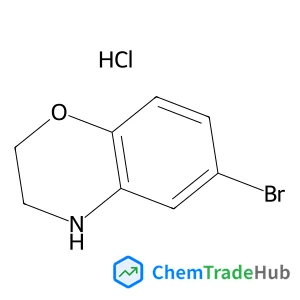
6-Bromo-3,4-dihydro-2H-1,4-benzoxazine hydrochloride (1:1)
CAS Number:
1260803-10-8
Molecular Formula:
C8H9BrClNO

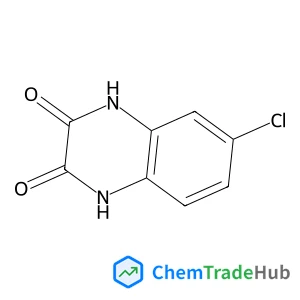
6-CHLORO-2,3-DIOXO-1,2,3,4-TETRAHYDROQUINOXALINE, 97
CAS Number:
169-14-2
Molecular Formula:
C8H5ClN2O2
Recommended Suppliers





Disclaimer
This page provides academic journal information for reference and research purposes only. We are not affiliated with any journal publishers and do not handle publication submissions. For publication-related inquiries, please contact the respective journal publishers directly.
If you notice any inaccuracies in the information displayed, please contact us at support@chemtradehub.com. We will promptly review and address your concerns.