












Dynamics of human acetylcholinesterase bound to non-covalent and covalent inhibitors shedding light on changes to the water network structure
Literature Information
Publication Date
2016-04-13
DOI
10.1039/C6CP00280C
Impact Factor
3.676
Authors
Kévin Scannapieco, Michael Marek Koza
View Original
Abstract
We investigated the effects of non-covalent reversible and covalent irreversible inhibitors on human acetylcholinesterase and human butyrylcholinesterase. Remarkably a non-covalent inhibitor, Huperzine A, has almost no effect on the molecular dynamics of the protein, whereas the covalently binding nerve agent soman renders the molecular structure stiffer in its aged form. The modified movements were studied by incoherent neutron scattering on different time scales and they indicate a stabilization and stiffening of aged human acetylcholinesterase. It is not straightforward to understand the forces leading to this strong effect. In addition to the specific interactions of the adduct within the protein, some indications point towards an extensive water structure change for the aged conjugate as water Bragg peaks appeared at cryogenic temperature despite an identical initial hydration state for all samples. Such a change associated to an apparent increase in free water volume upon aging suggests higher ordering of the hydration shell that leads to the stiffening of protein. Thus, several additive contributions seem responsible for the improved flexibility or stiffening effect of the inhibitors rather than a single interaction.
Related Literature
Tuning oxygen electrocatalysis via strain on LaNiO3(001)‡
Simuck F. Yuk, Valentino R. Cooper
2018-10-15
Paper
DOI: 10.1039/C8CP02405G
Tuning cavitation and crazing in polymer nanocomposite glasses containing bimodal grafted nanoparticles at the nanoparticle/polymer interface
Rui Shi, Hu-Jun Qian, Zhong-Yuan Lu
2019-03-12
Paper
DOI: 10.1039/C9CP00208A
Strong influence of weak hydrogen bonding on actinide–phosphonate complexation: accurate predictions from DFT followed by experimental validation
Aditi Chandrasekar, Tapan K. Ghanty, C. V. S. Brahmmananda Rao, Mahesh Sundararajan, N. Sivaraman
2019-02-13
Paper
DOI: 10.1039/C9CP00479C
Equilibrium structures of the tetramezine diastereomers and their ratio: joint analysis of gas phase electron diffraction, quantum chemistry, and spectroscopic data
Leonid S. Khaikin, Igor V. Kochikov, Anatoliy N. Rykov, Olga E. Grikina, Georgiy G. Ageev, Igor F. Shishkov, Vladimir V. Kuznetsov, Nina N. Makhova
2019-02-08
Paper
DOI: 10.1039/C8CP07607C
A new NMR crystallographic approach to reveal the calcium local structure of atorvastatin calcium
Sean T. Holmes, Wei D. Wang, Guangjin Hou, Cecil Dybowski, Wei Wang
2019-01-22
Paper
DOI: 10.1039/C8CP07673A
The band structure and optical absorption of hematite (α-Fe2O3): a first-principles GW-BSE study
2019-01-16
Paper
DOI: 10.1039/C8CP07132B
Bayesian determination of the effect of a deep eutectic solvent on the structure of lipid monolayers
Karen J. Edler, Stephen C. Parker
2019-02-22
Paper
DOI: 10.1039/C9CP00203K
Tunable electronic properties of an Sb/InSe van der Waals heterostructure by electric field effects
Zhihui Zhang, Yan Zhang, Zifeng Xie, Xing Wei, Tingting Guo, Jibin Fan, Lei Ni, Ye Tian, Jian Liu, Li Duan
2019-02-12
Paper
DOI: 10.1039/C8CP07407K
You might also like
Compound Q&A
What are the main uses of 4-Nitrophenyl phosphate disodium salt hexahydrate (CAS: 333338-18-4)?
4-Nitrophenyl phosphate disodium salt hexahydrate is primarily used as a substra...
333338-18-44-Nitrophenyl phosph...
Compound Q&A
What are the main uses of 2-(Trifluoromethyl)-1,3-oxazole-4-carboxylic Acid (CAS: 1060816-01-4)?
2-(Trifluoromethyl)-1,3-oxazole-4-carboxylic Acid (CAS: 1060816-01-4) is widely ...
1060816-01-42-(Trifluoromethyl)-...
Compound Q&A
How should 2-Fluoro-4-biphenylcarboxylic acid (CAS: 137045-30-8) be stored?
2-Fluoro-4-biphenylcarboxylic acid should be stored in a cool, dry place at room...
137045-30-82-Fluoro-4-biphenylc...
Compound Q&A
What industries use Prednisolone-21-Carboxylic Acid (CAS: 61549-70-0)?
Prednisolone-21-Carboxylic Acid is primarily used in the pharmaceutical industry...
61549-70-0Prednisolone-21-Carb...
Compound Q&A
How should 4-(Hydrazinomethyl)-1,2,3-benzenetriol (CAS: 3614-72-0) be stored?
4-(Hydrazinomethyl)-1,2,3-benzenetriol (CAS: 3614-72-0) should be stored in a co...
3614-72-04-(Hydrazinomethyl)-...
Compound Q&A
What industries use 4-Amino-1-methyl-1H-pyrazole-5-carboxylic acid hydrochloride (CAS: 92534-70-8)?
4-Amino-1-methyl-1H-pyrazole-5-carboxylic acid hydrochloride (CAS: 92534-70-8) i...
92534-70-84-Amino-1-methyl-1H-...
Compound Q&A
What regulatory guidelines apply to dehydropachymic acid (CAS: 77012-31-8)?
Dehydropachymic acid (CAS: 77012-31-8) is regulated by various agencies. It fall...
77012-31-8Dehydropachymic acid
Compound Q&A
What is the market or research trend for 6-[(2,2-Dimethylpropanoyl)amino]nicotinic acid (CAS: 898561-66-5)?
The market and research trends for 6-[(2,2-Dimethylpropanoyl)amino]nicotinic aci...
898561-66-56-[(2,2-Dimethylprop...
Compound Q&A
How should 1,10-Phenanthroline-2,9-dicarbaldehyde (CAS: 57709-62-3) be stored?
1,10-Phenanthroline-2,9-dicarbaldehyde should be stored in a cool, dry place awa...
57709-62-31,10-Phenanthroline-...
Compound Q&A
How is 5-Carbamoyl-11-oxo-10,11-dihydro-5H-dibenzo[b,f]azepin-10-yl acetate (CAS: 113952-21-9) typically synthesized?
5-Carbamoyl-11-oxo-10,11-dihydro-5H-dibenzo[b,f]azepin-10-yl acetate can be synt...
113952-21-95-Carbamoyl-11-oxo-1...
Source Journal
Physical Chemistry Chemical Physics

CiteScore:
5.5
Self-citation Rate:
10.3%
Articles per Year:
3036
Physical Chemistry Chemical Physics (PCCP) is an international journal co-owned by 19 physical chemistry and physics societies from around the world. This journal publishes original, cutting-edge research in physical chemistry, chemical physics and biophysical chemistry. To be suitable for publication in PCCP, articles must include significant innovation and/or insight into physical chemistry; this is the most important criterion that reviewers and Editors will judge against when evaluating submissions. The journal has a broad scope and welcomes contributions spanning experiment, theory, computation and data science. Topical coverage includes spectroscopy, dynamics, kinetics, statistical mechanics, thermodynamics, electrochemistry, catalysis, surface science, quantum mechanics, quantum computing and machine learning. Interdisciplinary research areas such as polymers and soft matter, materials, nanoscience, energy, surfaces/interfaces, and biophysical chemistry are welcomed if they demonstrate significant innovation and/or insight into physical chemistry. Joined experimental/theoretical studies are particularly appreciated when complementary and based on up-to-date approaches.
Recommended Compounds
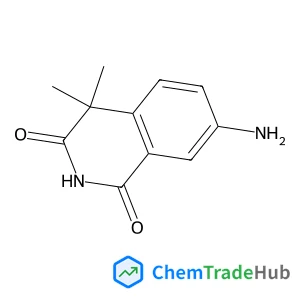
1,3(2H,4H)-Isoquinolinedione, 7-amino-4,4-dimethyl-
CAS Number:
14576-22-8
Molecular Formula:
C11H12N2O2
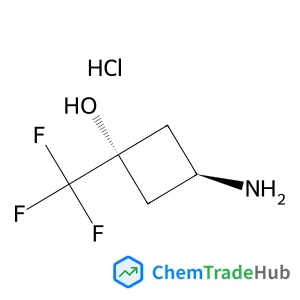
cis-3-Amino-1-(trifluoromethyl)cyclobutanol hydrochloride (1:1)
CAS Number:
1408075-16-0
Molecular Formula:
C5H9ClF3NO
Recommended Suppliers




Disclaimer
This page provides academic journal information for reference and research purposes only. We are not affiliated with any journal publishers and do not handle publication submissions. For publication-related inquiries, please contact the respective journal publishers directly.
If you notice any inaccuracies in the information displayed, please contact us at support@chemtradehub.com. We will promptly review and address your concerns.