












Detection of evoked acetylcholine release in mouse brain slices
Literature Information
Publication Date
2016-10-03
DOI
10.1039/C6AN01758D
Impact Factor
4.616
Authors
R. Asri, B. O'Neill, J. C. Patel, K. A. Siletti, M. E. Rice
View Original
Abstract
The study of transmitter interactions in reward and motor pathways in the brain, including the striatum, requires methodology to detect stimulus-driven neurotransmitter release events. Such methods exist for dopamine, and have contributed to the understanding of local and behavioral factors that regulate dopamine release. However, factors that regulate release of another key transmitter in these pathways, acetylcholine (ACh), are unresolved, in part because of limited temporal and spatial resolution of current detection methods. We have optimized a voltammetric method for detection of local stimulus-evoked ACh release using enzyme-coated carbon-fiber microelectrodes and fast-scan cyclic voltammetry. These electrodes are based on the detection of H2O2 generated by the actions of acetylcholine esterase and choline oxidase, and reliably respond to ACh in a concentration-dependent manner. Methods for enzyme coating were optimized for mechanical stability that allowed for their use in ex vivo brain slices. We report here the first quantitative assessment of extracellular ACh concentration after local electrical stimulation in dorsal striatum in slices from control mice. The selective detection of ACh under these conditions was confirmed by showing that the response detected in the control slices was absent in slices from mice bred to lack ACh synthesis in the forebrain. These electrodes represent a new tool to study ACh and ACh–dopamine interactions with micrometer spatial resolution.
Recommended Journals
Related Literature
The effect of interface angle on the thermal conductivity of Si/Ge superlattices
Aleksandr Chernatynskiy, Xiao-Feng Zhao
2021-10-08
Paper
DOI: 10.1039/D1CP03544D
Optical pressure and temperature sensing properties of Nd3+:YTaO4
Pengyu Zhou, Qingli Zhang, Xiuming Dou, Jian Wang, Baoquan Sun, Yuhua Shen, Bao Liu, Dandan Han
2021-09-22
Paper
DOI: 10.1039/D1CP03418A
Identification of beryllium fluoride complexes in mechanically distorted gels using quadrupolar split 9Be NMR spectra resolved with solution-state selective cross-polarization
Konstantin Romanenko, Stuart J. Elliott, Aleksandr A. Shubin, Philip W. Kuchel
2021-07-17
Paper
DOI: 10.1039/D1CP02515E
The CH(X2Π) + H2O reaction: two transition state kinetics
Thanh Lam Nguyen, Jozef Peeters
2021-07-16
Paper
DOI: 10.1039/D1CP02234B
Tuning Dzyaloshinskii–Moriya interaction via an electric field at the Co/h-BN interface
C. L. Ma, J. Hu
2021-09-21
Communication
DOI: 10.1039/D1CP02554F
A theoretical study on the excited-state deactivation paths for the A–5FU dimer
Xue-fang Yu, Ting-he Fu, Bo Xiao, Hong-yuan Yu, Qingzhong Li
2021-06-28
Paper
DOI: 10.1039/D1CP00030F
Modeling the impedance response and steady state behaviour of porous CGO-based MIEC anodes
Philip Marmet, Lorenz Holzer, Jan G. Grolig, Holger Bausinger, Andreas Mai, Joseph M. Brader, Thomas Hocker
2021-10-06
Paper
DOI: 10.1039/D1CP01962G
B-Doped 2D-InSe as a bifunctional catalyst for CO2/CH4 separation under the regulation of an external electric field
Chenxu Zhao, Menghui Xi, Jinrong Huo, Chaozheng He
2021-09-30
Paper
DOI: 10.1039/D1CP03943A
New ethionamide boosters and EthR2: structural and energetic analysis
J. F. Vianna, K. S. Bezerra, A. H. Lima Costa, E. D. Barbosa, J. X. Lima Neto, J. I. N. Oliveira, V. N. Freire, U. L. Fulco
2021-09-27
Paper
DOI: 10.1039/D1CP02853G
You might also like
Compound Q&A
What precautions should be taken when handling 4-Methyl-6-(trifluoromethyl)quinoline (CAS: 40716-16-3)?
When handling 4-Methyl-6-(trifluoromethyl)quinoline (CAS: 40716-16-3), safety go...
40716-16-34-Methyl-6-(trifluor...
Compound Q&A
What is 4-(3,5-Difluorophenyl)aniline (CAS: 405058-00-6)?
4-(3,5-Difluorophenyl)aniline is an aromatic organic compound with the CAS numbe...
405058-00-64-(3,5-Difluoropheny...
Compound Q&A
How is 5-{[4-(Trifluoromethyl)phenyl]sulfanyl}-1,2,3-thiadiazole-4-carboxylic acid (CAS: 338982-07-3) typically synthesized?
5-{[4-(Trifluoromethyl)phenyl]sulfanyl}-1,2,3-thiadiazole-4-carboxylic acid can ...
338982-07-35-{[4-(Trifluorometh...
Compound Q&A
What is the market or research trend for 4-Benzylaniline hydrochloride (CAS: 6317-57-3)?
The market for 4-Benzylaniline hydrochloride (CAS: 6317-57-3) is steadily growin...
6317-57-34-Benzylaniline hydr...
Compound Q&A
Is [3-(Diethylsulfamoyl)phenyl]boronic acid (CAS: 871329-58-7) safe?
[3-(Diethylsulfamoyl)phenyl]boronic acid is generally considered safe when handl...
871329-58-7[3-(Diethylsulfamoyl...
Compound Q&A
What are the main uses of 3-Bromo-2,5-dimethoxyaniline (CAS: 115929-62-9)?
3-Bromo-2,5-dimethoxyaniline is mainly used in the pharmaceutical and chemical i...
115929-62-93-Bromo-2,5-dimethox...
Compound Q&A
What regulatory guidelines apply to N-Methyl-1-(5-methyl-1H-indol-3-yl)methanamine (CAS: 915922-67-7)?
N-Methyl-1-(5-methyl-1H-indol-3-yl)methanamine (CAS: 915922-67-7) is subject to ...
915922-67-7N-Methyl-1-(5-methyl...
Compound Q&A
What industries use Carbamic acid, N-[(5S)-5,6-diamino-6-oxohexyl]-, 1,1-dimethylethyl ester (CAS: 24828-96-4)?
This compound is primarily used in the pharmaceutical industry for the synthesis...
24828-96-4Carbamic acid, N-[(5...
Compound Q&A
How should 2-Methyl-2-propanyl [(1S,3R)-3-aminocyclohexyl]carbamate (CAS: 1298101-47-9) be stored?
2-Methyl-2-propanyl [(1S,3R)-3-aminocyclohexyl]carbamate (CAS: 1298101-47-9) sho...
1298101-47-92-Methyl-2-propanyl ...
Compound Q&A
What industries use Ethyl 2-bromo-4,4,4-trifluorobutanoate (CAS: 367-33-9)?
Ethyl 2-bromo-4,4,4-trifluorobutanoate (CAS: 367-33-9) is utilized in the pharma...
367-33-9Ethyl 2-bromo-4,4,4-...
Source Journal
Analyst

CiteScore:
7.8
Self-citation Rate:
5.6%
Articles per Year:
653
Analyst publishes analytical and bioanalytical research that reports premier fundamental discoveries and inventions, and the applications of those discoveries, unconfined by traditional discipline barriers.
Recommended Compounds
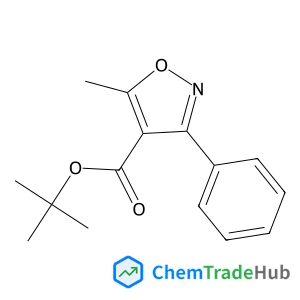
2-Methyl-2-propanyl 5-methyl-3-phenyl-1,2-oxazole-4-carboxylate
CAS Number:
211429-79-7
Molecular Formula:
C15H17NO3
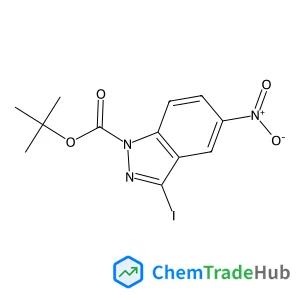
Tert-butyl 3-iodo-5-nitro-1H-indazole-1-carboxylate
CAS Number:
459133-69-8
Molecular Formula:
C12H12IN3O4
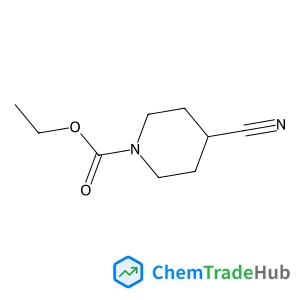
![Imidazo[1,2-c]pyrimidine structure](https://static.chemtradehub.com/structs/274/274-78-2-8b4c.webp "Imidazo[1,2-c]pyrimidine structure")
Recommended Suppliers






Disclaimer
This page provides academic journal information for reference and research purposes only. We are not affiliated with any journal publishers and do not handle publication submissions. For publication-related inquiries, please contact the respective journal publishers directly.
If you notice any inaccuracies in the information displayed, please contact us at support@chemtradehub.com. We will promptly review and address your concerns.