












![[(1S,2S,3R,4S,7R,9S,10S,12R,15S)-4,12-Diacetyloxy-15-[(2R,3S)-3-benzamido-3-phenyl-2-(2,2,2-trichloroethoxycarbonyloxy)propanoyl]oxy-1,9-dihydroxy-10,14,17,17-tetramethyl-11-oxo-6-oxatetracyclo[11.3.1.03,10.04,7]heptadec-13-en-2-yl] benzoate structure](https://static.chemtradehub.com/structs/100/100431-55-8-7104.webp "[(1S,2S,3R,4S,7R,9S,10S,12R,15S)-4,12-Diacetyloxy-15-[(2R,3S)-3-benzamido-3-phenyl-2-(2,2,2-trichloroethoxycarbonyloxy)propanoyl]oxy-1,9-dihydroxy-10,14,17,17-tetramethyl-11-oxo-6-oxatetracyclo[11.3.1.03,10.04,7]heptadec-13-en-2-yl] benzoate structure")
Synthesis and hydrolytic properties of water-soluble poly(carbonate–hydroxyurethane)s from trimethylolpropane
Literature Information
Publication Date
2015-12-08
DOI
10.1039/C5PY01733E
Impact Factor
5.582
Authors
Hiroyuki Matsukizono, Takeshi Endo
View Original
Abstract
Water-soluble poly(carbonate–hydroxyurethane)s (PCHUs) comprising hydroxyurethane–carbonate–hydroxyurethane repeating units with well-controlled molecular weight and polydispersity were synthesized from trimethylolpropane (TMP) and investigated for their hydrolytic properties in aqueous media at different pH values. The reaction of TMP with diphenyl carbonate affords mainly three types of different-structured TMP-based carbonates. By fine tuning the synthetic conditions, the bifunctional six-membered cyclic carbonate bridged by an acyclic carbonate bond (TMPC1) was obtained in 36.8% yield after purification. The polyaddition of TMPC1 and 1.25 equiv. of 1,3-diaminopropane at −10 °C proceeds without the cleavage of the acyclic carbonate linkages to form PCHUs comprising four repeating units with amino terminals. Furthermore, the reaction of their amino terminals with α,α′-diisothiocyante-p-xylene forms thiourea linkages (–NH–C(S)–NH–) to extend the chain length of the PCHUs without the inter/intra chain cross-linking via their hydroxyl side chains. After carboxylation of the hydroxyl side chains of the PCHUs with succinic anhydride and neutralization with sodium bicarbonate, water-soluble PCHUs can be obtained. The urethane bonds of the PCHUs are stable, while carbonate and ester bonds are gradually hydrolyzed in alkaline aqueous media at ambient temperature. In particular, the water-soluble PCHUs are completely decomposed to their basic structures in carbonate buffers at pH 10.6 within one week.
Related Literature
An improved, optimised and robust keratin azure assay for accurate assessment of keratinase activity
Rhona M. Cowan, Eleanor Birch, Grace Nisbet, Chimaeze Onyeiwu, Clare Campbell, Ian Archer, Dominic J. Campopiano
2023-11-06
Paper
DOI: 10.1039/D3AY01433A
A homogeneous label-free electrochemical aptasensor based on an omega-like DNA nanostructure for progesterone detection
Zaofen Wang, Weiping Shi, Yunzhu Tan, Bingqian Liu
2023-11-13
Paper
DOI: 10.1039/D3AY01255G
A low-cost optofluidic platform for the colorimetric assessment of bacterial activity in domestic wastewater
Prajal Chettri, Kalathur Mohan Ganesh, Sahashransu Satyajeet Mahapatra, A. S. Vishwanathan, Shailesh Srivastava
2023-11-02
Paper
DOI: 10.1039/D3AY01612A
Detection of coca alkaloids in oral fluid from coca leaf (tea) consumers: using solid phase extraction to improve validation parameters and widen the detection window
I. Álvarez-Freire, P. Cabarcos-Fernández, N. C. Rubio, A. Moreda-Piñeiro, M. J. Tabernero-Duque, I. Sánchez-Sellero, P. Bermejo-Barrera, A. M. Bermejo-Barrera
2023-10-18
Paper
DOI: 10.1039/D3AY01298K
Differences in the internal energies of ions in electrospray ionization mass spectrometers equipped with capillary–skimmer and capillary–RF lens interfaces
Daiki Asakawa, Ryoma Yamamoto, Nobuyasu Hanari, Kazumi Saikusa
2023-10-03
Paper
DOI: 10.1039/D3AY01450A
Advances in biomedical systems based on microneedles: design, fabrication, and application
Xinghao Wang, Zifeng Wang, Min Xiao, Zhanhong Li, Zhigang Zhu
2023-11-07
Review Article
DOI: 10.1039/D3BM01551C
An adaptive extended Gaussian peak derivative reweighted penalised least squares method for baseline correction
Xiaoshan Li, Xiaojun Tang, Bin Wang, Youshui Lu, Houqing Chen
2023-10-19
Paper
DOI: 10.1039/D3AY01389H
Catechol-tetraethylenepentamine co-deposition modified cellulose filter paper for α-glucosidase immobilization and inhibitor screening from traditional Chinese medicine
Guang-Zhen Wan, Chun-Lin Zhang, Juan Chen
2023-10-30
Paper
DOI: 10.1039/D3AY01835K
An active transport dual adaptive nanocarrier designed to overcome the corneal microenvironment for neovascularization therapy
Yingying Li, Shan Gao, Yu Zhang, Zhijing He, Jianbo Ji, Xiaoye Yang, Lei Ye, Lixia Zhao
2023-11-10
Paper
DOI: 10.1039/D3BM01349A
Molecular beacon decorated silver nanowires for quantitative miRNA detection by a SERS approach
Martina Banchelli, Sara Tombelli, Marella de Angelis, Cristiano D'Andrea, Cosimo Trono, Francesco Baldini, Ambra Giannetti, Paolo Matteini
2023-10-27
Paper
DOI: 10.1039/D3AY01661G
You might also like
Compound Q&A
What are the main uses of 4-Nitrophenyl phosphate disodium salt hexahydrate (CAS: 333338-18-4)?
4-Nitrophenyl phosphate disodium salt hexahydrate is primarily used as a substra...
333338-18-44-Nitrophenyl phosph...
Compound Q&A
What are the main uses of 2-(Trifluoromethyl)-1,3-oxazole-4-carboxylic Acid (CAS: 1060816-01-4)?
2-(Trifluoromethyl)-1,3-oxazole-4-carboxylic Acid (CAS: 1060816-01-4) is widely ...
1060816-01-42-(Trifluoromethyl)-...
Compound Q&A
How should 2-Fluoro-4-biphenylcarboxylic acid (CAS: 137045-30-8) be stored?
2-Fluoro-4-biphenylcarboxylic acid should be stored in a cool, dry place at room...
137045-30-82-Fluoro-4-biphenylc...
Compound Q&A
What industries use Prednisolone-21-Carboxylic Acid (CAS: 61549-70-0)?
Prednisolone-21-Carboxylic Acid is primarily used in the pharmaceutical industry...
61549-70-0Prednisolone-21-Carb...
Compound Q&A
How should 4-(Hydrazinomethyl)-1,2,3-benzenetriol (CAS: 3614-72-0) be stored?
4-(Hydrazinomethyl)-1,2,3-benzenetriol (CAS: 3614-72-0) should be stored in a co...
3614-72-04-(Hydrazinomethyl)-...
Compound Q&A
What industries use 4-Amino-1-methyl-1H-pyrazole-5-carboxylic acid hydrochloride (CAS: 92534-70-8)?
4-Amino-1-methyl-1H-pyrazole-5-carboxylic acid hydrochloride (CAS: 92534-70-8) i...
92534-70-84-Amino-1-methyl-1H-...
Compound Q&A
What regulatory guidelines apply to dehydropachymic acid (CAS: 77012-31-8)?
Dehydropachymic acid (CAS: 77012-31-8) is regulated by various agencies. It fall...
77012-31-8Dehydropachymic acid
Compound Q&A
What is the market or research trend for 6-[(2,2-Dimethylpropanoyl)amino]nicotinic acid (CAS: 898561-66-5)?
The market and research trends for 6-[(2,2-Dimethylpropanoyl)amino]nicotinic aci...
898561-66-56-[(2,2-Dimethylprop...
Compound Q&A
How should 1,10-Phenanthroline-2,9-dicarbaldehyde (CAS: 57709-62-3) be stored?
1,10-Phenanthroline-2,9-dicarbaldehyde should be stored in a cool, dry place awa...
57709-62-31,10-Phenanthroline-...
Compound Q&A
How is 5-Carbamoyl-11-oxo-10,11-dihydro-5H-dibenzo[b,f]azepin-10-yl acetate (CAS: 113952-21-9) typically synthesized?
5-Carbamoyl-11-oxo-10,11-dihydro-5H-dibenzo[b,f]azepin-10-yl acetate can be synt...
113952-21-95-Carbamoyl-11-oxo-1...
Source Journal
Polymer Chemistry

CiteScore:
8.6
Self-citation Rate:
7.3%
Articles per Year:
457
Polymer Chemistry welcomes submissions in all areas of polymer science that have a strong focus on macromolecular chemistry. Manuscripts may cover a broad range of fields, yet no direct application focus is required.
Recommended Compounds

![S-[2,3-Bis(palmitoyloxy)propyl]-N-[(9H-fluoren-9-ylmethoxy)(hydroxy)methylene]cysteine structure](https://static.chemtradehub.com/structs/210/210532-98-2-f6a7.webp "S-[2,3-Bis(palmitoyloxy)propyl]-N-[(9H-fluoren-9-ylmethoxy)(hydroxy)methylene]cysteine structure")
S-[2,3-Bis(palmitoyloxy)propyl]-N-[(9H-fluoren-9-ylmethoxy)(hydroxy)methylene]cysteine
CAS Number:
210532-98-2
Molecular Formula:
C53H83NO8S
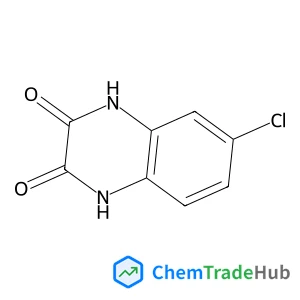
6-CHLORO-2,3-DIOXO-1,2,3,4-TETRAHYDROQUINOXALINE, 97
CAS Number:
169-14-2
Molecular Formula:
C8H5ClN2O2
Recommended Suppliers




Disclaimer
This page provides academic journal information for reference and research purposes only. We are not affiliated with any journal publishers and do not handle publication submissions. For publication-related inquiries, please contact the respective journal publishers directly.
If you notice any inaccuracies in the information displayed, please contact us at support@chemtradehub.com. We will promptly review and address your concerns.