












Toughening of photo-curable polymer networks: a review
Literature Information
Publication Date
2015-11-20
DOI
10.1039/C5PY01631B
Impact Factor
5.582
Authors
Martin Schwentenwein
View Original
Abstract
Photo-curable resins based on multifunctional acrylate monomers are commonly applied as thin films (e.g. protective coatings, printing inks, etc.) and in recent years are also used for the fabrication of bulk objects such as dental fillings and 3D-printed parts. While rapid curing and good spatial resolution are advantages to these systems, brittleness and poor impact resistance due to inhomogeneous polymer architecture and high crosslink density are serious drawbacks. By comparison, epoxy thermoset resins suffered many years ago from similar problems, but since then are found in ever demanding applications thanks to a variety of approaches to increase polymer toughness. Based on these successes, researchers have tried to translate strategies for toughening epoxy resins to photopolymer networks. Therefore, this review surveys relevant scientific papers and patents on the development of crosslinked epoxy-based polymers and also photo-curable polymers based on multifunctional acrylates with improved toughness. Strategies developed to reduce brittleness include working with monomers, which intrinsically give tougher polymers, particulate additives, and alternate forms of polymerization and polymer architecture (e.g., dual-cure networks, interpenetrating networks, thiol–ene chemistry). All of these strategies have advantages and yet application specific rigours must also be considered before and during formulation development.
Related Literature
Enhancing drug delivery with supramolecular amphiphilic macrocycle nanoparticles: selective targeting of CDK4/6 inhibitor palbociclib to melanoma
Mohamed F. Attia, Edikan A. Ogunnaike, Megan Pitz, Nancy M. Elbaz, Dillip K. Panda, Angela Alexander-Bryant, Sourav Saha, Daniel C. Whitehead
2023-12-11
Paper
DOI: 10.1039/D3BM01888A
A stable ratiometric fluorescent probe for hypochlorous acid detection and rheumatoid arthritis evaluation
Liuwei Gu, Yinghao Li, Xiaojie Kong, Ke Zhang, Yuling Qin, Xiaobo Zhou, Haiwei Ji, Guo Li, Li Wu
2023-12-21
Communication
DOI: 10.1039/D3BM01576A
Detection of coca alkaloids in oral fluid from coca leaf (tea) consumers: using solid phase extraction to improve validation parameters and widen the detection window
I. Álvarez-Freire, P. Cabarcos-Fernández, N. C. Rubio, A. Moreda-Piñeiro, M. J. Tabernero-Duque, I. Sánchez-Sellero, P. Bermejo-Barrera, A. M. Bermejo-Barrera
2023-10-18
Paper
DOI: 10.1039/D3AY01298K
Unveiling the antibacterial strategies and mechanisms of MoS2: a comprehensive analysis and future directions
Jiahao Shen, Junli Liu, Xiuyi Fan, Hui Liu, Yan Bao, AiPing Hui, Hafiz Akif Munir
2023-11-22
Review Article
DOI: 10.1039/D3BM01030A
Determination of vitamin D metabolites in various biological samples through an improved chemical derivatization assisted liquid chromatography-tandem mass spectrometry approach
Hua-Ming Xiao, Na An, Quan-Fei Zhu
2023-10-24
Paper
DOI: 10.1039/D3AY01769A
When microplastics meet electroanalysis: future analytical trends for an emerging threat
Sabina Susmel, Federico Figueredo
2023-10-18
Critical Review
DOI: 10.1039/D3AY01448G
Gastric cancer specific drug delivery with hydrophilic peptide probe conjugation
Moon Hwa Kwak, Seul Ki Yun, Seung Mok Yang, Seokho Myeong
2023-11-21
Paper
DOI: 10.1039/D3BM01590D
Ionophore-modified polyaniline-based optode for the determination of hydrogen sulfite levels in beverages, wastewater, and soil
Faisal K. Algethami, Basant H. Koraim, Ehab A. Abdelrahman, Yasmeen G. Abou El-Reash, Mahmoud S. Rizk
2023-11-13
Paper
DOI: 10.1039/D3AY01320K
UPLC-MS/MS method for quantitative determination of the advanced glycation endproducts Nε-(carboxymethyl)lysine and Nε-(carboxyethyl)lysine
2023-12-01
Paper
DOI: 10.1039/D3AY01817B
You might also like
Compound Q&A
What are the main uses of 4-Nitrophenyl phosphate disodium salt hexahydrate (CAS: 333338-18-4)?
4-Nitrophenyl phosphate disodium salt hexahydrate is primarily used as a substra...
333338-18-44-Nitrophenyl phosph...
Compound Q&A
What are the main uses of 2-(Trifluoromethyl)-1,3-oxazole-4-carboxylic Acid (CAS: 1060816-01-4)?
2-(Trifluoromethyl)-1,3-oxazole-4-carboxylic Acid (CAS: 1060816-01-4) is widely ...
1060816-01-42-(Trifluoromethyl)-...
Compound Q&A
How should 2-Fluoro-4-biphenylcarboxylic acid (CAS: 137045-30-8) be stored?
2-Fluoro-4-biphenylcarboxylic acid should be stored in a cool, dry place at room...
137045-30-82-Fluoro-4-biphenylc...
Compound Q&A
What industries use Prednisolone-21-Carboxylic Acid (CAS: 61549-70-0)?
Prednisolone-21-Carboxylic Acid is primarily used in the pharmaceutical industry...
61549-70-0Prednisolone-21-Carb...
Compound Q&A
How should 4-(Hydrazinomethyl)-1,2,3-benzenetriol (CAS: 3614-72-0) be stored?
4-(Hydrazinomethyl)-1,2,3-benzenetriol (CAS: 3614-72-0) should be stored in a co...
3614-72-04-(Hydrazinomethyl)-...
Compound Q&A
What industries use 4-Amino-1-methyl-1H-pyrazole-5-carboxylic acid hydrochloride (CAS: 92534-70-8)?
4-Amino-1-methyl-1H-pyrazole-5-carboxylic acid hydrochloride (CAS: 92534-70-8) i...
92534-70-84-Amino-1-methyl-1H-...
Compound Q&A
What regulatory guidelines apply to dehydropachymic acid (CAS: 77012-31-8)?
Dehydropachymic acid (CAS: 77012-31-8) is regulated by various agencies. It fall...
77012-31-8Dehydropachymic acid
Compound Q&A
What is the market or research trend for 6-[(2,2-Dimethylpropanoyl)amino]nicotinic acid (CAS: 898561-66-5)?
The market and research trends for 6-[(2,2-Dimethylpropanoyl)amino]nicotinic aci...
898561-66-56-[(2,2-Dimethylprop...
Compound Q&A
How should 1,10-Phenanthroline-2,9-dicarbaldehyde (CAS: 57709-62-3) be stored?
1,10-Phenanthroline-2,9-dicarbaldehyde should be stored in a cool, dry place awa...
57709-62-31,10-Phenanthroline-...
Compound Q&A
How is 5-Carbamoyl-11-oxo-10,11-dihydro-5H-dibenzo[b,f]azepin-10-yl acetate (CAS: 113952-21-9) typically synthesized?
5-Carbamoyl-11-oxo-10,11-dihydro-5H-dibenzo[b,f]azepin-10-yl acetate can be synt...
113952-21-95-Carbamoyl-11-oxo-1...
Source Journal
Polymer Chemistry

CiteScore:
8.6
Self-citation Rate:
7.3%
Articles per Year:
457
Polymer Chemistry welcomes submissions in all areas of polymer science that have a strong focus on macromolecular chemistry. Manuscripts may cover a broad range of fields, yet no direct application focus is required.
Recommended Compounds
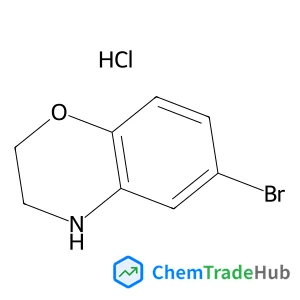
6-Bromo-3,4-dihydro-2H-1,4-benzoxazine hydrochloride (1:1)
CAS Number:
1260803-10-8
Molecular Formula:
C8H9BrClNO

Recommended Suppliers





Disclaimer
This page provides academic journal information for reference and research purposes only. We are not affiliated with any journal publishers and do not handle publication submissions. For publication-related inquiries, please contact the respective journal publishers directly.
If you notice any inaccuracies in the information displayed, please contact us at support@chemtradehub.com. We will promptly review and address your concerns.