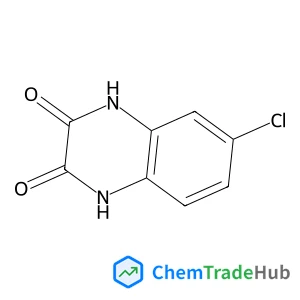
6-CHLORO-2,3-DIOXO-1,2,3,4-TETRAHYDROQUINOXALINE, 97
CAS Number:
169-14-2
Molecular Formula:
C8H5ClN2O2
DooLi Kim, Suzana Pereira Nunes
The interest in green processes and products has increased, in order to reduce the negative impact of many industrial processes on the environment. Solvents, which play a crucial role in the fabrication of membranes, need to be replaced by sustainable and less toxic solvent alternatives for commonly used polymers. The purpose of this study is the fabrication of greener hollow fiber membranes based on polyacrylonitrile (PAN), substituting dimethylformamide (DMF) by less toxic mixtures of ionic liquids (IL) and dimethylsulfoxide (DMSO). A thermodynamic analysis was conducted, estimating the Gibbs free energy of mixing to find the most convenient solution compositions. Hollow fiber membranes were manufactured and optimized. As a result, a uniform pattern and high porosity were observed in the inner surface of the membranes prepared from the ionic liquid solutions. The membranes were coated with a polyamide layer by interfacial polymerization. The hollow fiber membranes were applied in forward osmosis experiments by using sucrose solutions as draw solution.
Bo Yu, Qiao Jin, Jian Ji
DOI: 10.1039/D3BM01772A
Somayeh Mojtabavi, Seyed Ali Asghar Fakhrmousavi, Mehrdad Faizi, Hamid Forootanfar, Nasrin Samadi, Mohammad Ali Faramarzi
DOI: 10.1039/D3BM01406A
Qiuyi Liu, Yulian Yang, Yuemeng Zou, Luchun Wang, Zhu Li, Mingyue Wang, Lingling Li, Meng Tian, Dandan Wang, Die Gao
DOI: 10.1039/D3AY01166F
Yan Li, Zelong Long, Lingling Han, Kaijun Quan, Jia Chen, Xiuhui Liu, Hongdeng Qiu
DOI: 10.1039/D3AY01796F
Yin-Sheng Xu, Yingying Cui, Zeng-Ying Qiao
DOI: 10.1039/D3BM01138K
Yongjin Zhong, Yancheng Lai, Zeru Feng, Si Huang, Yu Fu, Lirong Huang, Keng-fu Lan, Anchun Mo
DOI: 10.1039/D3BM01676E
Siyi Li, Qinglin Wang, Yingying Ren, Pengtao Bao, Shanyue Guan, Xiaochen Qiu
DOI: 10.1039/D3BM01514A
Martina Banchelli, Sara Tombelli, Marella de Angelis, Cristiano D'Andrea, Cosimo Trono, Francesco Baldini, Ambra Giannetti, Paolo Matteini
DOI: 10.1039/D3AY01661G
Valentina Borko, Tomislav Friganović, Tin Weitner
DOI: 10.1039/D3AY01261A
4-Nitrophenyl phosphate disodium salt hexahydrate is primarily used as a substra...
2-(Trifluoromethyl)-1,3-oxazole-4-carboxylic Acid (CAS: 1060816-01-4) is widely ...
2-Fluoro-4-biphenylcarboxylic acid should be stored in a cool, dry place at room...
Prednisolone-21-Carboxylic Acid is primarily used in the pharmaceutical industry...
4-(Hydrazinomethyl)-1,2,3-benzenetriol (CAS: 3614-72-0) should be stored in a co...
4-Amino-1-methyl-1H-pyrazole-5-carboxylic acid hydrochloride (CAS: 92534-70-8) i...
Dehydropachymic acid (CAS: 77012-31-8) is regulated by various agencies. It fall...
The market and research trends for 6-[(2,2-Dimethylpropanoyl)amino]nicotinic aci...
1,10-Phenanthroline-2,9-dicarbaldehyde should be stored in a cool, dry place awa...
5-Carbamoyl-11-oxo-10,11-dihydro-5H-dibenzo[b,f]azepin-10-yl acetate can be synt...

Polymer Chemistry welcomes submissions in all areas of polymer science that have a strong focus on macromolecular chemistry. Manuscripts may cover a broad range of fields, yet no direct application focus is required.