












Cheap and fast: oxalic acid initiated CO2-based polyols synthesized by a novel preactivation approach
Literature Information
Publication Date
2015-10-12
DOI
10.1039/C5PY01338K
Impact Factor
5.582
Authors
Yusheng Qin, Lijun Qiao, Yuyang Miao, Xianhong Wang, Fosong Wang
View Original
Abstract
Oxalic acid, the cheapest dicarboxylic acid, was used as an effective initiator to synthesize polyols by copolymerization of CO2 and propylene oxide over a zinc–cobalt double metal cyanide catalyst. Generally, reaction times as long as 255 min were observed for complete PO conversion, due to the existence of the free carboxylic acid group of oxalic acid. To overcome this disadvantage, we proposed a novel preactivation approach by formation of oxalic acid based oligo-ether-diol in advance. About 4.75 PO monomers were initiated at 80 °C, which was independent of time and oxalic acid amount; the diol then acted as a chain transfer agent for the following copolymerization. Under the optimal conditions the reaction could proceed to completion in 150 min, which was a remarkable reduction in reaction time compared to the previous reaction time of 255 min. Notably, the resulting CO2-based diol was stable up to 190 °C, indicating that oxalic acid may be applied as an effective initiator for this copolymerization.
Recommended Journals
Related Literature
Low-cost electronic-nose (LC-e-nose) systems for the evaluation of plantation and fruit crops: recent advances and future trends
Jose Lucena Barbosa, Jr, Mohammed Kamruzzaman, Douglas Fernandes Barbin
2023-10-18
Critical Review
DOI: 10.1039/D3AY01192E
Facilely printed silk fibroin hydrogel microparticles as injectable long-lasting fillers
Chunyu Xie, Xiao Yang, Fan Zheng, Jiahao Shi, Caixia Huo, Zuyuan Wang, Bo Xiao, Lian Duan
2023-11-14
Paper
DOI: 10.1039/D3BM01488F
Determination of polyfluoroalkyl substances in cosmetic products using dispersed liquid–liquid extraction coupled with UHPLC-MS/MS
Wenyao Liang, Zemin Xia, Jianhua Tan
2023-11-20
Paper
DOI: 10.1039/D3AY01553J
Development and application of a universal extraction-free reagent based on an algal glycolipid
Minli Qiu, Jun Cheng, Huajun Zhou, Feihu Che, Yan Hu, Yinghui He, Yuzhu Dai, Yingjie Zhang
2023-11-03
Paper
DOI: 10.1039/D3AY01246H
Hydroxyl-rich branched polycations for nucleic acid delivery
Mengrui Su, Zichen Hu, Yujie Sun, Bingran Yu, Fu-Jian Xu
2023-11-17
Review Article
DOI: 10.1039/D3BM01394D
Antiepileptic drug concentration detection based on Raman spectroscopy and an improved snake optimization-convolutional neural network algorithm
Xinghu Fu, Xiqing Cao, Zizhen Fu, Zhexu Huang, Wa Jin, Guangwei Fu, Weihong Bi
2023-11-07
Paper
DOI: 10.1039/D3AY01631E
Membraneless, self-powered immunosensing of a cardiac biomarker by exploiting a PEC platform based on CaBi2Ta2O9 combined with bismuth oxyiodides
Greicy Kelly Cerqueira Caldas, Guilherme de Abreu Souza, Alan Silva de Menezes, Silma Regina Ferreira Pereira, Rita de Cássia Silva Luz, Flavio Santos Damos
2023-11-02
Paper
DOI: 10.1039/D3AY01309J
A dually emissive MPA-CdTe QDs@N, S-GQD nanosensor for sensitive and selective detection of 4-nitrophenol using two turn-off signals
Ali Nematollahzadeh
2023-10-19
Paper
DOI: 10.1039/D3AY01160G
You might also like
Compound Q&A
What are the main uses of 4-Nitrophenyl phosphate disodium salt hexahydrate (CAS: 333338-18-4)?
4-Nitrophenyl phosphate disodium salt hexahydrate is primarily used as a substra...
333338-18-44-Nitrophenyl phosph...
Compound Q&A
What are the main uses of 2-(Trifluoromethyl)-1,3-oxazole-4-carboxylic Acid (CAS: 1060816-01-4)?
2-(Trifluoromethyl)-1,3-oxazole-4-carboxylic Acid (CAS: 1060816-01-4) is widely ...
1060816-01-42-(Trifluoromethyl)-...
Compound Q&A
How should 2-Fluoro-4-biphenylcarboxylic acid (CAS: 137045-30-8) be stored?
2-Fluoro-4-biphenylcarboxylic acid should be stored in a cool, dry place at room...
137045-30-82-Fluoro-4-biphenylc...
Compound Q&A
What industries use Prednisolone-21-Carboxylic Acid (CAS: 61549-70-0)?
Prednisolone-21-Carboxylic Acid is primarily used in the pharmaceutical industry...
61549-70-0Prednisolone-21-Carb...
Compound Q&A
How should 4-(Hydrazinomethyl)-1,2,3-benzenetriol (CAS: 3614-72-0) be stored?
4-(Hydrazinomethyl)-1,2,3-benzenetriol (CAS: 3614-72-0) should be stored in a co...
3614-72-04-(Hydrazinomethyl)-...
Compound Q&A
What industries use 4-Amino-1-methyl-1H-pyrazole-5-carboxylic acid hydrochloride (CAS: 92534-70-8)?
4-Amino-1-methyl-1H-pyrazole-5-carboxylic acid hydrochloride (CAS: 92534-70-8) i...
92534-70-84-Amino-1-methyl-1H-...
Compound Q&A
What regulatory guidelines apply to dehydropachymic acid (CAS: 77012-31-8)?
Dehydropachymic acid (CAS: 77012-31-8) is regulated by various agencies. It fall...
77012-31-8Dehydropachymic acid
Compound Q&A
What is the market or research trend for 6-[(2,2-Dimethylpropanoyl)amino]nicotinic acid (CAS: 898561-66-5)?
The market and research trends for 6-[(2,2-Dimethylpropanoyl)amino]nicotinic aci...
898561-66-56-[(2,2-Dimethylprop...
Compound Q&A
How should 1,10-Phenanthroline-2,9-dicarbaldehyde (CAS: 57709-62-3) be stored?
1,10-Phenanthroline-2,9-dicarbaldehyde should be stored in a cool, dry place awa...
57709-62-31,10-Phenanthroline-...
Compound Q&A
How is 5-Carbamoyl-11-oxo-10,11-dihydro-5H-dibenzo[b,f]azepin-10-yl acetate (CAS: 113952-21-9) typically synthesized?
5-Carbamoyl-11-oxo-10,11-dihydro-5H-dibenzo[b,f]azepin-10-yl acetate can be synt...
113952-21-95-Carbamoyl-11-oxo-1...
Source Journal
Polymer Chemistry

CiteScore:
8.6
Self-citation Rate:
7.3%
Articles per Year:
457
Polymer Chemistry welcomes submissions in all areas of polymer science that have a strong focus on macromolecular chemistry. Manuscripts may cover a broad range of fields, yet no direct application focus is required.
Recommended Compounds
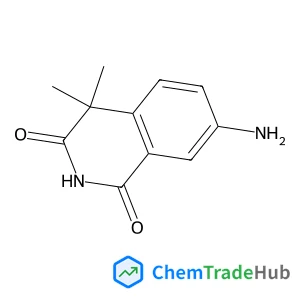
1,3(2H,4H)-Isoquinolinedione, 7-amino-4,4-dimethyl-
CAS Number:
14576-22-8
Molecular Formula:
C11H12N2O2
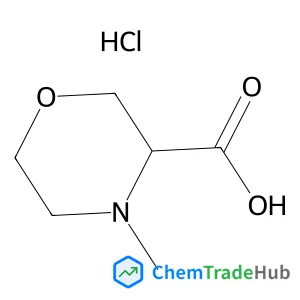
4-Methyl-3-morpholinecarboxylic acid hydrochloride (1:1)
CAS Number:
1240518-90-4
Molecular Formula:
C6H12ClNO3
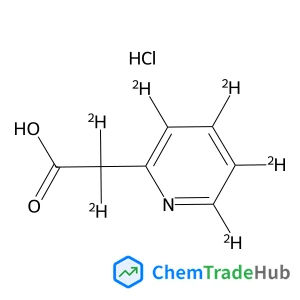
2,2-dideuterio-2-(3,4,5,6-tetradeuterio-2-pyridyl)acetic acid;hydrochloride
CAS Number:
1329799-67-8
Molecular Formula:
C7H2ClD6NO2
Recommended Suppliers






Disclaimer
This page provides academic journal information for reference and research purposes only. We are not affiliated with any journal publishers and do not handle publication submissions. For publication-related inquiries, please contact the respective journal publishers directly.
If you notice any inaccuracies in the information displayed, please contact us at support@chemtradehub.com. We will promptly review and address your concerns.