












Chalcogenodiazolo[3,4-c]pyridine based donor–acceptor–donor polymers for green and near-infrared electrochromics
Literature Information
Publication Date
2015-09-15
DOI
10.1039/C5PY01321F
Impact Factor
5.582
Authors
Shouli Ming, Shijie Zhen, Ximei Liu, Kaiwen Lin, Hongtao Liu, Yao Zhao, Baoyang Lu, Jingkun Xu
View Original
Abstract
A series of thiadiazolo[3,4-c]pyridine (PT)/selenadiazolo[3,4-c]pyridine (PSe) in alternation with a variety of thiophenes including thiophene (Th), 3-methylthiophene (MeTh), 3-hexylthiophene (HexTh) and 3,4-ethoxylenedioxythiophene (EDOT) based donor–acceptor–donor (D–A–D) monomers were designed and electropolymerized to yield their corresponding polymers. The structure–property relationships of these monomers/polymers, including band gap, electrochemical behavior, and optical properties, were comparatively investigated. The monomers exhibited orange, red, and purple emission characteristics with quantum yields ranging from 0.072 to 0.849 and could probably be used as building blocks for rational design of fluorescent materials. Also, it was noted that these donor and acceptor units played key roles in optical absorption, leading to neutral electrochromic polymers with different colors including green, purple, gray, sky blue and dark blue. In particular, the obtained EDOT based polymers revealed an obvious color change from green to blue with a faster response time (0.3–0.6 s) relative to their benzochalcogenodiazole analogues. Furthermore, the thiophene and alkyl thiophene-based polymers kept their color constant under different applied voltages and showed superior optical contrast (∼37%) in the near-infrared region compared with that in the visible region. These intriguing features of polymeric materials demonstrated that insertion of chalcogenodiazolo[3,4-c]pyridine into a D–A–D system allowed the formation of green and near-infrared electrochromes.
Related Literature
On site separation of inorganic forms of thallium and arsenic in sea water systems followed by ICP-MS determination
Joanna Kowalska, Alicja Drwal, Klaudia Tutaj, Lidiia Kovshun, Beata Krasnodębska-Ostręga
2023-11-06
Paper
DOI: 10.1039/D3AY01292A
Enhancing drug delivery with supramolecular amphiphilic macrocycle nanoparticles: selective targeting of CDK4/6 inhibitor palbociclib to melanoma
Mohamed F. Attia, Edikan A. Ogunnaike, Megan Pitz, Nancy M. Elbaz, Dillip K. Panda, Angela Alexander-Bryant, Sourav Saha, Daniel C. Whitehead
2023-12-11
Paper
DOI: 10.1039/D3BM01888A
Method development for forensic oil identification by direct analysis in real time time-of-flight mass spectrometry
Krishnaja Tikkisetty, Taylor Filewood, Jeffrey Yan, Honoria Kwok, Pamela Brunswick, Robert Cody, Dayue Shang
2023-11-02
Paper
DOI: 10.1039/D3AY01282D
Membraneless, self-powered immunosensing of a cardiac biomarker by exploiting a PEC platform based on CaBi2Ta2O9 combined with bismuth oxyiodides
Greicy Kelly Cerqueira Caldas, Guilherme de Abreu Souza, Alan Silva de Menezes, Silma Regina Ferreira Pereira, Rita de Cássia Silva Luz, Flavio Santos Damos
2023-11-02
Paper
DOI: 10.1039/D3AY01309J
Antiepileptic drug concentration detection based on Raman spectroscopy and an improved snake optimization-convolutional neural network algorithm
Xinghu Fu, Xiqing Cao, Zizhen Fu, Zhexu Huang, Wa Jin, Guangwei Fu, Weihong Bi
2023-11-07
Paper
DOI: 10.1039/D3AY01631E
Multifunctional MXene-doped photothermal microneedles for drug-resistant bacteria-infected wound healing
Yongjin Zhong, Yancheng Lai, Zeru Feng, Si Huang, Yu Fu, Lirong Huang, Keng-fu Lan, Anchun Mo
2023-12-08
Paper
DOI: 10.1039/D3BM01676E
Construction of a cleavable linker chemistry-based HBEXO-Chip to isolate circulating exosomes for breast cancer diagnosis
Shanshan Zhou, Zongxin Li, Yan Li, Xiaoyao Wang, Kun Deng
2023-12-06
Paper
DOI: 10.1039/D3AY01938A
Genetically engineered probiotics for an optical imaging-guided tumor photothermal therapy/immunotherapy
Xue Chen, Puze Li, Shiqiang Xie
2023-11-15
Paper
DOI: 10.1039/D3BM01227A
Unveiling the antibacterial strategies and mechanisms of MoS2: a comprehensive analysis and future directions
Jiahao Shen, Junli Liu, Xiuyi Fan, Hui Liu, Yan Bao, AiPing Hui, Hafiz Akif Munir
2023-11-22
Review Article
DOI: 10.1039/D3BM01030A
A phosphonium ionic liquid conjugated magnetic graphitic carbon nitride nanocomposite: an effective sample pretreatment tool for selenium separation and determination
Emmanuvel Arputharaj, Shivangi Singh, Raghavendra Rao Pasupuleti, Chun-An Kuo, Wei-Jyun Ya, Yu-Hui Huang, You-Rong Wu
2023-11-09
Paper
DOI: 10.1039/D3AY01312J
You might also like
Compound Q&A
What are the main uses of 4-Nitrophenyl phosphate disodium salt hexahydrate (CAS: 333338-18-4)?
4-Nitrophenyl phosphate disodium salt hexahydrate is primarily used as a substra...
333338-18-44-Nitrophenyl phosph...
Compound Q&A
What are the main uses of 2-(Trifluoromethyl)-1,3-oxazole-4-carboxylic Acid (CAS: 1060816-01-4)?
2-(Trifluoromethyl)-1,3-oxazole-4-carboxylic Acid (CAS: 1060816-01-4) is widely ...
1060816-01-42-(Trifluoromethyl)-...
Compound Q&A
How should 2-Fluoro-4-biphenylcarboxylic acid (CAS: 137045-30-8) be stored?
2-Fluoro-4-biphenylcarboxylic acid should be stored in a cool, dry place at room...
137045-30-82-Fluoro-4-biphenylc...
Compound Q&A
What industries use Prednisolone-21-Carboxylic Acid (CAS: 61549-70-0)?
Prednisolone-21-Carboxylic Acid is primarily used in the pharmaceutical industry...
61549-70-0Prednisolone-21-Carb...
Compound Q&A
How should 4-(Hydrazinomethyl)-1,2,3-benzenetriol (CAS: 3614-72-0) be stored?
4-(Hydrazinomethyl)-1,2,3-benzenetriol (CAS: 3614-72-0) should be stored in a co...
3614-72-04-(Hydrazinomethyl)-...
Compound Q&A
What industries use 4-Amino-1-methyl-1H-pyrazole-5-carboxylic acid hydrochloride (CAS: 92534-70-8)?
4-Amino-1-methyl-1H-pyrazole-5-carboxylic acid hydrochloride (CAS: 92534-70-8) i...
92534-70-84-Amino-1-methyl-1H-...
Compound Q&A
What regulatory guidelines apply to dehydropachymic acid (CAS: 77012-31-8)?
Dehydropachymic acid (CAS: 77012-31-8) is regulated by various agencies. It fall...
77012-31-8Dehydropachymic acid
Compound Q&A
What is the market or research trend for 6-[(2,2-Dimethylpropanoyl)amino]nicotinic acid (CAS: 898561-66-5)?
The market and research trends for 6-[(2,2-Dimethylpropanoyl)amino]nicotinic aci...
898561-66-56-[(2,2-Dimethylprop...
Compound Q&A
How should 1,10-Phenanthroline-2,9-dicarbaldehyde (CAS: 57709-62-3) be stored?
1,10-Phenanthroline-2,9-dicarbaldehyde should be stored in a cool, dry place awa...
57709-62-31,10-Phenanthroline-...
Compound Q&A
How is 5-Carbamoyl-11-oxo-10,11-dihydro-5H-dibenzo[b,f]azepin-10-yl acetate (CAS: 113952-21-9) typically synthesized?
5-Carbamoyl-11-oxo-10,11-dihydro-5H-dibenzo[b,f]azepin-10-yl acetate can be synt...
113952-21-95-Carbamoyl-11-oxo-1...
Source Journal
Polymer Chemistry

CiteScore:
8.6
Self-citation Rate:
7.3%
Articles per Year:
457
Polymer Chemistry welcomes submissions in all areas of polymer science that have a strong focus on macromolecular chemistry. Manuscripts may cover a broad range of fields, yet no direct application focus is required.
Recommended Compounds
![N-[2-(4-Hydroxyphenoxy)-4-nitrophenyl]methanesulfonamide structure](https://static.chemtradehub.com/structs/109/109032-22-6-7c88.webp "N-[2-(4-Hydroxyphenoxy)-4-nitrophenyl]methanesulfonamide structure")
N-[2-(4-Hydroxyphenoxy)-4-nitrophenyl]methanesulfonamide
CAS Number:
109032-22-6
Molecular Formula:
C13H12N2O6S

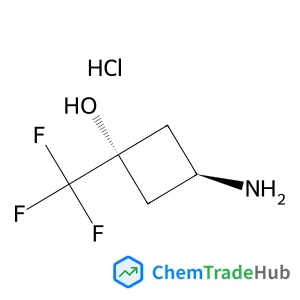
cis-3-Amino-1-(trifluoromethyl)cyclobutanol hydrochloride (1:1)
CAS Number:
1408075-16-0
Molecular Formula:
C5H9ClF3NO
Recommended Suppliers





Disclaimer
This page provides academic journal information for reference and research purposes only. We are not affiliated with any journal publishers and do not handle publication submissions. For publication-related inquiries, please contact the respective journal publishers directly.
If you notice any inaccuracies in the information displayed, please contact us at support@chemtradehub.com. We will promptly review and address your concerns.