












A robust procedure for large scale synthesis of a high molar mass, unsubstituted poly(m,p-phenylene)
Literature Information
Publication Date
2015-09-15
DOI
10.1039/C5PY01317H
Impact Factor
5.582
Authors
Bernd Deffner, A. Dieter Schlüter
View Original
Abstract
Due to the absence of functional groups and the relative inertness of phenylene units, polyphenylenes are an interesting research target for materials such as films and fibers, combining some π–π conjugation with chemical (e.g. hydrolytic) and thermal robustness. However, unsubstituted polyphenylenes practically cannot be obtained at high molar masses due to their already poor solubility at an early stage of growth. Herein, we report a synthetic route which nevertheless provides such polymers in a two-step process recently promoted by Sakamoto et al. First, a soluble precursor poly(m,p-phenylene) is obtained by AA/BB-type Suzuki polycondensation (SPC) which is then subjected to a virtually quantitative removal of its solubilizing side chains. SPC was carried out on a multigram scale using highly pure monomers which resulted in a fully reproducible and scalable route that provided up to 14 g of a substituted poly(m,p-phenylene) with a molar mass of 150 kg mol−1 (300 kg mol−1 after the removal of the common cyclic side products). This molar mass is amongst the highest ever reported in the open literature for SPC. The precursor polymer was compression moulded into films which were then subjected to side chain cleaving conditions by simple immersion into acidic solutions. Gratifyingly, the side chains could almost completely be removed with preservation of the overall film shape. We consider this work a step towards novel stiff and strong fluorescing films and fibers resistant to hydrolytic conditions.
Related Literature
A homogeneous label-free electrochemical aptasensor based on an omega-like DNA nanostructure for progesterone detection
Zaofen Wang, Weiping Shi, Yunzhu Tan, Bingqian Liu
2023-11-13
Paper
DOI: 10.1039/D3AY01255G
A phosphonium ionic liquid conjugated magnetic graphitic carbon nitride nanocomposite: an effective sample pretreatment tool for selenium separation and determination
Emmanuvel Arputharaj, Shivangi Singh, Raghavendra Rao Pasupuleti, Chun-An Kuo, Wei-Jyun Ya, Yu-Hui Huang, You-Rong Wu
2023-11-09
Paper
DOI: 10.1039/D3AY01312J
Construction of Mn–N–C nanoparticles with multienzyme-like properties and photothermal performance for the effective treatment of bacterial infections
Yong Ding, Xiao-Chan Yang, Ya-Ya Yu, Sheng-Nan Song, Bo Li, Xue-Yao Pang, Jian-Jian Cai, Chun-Huan Zhang, Ya-Mu Xia, Wei-Wei Gao
2023-11-22
Paper
DOI: 10.1039/D3BM01228J
SERS combined with QuEChERS using NBC and Fe3O4 MNPs as cleanup agents to rapidly and reliably detect chlorpyrifos pesticide in citrus
Xu Wang, Shirong Ai, Aihua Xiong, Weiqi Zhou, Liang He, Jie Teng, Xiang Geng, Ruimei Wu
2023-11-13
Paper
DOI: 10.1039/D3AY01604H
Sporopollenin exine capsules modulate the function of microglial cells
Mengwei Li, Banglian Hu, Zhaojie Wu, Ziwei Wang, Jian Weng, Honghua Zheng, Liping Sun
2023-12-05
Paper
DOI: 10.1039/D3BM01154B
Determination of vitamin D metabolites in various biological samples through an improved chemical derivatization assisted liquid chromatography-tandem mass spectrometry approach
Hua-Ming Xiao, Na An, Quan-Fei Zhu
2023-10-24
Paper
DOI: 10.1039/D3AY01769A
Antiepileptic drug concentration detection based on Raman spectroscopy and an improved snake optimization-convolutional neural network algorithm
Xinghu Fu, Xiqing Cao, Zizhen Fu, Zhexu Huang, Wa Jin, Guangwei Fu, Weihong Bi
2023-11-07
Paper
DOI: 10.1039/D3AY01631E
Enhancing drug delivery with supramolecular amphiphilic macrocycle nanoparticles: selective targeting of CDK4/6 inhibitor palbociclib to melanoma
Mohamed F. Attia, Edikan A. Ogunnaike, Megan Pitz, Nancy M. Elbaz, Dillip K. Panda, Angela Alexander-Bryant, Sourav Saha, Daniel C. Whitehead
2023-12-11
Paper
DOI: 10.1039/D3BM01888A
A rapid and direct method for dating blue pen ink in documents using multiset modeling of infrared spectroscopy and mass spectrometry data
Kauanny B. N. Braga, Lanaia Í. L. Maciel, Boniek G. Vaz, Licarion Pinto, Jandyson M. Santos
2023-11-14
Paper
DOI: 10.1039/D3AY01732J
Optimization of heteronuclear ultrafast 2D NMR for the study of complex mixtures hyperpolarized by dynamic nuclear polarization
Clément Praud, Victor Ribay, Arnab Dey, Benoît Charrier, Joris Mandral, Jonathan Farjon, Jean-Nicolas Dumez, Patrick Giraudeau
2023-11-01
Paper
DOI: 10.1039/D3AY01681A
You might also like
Compound Q&A
What are the main uses of 4-Nitrophenyl phosphate disodium salt hexahydrate (CAS: 333338-18-4)?
4-Nitrophenyl phosphate disodium salt hexahydrate is primarily used as a substra...
333338-18-44-Nitrophenyl phosph...
Compound Q&A
What are the main uses of 2-(Trifluoromethyl)-1,3-oxazole-4-carboxylic Acid (CAS: 1060816-01-4)?
2-(Trifluoromethyl)-1,3-oxazole-4-carboxylic Acid (CAS: 1060816-01-4) is widely ...
1060816-01-42-(Trifluoromethyl)-...
Compound Q&A
How should 2-Fluoro-4-biphenylcarboxylic acid (CAS: 137045-30-8) be stored?
2-Fluoro-4-biphenylcarboxylic acid should be stored in a cool, dry place at room...
137045-30-82-Fluoro-4-biphenylc...
Compound Q&A
What industries use Prednisolone-21-Carboxylic Acid (CAS: 61549-70-0)?
Prednisolone-21-Carboxylic Acid is primarily used in the pharmaceutical industry...
61549-70-0Prednisolone-21-Carb...
Compound Q&A
How should 4-(Hydrazinomethyl)-1,2,3-benzenetriol (CAS: 3614-72-0) be stored?
4-(Hydrazinomethyl)-1,2,3-benzenetriol (CAS: 3614-72-0) should be stored in a co...
3614-72-04-(Hydrazinomethyl)-...
Compound Q&A
What industries use 4-Amino-1-methyl-1H-pyrazole-5-carboxylic acid hydrochloride (CAS: 92534-70-8)?
4-Amino-1-methyl-1H-pyrazole-5-carboxylic acid hydrochloride (CAS: 92534-70-8) i...
92534-70-84-Amino-1-methyl-1H-...
Compound Q&A
What regulatory guidelines apply to dehydropachymic acid (CAS: 77012-31-8)?
Dehydropachymic acid (CAS: 77012-31-8) is regulated by various agencies. It fall...
77012-31-8Dehydropachymic acid
Compound Q&A
What is the market or research trend for 6-[(2,2-Dimethylpropanoyl)amino]nicotinic acid (CAS: 898561-66-5)?
The market and research trends for 6-[(2,2-Dimethylpropanoyl)amino]nicotinic aci...
898561-66-56-[(2,2-Dimethylprop...
Compound Q&A
How should 1,10-Phenanthroline-2,9-dicarbaldehyde (CAS: 57709-62-3) be stored?
1,10-Phenanthroline-2,9-dicarbaldehyde should be stored in a cool, dry place awa...
57709-62-31,10-Phenanthroline-...
Compound Q&A
How is 5-Carbamoyl-11-oxo-10,11-dihydro-5H-dibenzo[b,f]azepin-10-yl acetate (CAS: 113952-21-9) typically synthesized?
5-Carbamoyl-11-oxo-10,11-dihydro-5H-dibenzo[b,f]azepin-10-yl acetate can be synt...
113952-21-95-Carbamoyl-11-oxo-1...
Source Journal
Polymer Chemistry

CiteScore:
8.6
Self-citation Rate:
7.3%
Articles per Year:
457
Polymer Chemistry welcomes submissions in all areas of polymer science that have a strong focus on macromolecular chemistry. Manuscripts may cover a broad range of fields, yet no direct application focus is required.
Recommended Compounds
![(3R,5R)-1-[(Benzyloxy)carbonyl]-5-methyl-3-piperidinecarboxylic acid structure](https://static.chemtradehub.com/structs/126/1269757-29-0-c552.webp "(3R,5R)-1-[(Benzyloxy)carbonyl]-5-methyl-3-piperidinecarboxylic acid structure")
(3R,5R)-1-[(Benzyloxy)carbonyl]-5-methyl-3-piperidinecarboxylic acid
CAS Number:
1269757-29-0
Molecular Formula:
C15H19NO4
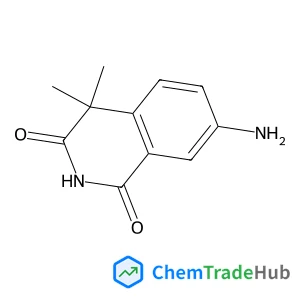
1,3(2H,4H)-Isoquinolinedione, 7-amino-4,4-dimethyl-
CAS Number:
14576-22-8
Molecular Formula:
C11H12N2O2

2,2-dideuterio-2-(3,4,5,6-tetradeuterio-2-pyridyl)acetic acid;hydrochloride
CAS Number:
1329799-67-8
Molecular Formula:
C7H2ClD6NO2
Recommended Suppliers





Disclaimer
This page provides academic journal information for reference and research purposes only. We are not affiliated with any journal publishers and do not handle publication submissions. For publication-related inquiries, please contact the respective journal publishers directly.
If you notice any inaccuracies in the information displayed, please contact us at support@chemtradehub.com. We will promptly review and address your concerns.