












Interactions of a zwitterionic thiophene-based conjugated polymer with surfactants
Literature Information
Publication Date
2015-09-25
DOI
10.1039/C5PY01210D
Impact Factor
5.582
Authors
Telma Costa, Diego de Azevedo, Beverly Stewart, Matti Knaapila, Artur J. M. Valente, Mario Kraft, Ullrich Scherf, Hugh D. Burrows
View Original
Abstract
In this paper we investigate the optical and structural properties of a zwitterionic poly[3-(N-(4-sulfonato-1-butyl)-N,N-diethylammonium)hexyl-2,5-thiophene] (P3SBDEAHT) conjugated polyelectrolyte (CPE) and its interaction in water with surfactants, using absorption, photoluminescence (PL), electrical conductivity, molecular dynamics simulations (MDS) and small-angle X-ray scattering (SAXS). Different surfactants were studied to evaluate the effect of the head group and chain length on the self-assembly. PL data emphasize the importance of polymer–surfactant electrostatic interactions in the formation of complexes. Nevertheless, conductivity and MDS data have shown that nonspecific interactions also play an important role. These seem to be responsible for the spatial position of the surfactant tail in the complex and, eventually, for breaking-up P3SBDEAHT aggregates. SAXS measurements on P3SBDEAHT-zwitterionic cocamidopropyl betaine (CAPB) surfactant complexes showed a specific structural organization of the system. The CAPB surfactant promotes a structural transition from pure P3SBDEAHT 3-dimensional aggregates (radius of gyration ∼85 Å) to thick cylindrical aggregates (∼20 Å) where all CAPB molecules are associated with the polymer. For molar ratios (in terms of the polymer repeat unit) >1 the SAXS interference maximum of the complexes resembles that of pure CAPB thus suggesting ongoing phase segregation in the formation of a “pure” CAPB phase.
Related Literature
Development and application of a universal extraction-free reagent based on an algal glycolipid
Minli Qiu, Jun Cheng, Huajun Zhou, Feihu Che, Yan Hu, Yinghui He, Yuzhu Dai, Yingjie Zhang
2023-11-03
Paper
DOI: 10.1039/D3AY01246H
An adaptive extended Gaussian peak derivative reweighted penalised least squares method for baseline correction
Xiaoshan Li, Xiaojun Tang, Bin Wang, Youshui Lu, Houqing Chen
2023-10-19
Paper
DOI: 10.1039/D3AY01389H
Fibrous capsule-resistant, controllably degradable and functionalizable zwitterion-albumin hybrid hydrogels
Zuolong Liu, Xianchi Zhou, Yongcheng Chen, Yanwen Ni, Zihao Zhu, Wenzhong Cao, Kexin Chen, Yu Yan
2023-11-29
Paper
DOI: 10.1039/D3BM01783D
A dual-mode green emissive fluorescent probe for real-time detection of doxycycline in milk using a smartphone sensing platform
Ruiqing Sun, Ping Liu, Yingjia Dong, Qingli Yang, Yongchao Ma
2023-11-14
Paper
DOI: 10.1039/D3AY01850D
Advances in biomedical systems based on microneedles: design, fabrication, and application
Xinghao Wang, Zifeng Wang, Min Xiao, Zhanhong Li, Zhigang Zhu
2023-11-07
Review Article
DOI: 10.1039/D3BM01551C
Avoiding some common mistakes in straight line regression. Part 1
2023-11-06
AMC Technical Brief
DOI: 10.1039/D3AY90134C
Cartilage regeneration using transforming growth factor-beta 3-loaded injectable crosslinked hyaluronic acid hydrogel
Ju Hwa Lee, Yun Chang Pyun, Jonggyu Park, Tae Woong Kang, Jin Sol Seo, Dae Hoon Lee
2023-12-13
Paper
DOI: 10.1039/D3BM01008B
You might also like
Compound Q&A
What are the main uses of 4-Nitrophenyl phosphate disodium salt hexahydrate (CAS: 333338-18-4)?
4-Nitrophenyl phosphate disodium salt hexahydrate is primarily used as a substra...
333338-18-44-Nitrophenyl phosph...
Compound Q&A
What are the main uses of 2-(Trifluoromethyl)-1,3-oxazole-4-carboxylic Acid (CAS: 1060816-01-4)?
2-(Trifluoromethyl)-1,3-oxazole-4-carboxylic Acid (CAS: 1060816-01-4) is widely ...
1060816-01-42-(Trifluoromethyl)-...
Compound Q&A
How should 2-Fluoro-4-biphenylcarboxylic acid (CAS: 137045-30-8) be stored?
2-Fluoro-4-biphenylcarboxylic acid should be stored in a cool, dry place at room...
137045-30-82-Fluoro-4-biphenylc...
Compound Q&A
What industries use Prednisolone-21-Carboxylic Acid (CAS: 61549-70-0)?
Prednisolone-21-Carboxylic Acid is primarily used in the pharmaceutical industry...
61549-70-0Prednisolone-21-Carb...
Compound Q&A
How should 4-(Hydrazinomethyl)-1,2,3-benzenetriol (CAS: 3614-72-0) be stored?
4-(Hydrazinomethyl)-1,2,3-benzenetriol (CAS: 3614-72-0) should be stored in a co...
3614-72-04-(Hydrazinomethyl)-...
Compound Q&A
What industries use 4-Amino-1-methyl-1H-pyrazole-5-carboxylic acid hydrochloride (CAS: 92534-70-8)?
4-Amino-1-methyl-1H-pyrazole-5-carboxylic acid hydrochloride (CAS: 92534-70-8) i...
92534-70-84-Amino-1-methyl-1H-...
Compound Q&A
What regulatory guidelines apply to dehydropachymic acid (CAS: 77012-31-8)?
Dehydropachymic acid (CAS: 77012-31-8) is regulated by various agencies. It fall...
77012-31-8Dehydropachymic acid
Compound Q&A
What is the market or research trend for 6-[(2,2-Dimethylpropanoyl)amino]nicotinic acid (CAS: 898561-66-5)?
The market and research trends for 6-[(2,2-Dimethylpropanoyl)amino]nicotinic aci...
898561-66-56-[(2,2-Dimethylprop...
Compound Q&A
How should 1,10-Phenanthroline-2,9-dicarbaldehyde (CAS: 57709-62-3) be stored?
1,10-Phenanthroline-2,9-dicarbaldehyde should be stored in a cool, dry place awa...
57709-62-31,10-Phenanthroline-...
Compound Q&A
How is 5-Carbamoyl-11-oxo-10,11-dihydro-5H-dibenzo[b,f]azepin-10-yl acetate (CAS: 113952-21-9) typically synthesized?
5-Carbamoyl-11-oxo-10,11-dihydro-5H-dibenzo[b,f]azepin-10-yl acetate can be synt...
113952-21-95-Carbamoyl-11-oxo-1...
Source Journal
Polymer Chemistry

CiteScore:
8.6
Self-citation Rate:
7.3%
Articles per Year:
457
Polymer Chemistry welcomes submissions in all areas of polymer science that have a strong focus on macromolecular chemistry. Manuscripts may cover a broad range of fields, yet no direct application focus is required.
Recommended Compounds

phosphoryl}methyl 4-methylbenzenesulfonate structure](https://static.chemtradehub.com/structs/864/864068-45-1-ba7c.webp "{[3-(Hexadecyloxy)propoxy](hydroxy)phosphoryl}methyl 4-methylbenzenesulfonate structure")
{[3-(Hexadecyloxy)propoxy](hydroxy)phosphoryl}methyl 4-methylbenzenesulfonate
CAS Number:
864068-45-1
Molecular Formula:
C27H49O7PS
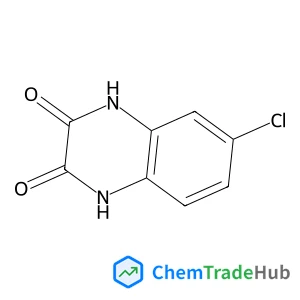
6-CHLORO-2,3-DIOXO-1,2,3,4-TETRAHYDROQUINOXALINE, 97
CAS Number:
169-14-2
Molecular Formula:
C8H5ClN2O2

Recommended Suppliers






Disclaimer
This page provides academic journal information for reference and research purposes only. We are not affiliated with any journal publishers and do not handle publication submissions. For publication-related inquiries, please contact the respective journal publishers directly.
If you notice any inaccuracies in the information displayed, please contact us at support@chemtradehub.com. We will promptly review and address your concerns.