













Correction: Strongly correlated plexcitonics: evolution of the Fano resonance in the presence of Kondo correlations
Literature Information
Publication Date
2015-05-07
DOI
10.1039/C5CP90078F
Impact Factor
3.676
Authors
View Original
Abstract
Correction for ‘Strongly correlated plexcitonics: evolution of the Fano resonance in the presence of Kondo correlations’ by A. Goker et al., Phys. Chem. Chem. Phys., 2015, 17, 11569–11576.
Related Literature
Effects of a TiC substrate on the catalytic activity of Pt for NO reduction
Xingli Chu, Zhaoming Fu, Shasha Li, Xilin Zhang
2016-04-12
Paper
DOI: 10.1039/C6CP00194G
Solvation dependence observed in the electronic dissymmetry factor spectra: how much information are we missing by analyzing the circular dichroism spectra alone?
Cody L. Covington, Prasad L. Polavarapu
2016-04-27
Paper
DOI: 10.1039/C6CP01247G
Correction: Are stabilizing osmolytes preferentially excluded from the protein surface? FTIR and MD studies
P. Bruździak, B. Adamczak, E. Kaczkowska, J. Czub, J. Stangret
2016-05-03
Correction
DOI: 10.1039/C6CP90115H
A DFT study of 2-aminopurine-containing dinucleotides: prediction of stacked conformations with B-DNA structure
Darren A. Smith, Leo F. Holroyd, Tanja van Mourik, Anita C. Jones
2016-05-11
Paper
DOI: 10.1039/C5CP07816D
Tight binding model of conformational disorder effects on the optical absorption spectrum of polythiophenes
Joel H. Bombile, Michael J. Janik, Scott T. Milner
2016-04-12
Paper
DOI: 10.1039/C6CP00832A
A closer examination of the coupling between ionic hydrogen bond (IHB) stretching and flanking group motions in (CH3OH)2H+: the strong isotope effects
2016-04-28
Paper
DOI: 10.1039/C6CP00309E
Analysis of constant tension-induced rupture of lipid membranes using activation energy
Mohammad Abu Sayem Karal, Victor Levadnyy
2016-04-15
Paper
DOI: 10.1039/C6CP01184E
Enhancement of two photon absorption properties and intersystem crossing by charge transfer in pentaaryl boron-dipyrromethene (BODIPY) derivatives
B. Küçüköz, G. Sevinç, E. Yildiz, A. Karatay, F. Zhong, H. Yılmaz, Y. Tutel, M. Hayvalı, J. Zhao, H. G. Yaglioglu
2016-04-19
Paper
DOI: 10.1039/C6CP01266C
Evaluating the solid electrolyte interphase formed on silicon electrodes: a comparison of ex situ X-ray photoelectron spectroscopy and in situ neutron reflectometry
T. M. Fears, M. Doucet, J. F. Browning, J. K. S. Baldwin, J. G. Winiarz, H. Kaiser, H. Taub, R. L. Sacci, G. M. Veith
2016-04-15
Paper
DOI: 10.1039/C6CP00978F
Conformational distortion of α-phenylethyl amine in cryogenic matrices – a matrix isolation VCD study
Corina H. Pollok, Christian Merten
2016-04-14
Paper
DOI: 10.1039/C6CP01946C
You might also like
Compound Q&A
What are the main uses of 4-Nitrophenyl phosphate disodium salt hexahydrate (CAS: 333338-18-4)?
4-Nitrophenyl phosphate disodium salt hexahydrate is primarily used as a substra...
333338-18-44-Nitrophenyl phosph...
Compound Q&A
What are the main uses of 2-(Trifluoromethyl)-1,3-oxazole-4-carboxylic Acid (CAS: 1060816-01-4)?
2-(Trifluoromethyl)-1,3-oxazole-4-carboxylic Acid (CAS: 1060816-01-4) is widely ...
1060816-01-42-(Trifluoromethyl)-...
Compound Q&A
How should 2-Fluoro-4-biphenylcarboxylic acid (CAS: 137045-30-8) be stored?
2-Fluoro-4-biphenylcarboxylic acid should be stored in a cool, dry place at room...
137045-30-82-Fluoro-4-biphenylc...
Compound Q&A
What industries use Prednisolone-21-Carboxylic Acid (CAS: 61549-70-0)?
Prednisolone-21-Carboxylic Acid is primarily used in the pharmaceutical industry...
61549-70-0Prednisolone-21-Carb...
Compound Q&A
How should 4-(Hydrazinomethyl)-1,2,3-benzenetriol (CAS: 3614-72-0) be stored?
4-(Hydrazinomethyl)-1,2,3-benzenetriol (CAS: 3614-72-0) should be stored in a co...
3614-72-04-(Hydrazinomethyl)-...
Compound Q&A
What industries use 4-Amino-1-methyl-1H-pyrazole-5-carboxylic acid hydrochloride (CAS: 92534-70-8)?
4-Amino-1-methyl-1H-pyrazole-5-carboxylic acid hydrochloride (CAS: 92534-70-8) i...
92534-70-84-Amino-1-methyl-1H-...
Compound Q&A
What regulatory guidelines apply to dehydropachymic acid (CAS: 77012-31-8)?
Dehydropachymic acid (CAS: 77012-31-8) is regulated by various agencies. It fall...
77012-31-8Dehydropachymic acid
Compound Q&A
What is the market or research trend for 6-[(2,2-Dimethylpropanoyl)amino]nicotinic acid (CAS: 898561-66-5)?
The market and research trends for 6-[(2,2-Dimethylpropanoyl)amino]nicotinic aci...
898561-66-56-[(2,2-Dimethylprop...
Compound Q&A
How should 1,10-Phenanthroline-2,9-dicarbaldehyde (CAS: 57709-62-3) be stored?
1,10-Phenanthroline-2,9-dicarbaldehyde should be stored in a cool, dry place awa...
57709-62-31,10-Phenanthroline-...
Compound Q&A
How is 5-Carbamoyl-11-oxo-10,11-dihydro-5H-dibenzo[b,f]azepin-10-yl acetate (CAS: 113952-21-9) typically synthesized?
5-Carbamoyl-11-oxo-10,11-dihydro-5H-dibenzo[b,f]azepin-10-yl acetate can be synt...
113952-21-95-Carbamoyl-11-oxo-1...
Source Journal
Physical Chemistry Chemical Physics

CiteScore:
5.5
Self-citation Rate:
10.3%
Articles per Year:
3036
Physical Chemistry Chemical Physics (PCCP) is an international journal co-owned by 19 physical chemistry and physics societies from around the world. This journal publishes original, cutting-edge research in physical chemistry, chemical physics and biophysical chemistry. To be suitable for publication in PCCP, articles must include significant innovation and/or insight into physical chemistry; this is the most important criterion that reviewers and Editors will judge against when evaluating submissions. The journal has a broad scope and welcomes contributions spanning experiment, theory, computation and data science. Topical coverage includes spectroscopy, dynamics, kinetics, statistical mechanics, thermodynamics, electrochemistry, catalysis, surface science, quantum mechanics, quantum computing and machine learning. Interdisciplinary research areas such as polymers and soft matter, materials, nanoscience, energy, surfaces/interfaces, and biophysical chemistry are welcomed if they demonstrate significant innovation and/or insight into physical chemistry. Joined experimental/theoretical studies are particularly appreciated when complementary and based on up-to-date approaches.
Recommended Compounds

cis-3-Amino-1-(trifluoromethyl)cyclobutanol hydrochloride (1:1)
CAS Number:
1408075-16-0
Molecular Formula:
C5H9ClF3NO
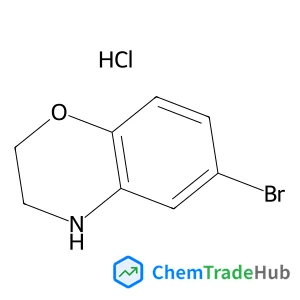
6-Bromo-3,4-dihydro-2H-1,4-benzoxazine hydrochloride (1:1)
CAS Number:
1260803-10-8
Molecular Formula:
C8H9BrClNO
Recommended Suppliers




Disclaimer
This page provides academic journal information for reference and research purposes only. We are not affiliated with any journal publishers and do not handle publication submissions. For publication-related inquiries, please contact the respective journal publishers directly.
If you notice any inaccuracies in the information displayed, please contact us at support@chemtradehub.com. We will promptly review and address your concerns.