












Correction: A rational computational study of surface defect-mediated stabilization of low-dimensional Pt nanostructures on TiN(100)
Literature Information
Publication Date
2015-05-08
DOI
10.1039/C5CP90064F
Impact Factor
3.676
Authors
Young Joo Tak, Woosun Jang, Norina A. Richter, Aloysius Soon
View Original
Abstract
Correction for ‘A rational computational study of surface defect-mediated stabilization of low-dimensional Pt nanostructures on TiN(100)’ by Young Joo Tak et al., Phys. Chem. Chem. Phys., 2015, 17, 9680–9686.
Related Literature
Resolution of mixed dyes by in situ near infrared (NIR) spectroelectrochemistry
David Ibáñez, Alejandro Pérez-Junquera, María Begoña González-García, David Hernández-Santos, Pablo Fanjul-Bolado
2019-03-04
Communication
DOI: 10.1039/C9CP00484J
The application of the surface energy based solubility parameter theory for the rational design of polymer-functionalized MWCNTs
Pablo Quijano Velasco, Kyriakos Porfyrakis
2019-02-14
Communication
DOI: 10.1039/C8CP07411A
Hydrogen adsorption on transition metal carbides: a DFT study
Fabrizio Silveri, Matthew G. Quesne, Alberto Roldan, Nora H. de Leeuw, C. Richard A. Catlow
2019-01-17
Paper
DOI: 10.1039/C8CP05975F
Manipulation of dipolar magnetism in low-dimensional iron oxide nanoparticle assemblies
Asma Qdemat, Oleg Petracic, Emmanuel Kentzinger, Ulrich Rücker, Fengshan Zheng, Peng-Han Lu, Xian-Kui Wei, Rafal E. Dunin-Borkowski, Thomas Brückel
2019-02-25
Paper
DOI: 10.1039/C9CP00302A
Monitoring solvent dynamics and ion associations in the formation of cubic octamer polyanion in tetramethylammonium silicate solutions
Ying Chen, Nancy M. Washton, Robert P. Young, Abhijeet J. Karkamkar, James J. De Yoreo, Karl T. Mueller
2019-02-12
Communication
DOI: 10.1039/C8CP07521B
Theoretical predication of the high hydrogen evolution catalytic activity for the cubic and tetragonal SnP systems
Jingwei Liu, Guangtao Yu, Ran Zhang, Xuri Huang, Wei Chen
2019-02-08
Paper
DOI: 10.1039/C9CP00618D
A comparison between hydrogen and halogen bonding: the hypohalous acid–water dimers, HOX⋯H2O (X = F, Cl, Br)
Mark E. Wolf, Boyi Zhang, Justin M. Turney, Henry F. Schaefer, III
2019-02-20
Paper
DOI: 10.1039/C9CP00422J
Far-IR and UV spectral signatures of controlled complexation and microhydration of the polycyclic aromatic hydrocarbon acenaphthene
Jens Antony, Stefan Grimme, Anouk M. Rijs
2018-10-11
Paper
DOI: 10.1039/C8CP04480E
Origin band of the first photoionizing transition of hydrogen isocyanide
Bérenger Gans, Gustavo A. Garcia, Séverine Boyé-Péronne, Stephen T. Pratt, Jean-Claude Guillemin, Alfredo Aguado, Octavio Roncero, Jean-Christophe Loison
2019-01-10
Paper
DOI: 10.1039/C8CP07737A
Production of HO2 and OH radicals from near-UV irradiated airborne TiO2 nanoparticles
D. R. Moon, M. T. Baeza-Romero
2019-01-02
Paper
DOI: 10.1039/C8CP06889E
You might also like
Compound Q&A
What are the main uses of 4-Nitrophenyl phosphate disodium salt hexahydrate (CAS: 333338-18-4)?
4-Nitrophenyl phosphate disodium salt hexahydrate is primarily used as a substra...
333338-18-44-Nitrophenyl phosph...
Compound Q&A
What are the main uses of 2-(Trifluoromethyl)-1,3-oxazole-4-carboxylic Acid (CAS: 1060816-01-4)?
2-(Trifluoromethyl)-1,3-oxazole-4-carboxylic Acid (CAS: 1060816-01-4) is widely ...
1060816-01-42-(Trifluoromethyl)-...
Compound Q&A
How should 2-Fluoro-4-biphenylcarboxylic acid (CAS: 137045-30-8) be stored?
2-Fluoro-4-biphenylcarboxylic acid should be stored in a cool, dry place at room...
137045-30-82-Fluoro-4-biphenylc...
Compound Q&A
What industries use Prednisolone-21-Carboxylic Acid (CAS: 61549-70-0)?
Prednisolone-21-Carboxylic Acid is primarily used in the pharmaceutical industry...
61549-70-0Prednisolone-21-Carb...
Compound Q&A
How should 4-(Hydrazinomethyl)-1,2,3-benzenetriol (CAS: 3614-72-0) be stored?
4-(Hydrazinomethyl)-1,2,3-benzenetriol (CAS: 3614-72-0) should be stored in a co...
3614-72-04-(Hydrazinomethyl)-...
Compound Q&A
What industries use 4-Amino-1-methyl-1H-pyrazole-5-carboxylic acid hydrochloride (CAS: 92534-70-8)?
4-Amino-1-methyl-1H-pyrazole-5-carboxylic acid hydrochloride (CAS: 92534-70-8) i...
92534-70-84-Amino-1-methyl-1H-...
Compound Q&A
What regulatory guidelines apply to dehydropachymic acid (CAS: 77012-31-8)?
Dehydropachymic acid (CAS: 77012-31-8) is regulated by various agencies. It fall...
77012-31-8Dehydropachymic acid
Compound Q&A
What is the market or research trend for 6-[(2,2-Dimethylpropanoyl)amino]nicotinic acid (CAS: 898561-66-5)?
The market and research trends for 6-[(2,2-Dimethylpropanoyl)amino]nicotinic aci...
898561-66-56-[(2,2-Dimethylprop...
Compound Q&A
How should 1,10-Phenanthroline-2,9-dicarbaldehyde (CAS: 57709-62-3) be stored?
1,10-Phenanthroline-2,9-dicarbaldehyde should be stored in a cool, dry place awa...
57709-62-31,10-Phenanthroline-...
Compound Q&A
How is 5-Carbamoyl-11-oxo-10,11-dihydro-5H-dibenzo[b,f]azepin-10-yl acetate (CAS: 113952-21-9) typically synthesized?
5-Carbamoyl-11-oxo-10,11-dihydro-5H-dibenzo[b,f]azepin-10-yl acetate can be synt...
113952-21-95-Carbamoyl-11-oxo-1...
Source Journal
Physical Chemistry Chemical Physics

CiteScore:
5.5
Self-citation Rate:
10.3%
Articles per Year:
3036
Physical Chemistry Chemical Physics (PCCP) is an international journal co-owned by 19 physical chemistry and physics societies from around the world. This journal publishes original, cutting-edge research in physical chemistry, chemical physics and biophysical chemistry. To be suitable for publication in PCCP, articles must include significant innovation and/or insight into physical chemistry; this is the most important criterion that reviewers and Editors will judge against when evaluating submissions. The journal has a broad scope and welcomes contributions spanning experiment, theory, computation and data science. Topical coverage includes spectroscopy, dynamics, kinetics, statistical mechanics, thermodynamics, electrochemistry, catalysis, surface science, quantum mechanics, quantum computing and machine learning. Interdisciplinary research areas such as polymers and soft matter, materials, nanoscience, energy, surfaces/interfaces, and biophysical chemistry are welcomed if they demonstrate significant innovation and/or insight into physical chemistry. Joined experimental/theoretical studies are particularly appreciated when complementary and based on up-to-date approaches.
Recommended Compounds
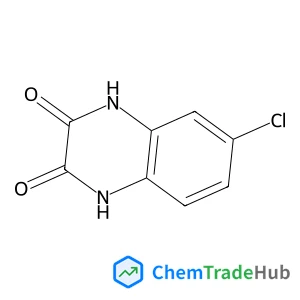
6-CHLORO-2,3-DIOXO-1,2,3,4-TETRAHYDROQUINOXALINE, 97
CAS Number:
169-14-2
Molecular Formula:
C8H5ClN2O2
![[(1S,2S,3R,4S,7R,9S,10S,12R,15S)-4,12-Diacetyloxy-15-[(2R,3S)-3-benzamido-3-phenyl-2-(2,2,2-trichloroethoxycarbonyloxy)propanoyl]oxy-1,9-dihydroxy-10,14,17,17-tetramethyl-11-oxo-6-oxatetracyclo[11.3.1.03,10.04,7]heptadec-13-en-2-yl] benzoate structure](https://static.chemtradehub.com/structs/100/100431-55-8-7104.webp "[(1S,2S,3R,4S,7R,9S,10S,12R,15S)-4,12-Diacetyloxy-15-[(2R,3S)-3-benzamido-3-phenyl-2-(2,2,2-trichloroethoxycarbonyloxy)propanoyl]oxy-1,9-dihydroxy-10,14,17,17-tetramethyl-11-oxo-6-oxatetracyclo[11.3.1.03,10.04,7]heptadec-13-en-2-yl] benzoate structure")
Recommended Suppliers



Disclaimer
This page provides academic journal information for reference and research purposes only. We are not affiliated with any journal publishers and do not handle publication submissions. For publication-related inquiries, please contact the respective journal publishers directly.
If you notice any inaccuracies in the information displayed, please contact us at support@chemtradehub.com. We will promptly review and address your concerns.