












Theoretical insights into how the first C–C bond forms in the methanol-to-olefin process catalysed by HSAPO-34
Literature Information
Publication Date
2016-04-29
DOI
10.1039/C5CP08029K
Impact Factor
3.676
Authors
Chao Peng, Haifeng Wang
View Original
Abstract
We report here a comprehensive understanding of the first C–C coupling during the induction period of the methanol-to-olefin process using density functional theory with the HSE06 hybrid functional. We illustrate the possible routes of formation for the active carbenium ion (CH3OCH2+), which has been identified to play an important part in triggering the formation of the first C–C bond and the hydrocarbon pool species. CH3OCH2+ can be generated not only from dimethyl ether and Z(O)–CH3, but also from the reaction of HCHO and Z(O)–CH3, which has a lower effective barrier. An understanding of the dominance of CH3OCH2+ over other carbocations and direct C–C coupling pathways is presented and quantitatively analysed. The charge distribution in the formation of CH3OCH2+ is revealed and it is confirmed that the carbenium ion is thermodynamically more favoured than the radical. The subsequent reaction after the first C–C coupling was investigated, which uncovered some important active C2 species that possibly led to the formation of the active hydrocarbon pool intermediates and may finally realize the catalytic cycle.
Recommended Journals
Related Literature
Radicals formed by electron transfer from cytosine and 1-methylcytosine to the triplet state of anthraquinone-2,6-disulfonic acid. A Fourier-transform EPR study
K. Hildenbrand, S. Naumov
2000-08-17
Paper
DOI: 10.1039/B004617P
Adsorption of CO2 on FSM-type mesoporous silicas
Masahiro Katoh, Keiichi Sakamoto, Mituo Kamiyamane, Tahei Tomida
2000-09-05
Paper
DOI: 10.1039/B004505P
Analysis of gas dissociation rate into liquid phase under magnetic field gradient
Akifumi Yamada
2000-08-31
Paper
DOI: 10.1039/B003472J
Excited state proton and electron transfer reactions of acridinedione dyes with amines
Paper
DOI: 10.1039/A809070J
Chirality and intermolecular forces: studies using R2PI experiments in supersonic beams
S. Piccirillo, T. M. Di Palma, M. Speranza
2000-08-01
Paper
DOI: 10.1039/B004138F
Production, characterization and scattering of a sulfur atom beam: Interatomic potentials for the rare-gas sulfides, RS (R=Ne, Ar, Kr, Xe)
Vincenzo Aquilanti, Daniela Ascenzi, Elisabetta Braca
2000-05-17
Paper
DOI: 10.1039/B001696I
Tailoring the optical properties of metal-oxide electrochromic mixtures
Paul M. S. Monk, Steven Bleazard, Safina P. Akhtar, Julie Boutevin
2000-09-05
Paper
DOI: 10.1039/B005430P
Titration microcalorimetry of micelle formation in aqueous solutions containing alkylpolyoxyethylene glycol ethers, C12H25(OCH2CH2)mOH where m=3, 4 and 5, and octadecyltrimethylammonium bromide
Jan B. F. N. Engberts, Jan Kevelam
2000-09-06
Paper
DOI: 10.1039/B004501M
Photophysics and photochemistry of 2,6-distyrylpyridine and some heteroanalogues
L. Giglio, U. Mazzucato, G. Musumarra, A. Spalletti
2000-09-01
Paper
DOI: 10.1039/B004141F
You might also like
Compound Q&A
What are the main uses of 4-Nitrophenyl phosphate disodium salt hexahydrate (CAS: 333338-18-4)?
4-Nitrophenyl phosphate disodium salt hexahydrate is primarily used as a substra...
333338-18-44-Nitrophenyl phosph...
Compound Q&A
What are the main uses of 2-(Trifluoromethyl)-1,3-oxazole-4-carboxylic Acid (CAS: 1060816-01-4)?
2-(Trifluoromethyl)-1,3-oxazole-4-carboxylic Acid (CAS: 1060816-01-4) is widely ...
1060816-01-42-(Trifluoromethyl)-...
Compound Q&A
How should 2-Fluoro-4-biphenylcarboxylic acid (CAS: 137045-30-8) be stored?
2-Fluoro-4-biphenylcarboxylic acid should be stored in a cool, dry place at room...
137045-30-82-Fluoro-4-biphenylc...
Compound Q&A
What industries use Prednisolone-21-Carboxylic Acid (CAS: 61549-70-0)?
Prednisolone-21-Carboxylic Acid is primarily used in the pharmaceutical industry...
61549-70-0Prednisolone-21-Carb...
Compound Q&A
How should 4-(Hydrazinomethyl)-1,2,3-benzenetriol (CAS: 3614-72-0) be stored?
4-(Hydrazinomethyl)-1,2,3-benzenetriol (CAS: 3614-72-0) should be stored in a co...
3614-72-04-(Hydrazinomethyl)-...
Compound Q&A
What industries use 4-Amino-1-methyl-1H-pyrazole-5-carboxylic acid hydrochloride (CAS: 92534-70-8)?
4-Amino-1-methyl-1H-pyrazole-5-carboxylic acid hydrochloride (CAS: 92534-70-8) i...
92534-70-84-Amino-1-methyl-1H-...
Compound Q&A
What regulatory guidelines apply to dehydropachymic acid (CAS: 77012-31-8)?
Dehydropachymic acid (CAS: 77012-31-8) is regulated by various agencies. It fall...
77012-31-8Dehydropachymic acid
Compound Q&A
What is the market or research trend for 6-[(2,2-Dimethylpropanoyl)amino]nicotinic acid (CAS: 898561-66-5)?
The market and research trends for 6-[(2,2-Dimethylpropanoyl)amino]nicotinic aci...
898561-66-56-[(2,2-Dimethylprop...
Compound Q&A
How should 1,10-Phenanthroline-2,9-dicarbaldehyde (CAS: 57709-62-3) be stored?
1,10-Phenanthroline-2,9-dicarbaldehyde should be stored in a cool, dry place awa...
57709-62-31,10-Phenanthroline-...
Compound Q&A
How is 5-Carbamoyl-11-oxo-10,11-dihydro-5H-dibenzo[b,f]azepin-10-yl acetate (CAS: 113952-21-9) typically synthesized?
5-Carbamoyl-11-oxo-10,11-dihydro-5H-dibenzo[b,f]azepin-10-yl acetate can be synt...
113952-21-95-Carbamoyl-11-oxo-1...
Source Journal
Physical Chemistry Chemical Physics

CiteScore:
5.5
Self-citation Rate:
10.3%
Articles per Year:
3036
Physical Chemistry Chemical Physics (PCCP) is an international journal co-owned by 19 physical chemistry and physics societies from around the world. This journal publishes original, cutting-edge research in physical chemistry, chemical physics and biophysical chemistry. To be suitable for publication in PCCP, articles must include significant innovation and/or insight into physical chemistry; this is the most important criterion that reviewers and Editors will judge against when evaluating submissions. The journal has a broad scope and welcomes contributions spanning experiment, theory, computation and data science. Topical coverage includes spectroscopy, dynamics, kinetics, statistical mechanics, thermodynamics, electrochemistry, catalysis, surface science, quantum mechanics, quantum computing and machine learning. Interdisciplinary research areas such as polymers and soft matter, materials, nanoscience, energy, surfaces/interfaces, and biophysical chemistry are welcomed if they demonstrate significant innovation and/or insight into physical chemistry. Joined experimental/theoretical studies are particularly appreciated when complementary and based on up-to-date approaches.
Recommended Compounds
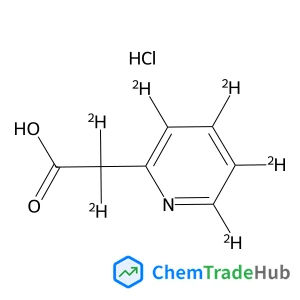
2,2-dideuterio-2-(3,4,5,6-tetradeuterio-2-pyridyl)acetic acid;hydrochloride
CAS Number:
1329799-67-8
Molecular Formula:
C7H2ClD6NO2
![[(1S,2S,3R,4S,7R,9S,10S,12R,15S)-4,12-Diacetyloxy-15-[(2R,3S)-3-benzamido-3-phenyl-2-(2,2,2-trichloroethoxycarbonyloxy)propanoyl]oxy-1,9-dihydroxy-10,14,17,17-tetramethyl-11-oxo-6-oxatetracyclo[11.3.1.03,10.04,7]heptadec-13-en-2-yl] benzoate structure](https://static.chemtradehub.com/structs/100/100431-55-8-7104.webp "[(1S,2S,3R,4S,7R,9S,10S,12R,15S)-4,12-Diacetyloxy-15-[(2R,3S)-3-benzamido-3-phenyl-2-(2,2,2-trichloroethoxycarbonyloxy)propanoyl]oxy-1,9-dihydroxy-10,14,17,17-tetramethyl-11-oxo-6-oxatetracyclo[11.3.1.03,10.04,7]heptadec-13-en-2-yl] benzoate structure")
Recommended Suppliers





Disclaimer
This page provides academic journal information for reference and research purposes only. We are not affiliated with any journal publishers and do not handle publication submissions. For publication-related inquiries, please contact the respective journal publishers directly.
If you notice any inaccuracies in the information displayed, please contact us at support@chemtradehub.com. We will promptly review and address your concerns.