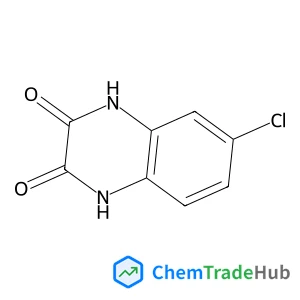
6-CHLORO-2,3-DIOXO-1,2,3,4-TETRAHYDROQUINOXALINE, 97
CAS Number:
169-14-2
Molecular Formula:
C8H5ClN2O2
Francesca Peccati, Marta Wiśniewska, Xavier Solans-Monfort, Mariona Sodupe
According to the amyloid cascade hypothesis, amyloid-β (Aβ) deposition is a central event in the Alzheimer's disease and thus, detection of Aβ deposits is crucial to monitor the progression of the pathology. Despite its low tissue penetration, fluorescence imaging may become an alternative technique for identifying these deposits because it is less toxic and less costly than positron emission tomography. Suitable dyes, however, should emit in the near infrared (NIR) region, cross the blood–brain barrier and target Aβ aggregates. In this work, we use TD-DFT, AIMD simulations and protein energy landscape exploration (PELE) to analyze the photophysical properties of a family of donor–acceptor markers and their binding to amyloid fibrils. These markers are formed by N,N-dimethylaniline donor and propanedinitrile acceptor groups separated by a spacer consisting of one, two or three conjugated double bonds. The smallest compound has a low emission wavelength, can deactivate through a non-radiative process involving a conical intersection and binds weakly to Aβ fibrils. In contrast, the largest dye is a suitable compound as it shows an emission wavelength in the NIR region, does not seem to relax through conical intersection processes and binds to Aβ fibrils strongly entering hydrophobic voids. Analysis of electronic excitations shows that the transition has an important charge transfer character that increases with the length of the spacer, the π bridge being an active participant in the transition. Therefore, adding double bonds to the dye skeleton has two beneficial effects: (i) it increases the emission wavelength as it enlarges the π system and (ii) it increases the charge transfer character of the transition, which increases the red-shifting of the emission wavelength in polar solvents.

Crystallography Reports

Chemical Communications

Russian Journal of Bioorganic Chemistry

Current Opinion in Colloid & Interface Science

Russian Journal of General Chemistry

Journal of Saudi Chemical Society

Saudi Pharmaceutical Journal

Russian Journal of Applied Chemistry

Russian Journal of Organic Chemistry

Drug Discovery Today
Heinz-Jürgen Benkelberg, Olaf Böge, Ralph Seuwen, Peter Warneck
DOI: 10.1039/B002053M
T. J. Schmidt, B. N. Grgur, R. J. Behm, N. M. Markovic, P. N. Ross, Jr.
DOI: 10.1039/B003767M
Christopher Breen, Jeffrey Forsyth, Jack Yarwood, Trevor Hughes
DOI: 10.1039/B003587O
Masahiro Katoh, Keiichi Sakamoto, Mituo Kamiyamane, Tahei Tomida
DOI: 10.1039/B004505P
DOI: 10.1039/A900119K
DOI: 10.1039/A809431D
Kate J. Beverley, John H. Clint, Paul D. I. Fletcher
DOI: 10.1039/B005628F
4-Nitrophenyl phosphate disodium salt hexahydrate is primarily used as a substra...
2-(Trifluoromethyl)-1,3-oxazole-4-carboxylic Acid (CAS: 1060816-01-4) is widely ...
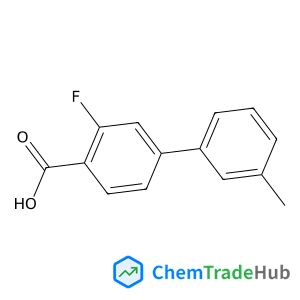
2-Fluoro-4-biphenylcarboxylic acid should be stored in a cool, dry place at room...
Prednisolone-21-Carboxylic Acid is primarily used in the pharmaceutical industry...
4-(Hydrazinomethyl)-1,2,3-benzenetriol (CAS: 3614-72-0) should be stored in a co...
4-Amino-1-methyl-1H-pyrazole-5-carboxylic acid hydrochloride (CAS: 92534-70-8) i...
Dehydropachymic acid (CAS: 77012-31-8) is regulated by various agencies. It fall...
The market and research trends for 6-[(2,2-Dimethylpropanoyl)amino]nicotinic aci...
1,10-Phenanthroline-2,9-dicarbaldehyde should be stored in a cool, dry place awa...
5-Carbamoyl-11-oxo-10,11-dihydro-5H-dibenzo[b,f]azepin-10-yl acetate can be synt...

Physical Chemistry Chemical Physics (PCCP) is an international journal co-owned by 19 physical chemistry and physics societies from around the world. This journal publishes original, cutting-edge research in physical chemistry, chemical physics and biophysical chemistry. To be suitable for publication in PCCP, articles must include significant innovation and/or insight into physical chemistry; this is the most important criterion that reviewers and Editors will judge against when evaluating submissions. The journal has a broad scope and welcomes contributions spanning experiment, theory, computation and data science. Topical coverage includes spectroscopy, dynamics, kinetics, statistical mechanics, thermodynamics, electrochemistry, catalysis, surface science, quantum mechanics, quantum computing and machine learning. Interdisciplinary research areas such as polymers and soft matter, materials, nanoscience, energy, surfaces/interfaces, and biophysical chemistry are welcomed if they demonstrate significant innovation and/or insight into physical chemistry. Joined experimental/theoretical studies are particularly appreciated when complementary and based on up-to-date approaches.

![[(1S,2S,3R,4S,7R,9S,10S,12R,15S)-4,12-Diacetyloxy-15-[(2R,3S)-3-benzamido-3-phenyl-2-(2,2,2-trichloroethoxycarbonyloxy)propanoyl]oxy-1,9-dihydroxy-10,14,17,17-tetramethyl-11-oxo-6-oxatetracyclo[11.3.1.03,10.04,7]heptadec-13-en-2-yl] benzoate structure](https://static.chemtradehub.com/structs/100/100431-55-8-7104.webp "[(1S,2S,3R,4S,7R,9S,10S,12R,15S)-4,12-Diacetyloxy-15-[(2R,3S)-3-benzamido-3-phenyl-2-(2,2,2-trichloroethoxycarbonyloxy)propanoyl]oxy-1,9-dihydroxy-10,14,17,17-tetramethyl-11-oxo-6-oxatetracyclo[11.3.1.03,10.04,7]heptadec-13-en-2-yl] benzoate structure")