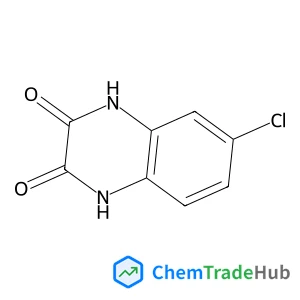
6-CHLORO-2,3-DIOXO-1,2,3,4-TETRAHYDROQUINOXALINE, 97
CAS Number:
169-14-2
Molecular Formula:
C8H5ClN2O2
C. López-Martínez, P. Flores-Morales, M. Cruz, T. González, M. Feliz, A. Diez, Josep M. Campanera
Cis and trans proline conformers are often associated with dramatic changes in the biological function of peptides. A slow equilibrium between cis and trans Ile–Pro amide bond conformers occurs in constrained derivatives of the native marine cyclic heptapeptide stylostatin 1 (cyclo-(NSLAIPF)), a potential anticancer agent. In this work, four cyclopeptides, cyclo-(NSTAIPF), cyclo-(KSTAIPF), cyclo-(RSTAIPF) and cyclo-(DSTAIPF), which are structurally related to stylostatin 1, are experimentally and computationally examined in order to assess the effect of residue mutations on the cis–trans conformational ratio and the apparent capacity to form dimeric aggregates. Primarily, cyclo-(KSTAIPF) and cyclo-(RSTAIPF) showed specific trends in circular dichroism, MALDI-TOF and HPLC purification experiments, which suggests the occurrence of peptide dimerization. Meanwhile, the NMR spectrum of cyclo-(KSTAIPF) indicates that this cyclopeptide exists in the two slow-exchange families of conformations mentioned above. Molecular dynamics simulations combined with quantum mechanical calculations have shed light on the factors governing the cis/trans conformational ratio. In particular, we have found that residue mutations affect the internal hydrogen bond pattern which ultimately tunes the cis/trans conformational ratio and that only trans conformers are capable of aggregating due to the shape complementarity of the two subunits.
Vytautas Grivickas, Patrik Ščajev, Vitalijus Bikbajevas, Olga V. Korolik, Alexander V. Mazanik
DOI: 10.1039/C8CP06209A
DOI: 10.1039/C8CP07275B
Nicolás Otero, Marcos Mandado
DOI: 10.1039/C8CP07362G
G. Opletal, B. Sun, T. C. Petersen, S. P. Russo, A. S. Barnard
DOI: 10.1039/C8CP06649C
Simon Mathieu, Georges Trinquier
DOI: 10.1039/C8CP07321J
Haina Wang, Ryan P. A. Bettens
DOI: 10.1039/C8CP07640E
Guangbao Wu, Jiyu Zhou, Rui Meng, Baoda Xue, Huiqiong Zhou, Zhiyong Tang, Yuan Zhang
DOI: 10.1039/C8CP07271J
DOI: 10.1039/C8CP07781A
DOI: 10.1039/C8CP07734G
4-Nitrophenyl phosphate disodium salt hexahydrate is primarily used as a substra...
2-(Trifluoromethyl)-1,3-oxazole-4-carboxylic Acid (CAS: 1060816-01-4) is widely ...
2-Fluoro-4-biphenylcarboxylic acid should be stored in a cool, dry place at room...
Prednisolone-21-Carboxylic Acid is primarily used in the pharmaceutical industry...
4-(Hydrazinomethyl)-1,2,3-benzenetriol (CAS: 3614-72-0) should be stored in a co...
4-Amino-1-methyl-1H-pyrazole-5-carboxylic acid hydrochloride (CAS: 92534-70-8) i...
Dehydropachymic acid (CAS: 77012-31-8) is regulated by various agencies. It fall...
The market and research trends for 6-[(2,2-Dimethylpropanoyl)amino]nicotinic aci...
1,10-Phenanthroline-2,9-dicarbaldehyde should be stored in a cool, dry place awa...
5-Carbamoyl-11-oxo-10,11-dihydro-5H-dibenzo[b,f]azepin-10-yl acetate can be synt...

Physical Chemistry Chemical Physics (PCCP) is an international journal co-owned by 19 physical chemistry and physics societies from around the world. This journal publishes original, cutting-edge research in physical chemistry, chemical physics and biophysical chemistry. To be suitable for publication in PCCP, articles must include significant innovation and/or insight into physical chemistry; this is the most important criterion that reviewers and Editors will judge against when evaluating submissions. The journal has a broad scope and welcomes contributions spanning experiment, theory, computation and data science. Topical coverage includes spectroscopy, dynamics, kinetics, statistical mechanics, thermodynamics, electrochemistry, catalysis, surface science, quantum mechanics, quantum computing and machine learning. Interdisciplinary research areas such as polymers and soft matter, materials, nanoscience, energy, surfaces/interfaces, and biophysical chemistry are welcomed if they demonstrate significant innovation and/or insight into physical chemistry. Joined experimental/theoretical studies are particularly appreciated when complementary and based on up-to-date approaches.
![(3R,5R)-1-[(Benzyloxy)carbonyl]-5-methyl-3-piperidinecarboxylic acid structure](https://static.chemtradehub.com/structs/126/1269757-29-0-c552.webp "(3R,5R)-1-[(Benzyloxy)carbonyl]-5-methyl-3-piperidinecarboxylic acid structure")