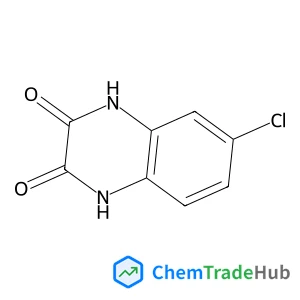
6-CHLORO-2,3-DIOXO-1,2,3,4-TETRAHYDROQUINOXALINE, 97
CAS Number:
169-14-2
Molecular Formula:
C8H5ClN2O2
Sharmila N. Shirodkar, Umesh V. Waghmare, Timothy S. Fisher, Ricardo Grau-Crespo
Modification of graphene to open a robust gap in its electronic spectrum is essential for its use in field effect transistors and photochemistry applications. Inspired by recent experimental success in the preparation of homogeneous alloys of graphene and boron nitride (BN), we consider here engineering the electronic structure and bandgap of C2xB1−xN1−x alloys via both compositional and configurational modification. We start from the BN end-member, which already has a large bandgap, and then show that (a) the bandgap can in principle be reduced to about 2 eV with moderate substitution of C (x < 0.25); and (b) the electronic structure of C2xB1−xN1−x can be further tuned not only with composition x, but also with the configuration adopted by C substituents in the BN matrix. Our analysis, based on accurate screened hybrid functional calculations, provides a clear understanding of the correlation found between the bandgap and the level of aggregation of C atoms: the bandgap decreases most when the C atoms are maximally isolated, and increases with aggregation of C atoms due to the formation of bonding and anti-bonding bands associated with hybridization of occupied and empty defect states. We determine the location of valence and conduction band edges relative to vacuum and discuss the implications on the potential use of 2D C2xB1−xN1−x alloys in photocatalytic applications. Finally, we assess the thermodynamic limitations on the formation of these alloys using a cluster expansion model derived from first-principles.

Journal of Chemical Sciences

Journal of the Indian Institute of Science

Main Group Chemistry

Acta Metallurgica Sinica-English Letters

Biocatalysis and Biotransformation

Atomization and Sprays

Heteroatom Chemistry

Chinese Journal of Chemistry

Herald of the Russian Academy of Sciences

Critical Reviews in Solid State and Materials Sciences
Grace Campagnola, Kanti Nepal, Olve B. Peersen
DOI: 10.1039/C6CP00937A
DOI: 10.1039/C5CP05663B
DOI: 10.1039/C6CP00309E
Laurent Nahon, Lipsa Nag, Gustavo A. Garcia, Uwe Meierhenrich, Samuel Beaulieu, Vincent Wanie, Valérie Blanchet, Romain Géneaux, Ivan Powis
DOI: 10.1039/C6CP01293K
Mohammad Abu Sayem Karal, Victor Levadnyy
DOI: 10.1039/C6CP01184E
Kai Li, Guangyou Xie, Ying Wang, Hao Tang, Zhijian Wu
DOI: 10.1039/C6CP01570K
Francesca Peccati, Marta Wiśniewska, Xavier Solans-Monfort, Mariona Sodupe
DOI: 10.1039/C5CP07274C
Riccardo Rurali, Xavier Cartoixà, Thuat T. Trinh, Dick Bedeaux, Signe Kjelstrup
DOI: 10.1039/C6CP01872F
4-Nitrophenyl phosphate disodium salt hexahydrate is primarily used as a substra...
2-(Trifluoromethyl)-1,3-oxazole-4-carboxylic Acid (CAS: 1060816-01-4) is widely ...
2-Fluoro-4-biphenylcarboxylic acid should be stored in a cool, dry place at room...
Prednisolone-21-Carboxylic Acid is primarily used in the pharmaceutical industry...
4-(Hydrazinomethyl)-1,2,3-benzenetriol (CAS: 3614-72-0) should be stored in a co...
4-Amino-1-methyl-1H-pyrazole-5-carboxylic acid hydrochloride (CAS: 92534-70-8) i...
Dehydropachymic acid (CAS: 77012-31-8) is regulated by various agencies. It fall...
The market and research trends for 6-[(2,2-Dimethylpropanoyl)amino]nicotinic aci...
1,10-Phenanthroline-2,9-dicarbaldehyde should be stored in a cool, dry place awa...
5-Carbamoyl-11-oxo-10,11-dihydro-5H-dibenzo[b,f]azepin-10-yl acetate can be synt...

Physical Chemistry Chemical Physics (PCCP) is an international journal co-owned by 19 physical chemistry and physics societies from around the world. This journal publishes original, cutting-edge research in physical chemistry, chemical physics and biophysical chemistry. To be suitable for publication in PCCP, articles must include significant innovation and/or insight into physical chemistry; this is the most important criterion that reviewers and Editors will judge against when evaluating submissions. The journal has a broad scope and welcomes contributions spanning experiment, theory, computation and data science. Topical coverage includes spectroscopy, dynamics, kinetics, statistical mechanics, thermodynamics, electrochemistry, catalysis, surface science, quantum mechanics, quantum computing and machine learning. Interdisciplinary research areas such as polymers and soft matter, materials, nanoscience, energy, surfaces/interfaces, and biophysical chemistry are welcomed if they demonstrate significant innovation and/or insight into physical chemistry. Joined experimental/theoretical studies are particularly appreciated when complementary and based on up-to-date approaches.
![(2E)-3-(3-Chlorophenyl)-N-{2-[4-(methylsulfonyl)-1-piperazinyl]-2-oxoethyl}acrylamide structure](https://static.chemtradehub.com/structs/250/2505001-54-5-c1e9.webp "(2E)-3-(3-Chlorophenyl)-N-{2-[4-(methylsulfonyl)-1-piperazinyl]-2-oxoethyl}acrylamide structure")