



One-pot synthesis and Nb4N5 surface modification of Nb4+ self-doped KNbO3 nanorods for enhanced visible-light-driven hydrogen production
Literature Information
Publication Date
2015-04-27
DOI
10.1039/C5CP01199J
Impact Factor
3.676
Authors
Xia Wang, Zhentao Cui, Bing Liu, Minhua Cao
View Original
Abstract
Herein, rhombohedral self-doped KNbO3 (S-KN) nanorods were fabricated via a one pot, solvothermal method without using any surfactant. The presence of Nb4+ in S-KN greatly narrows its band gap and thus extends its photoresponse from UV to the visible light region. Moreover, S-KN/Nb4N5 nanorod heterostructures were obtained by nitriding S-KN nanorods for different times, which exhibited significantly enhanced photocatalytic activity for hydrogen production under visible light irradiation. The junction formed between S-KN and Nb4N5 and the Nb4+ self-doping of KN are supposed to be responsible for the enhanced photocatalytic activity of S-KN/Nb4N5. This study also paves the way for the synthesis of other similar photocatalysts.
Recommended Journals

Colloid Journal

Herald of the Russian Academy of Sciences

Polycyclic Aromatic Compounds

Atomization and Sprays

Bioorganic & Medicinal Chemistry Letters

Critical Reviews in Solid State and Materials Sciences

Journal of the Indian Institute of Science

Cellulose

Medicinal Chemistry Research

Main Group Chemistry
Related Literature
Correction: Orbital entanglement and CASSCF analysis of the Ru–NO bond in a Ruthenium nitrosyl complex
Leon Freitag, Stefan Knecht, Sebastian F. Keller, Mickaël G. Delcey, Thomas Bondon Pedersen, Roland Lindh, Markus Reiher, Leticia Gonzalez
2015-05-01
Correction
DOI: 10.1039/C5CP90073E
Study of chemical reactivity in relation to experimental parameters of efficiency in coumarin derivatives for dye sensitized solar cells using DFT
Jesús Baldenebro-López, Daniel Glossman-Mitnik
2015-04-27
Paper
DOI: 10.1039/C5CP01387A
Theoretical study of exciton dissociation through hot states at donor–acceptor interface in organic photocell
2015-04-16
Paper
DOI: 10.1039/C5CP00740B
Viscosity minima in binary mixtures of ionic liquids + molecular solvents
M. Tariq, K. Shimizu, J. M. S. S. Esperança, L. P. N. Rebelo
2015-04-20
Paper
DOI: 10.1039/C5CP01563D
Correction: A rational computational study of surface defect-mediated stabilization of low-dimensional Pt nanostructures on TiN(100)
Young Joo Tak, Woosun Jang, Norina A. Richter, Aloysius Soon
2015-05-08
Correction
DOI: 10.1039/C5CP90064F
A model for predicting the thermal conductivity of SiO2–Ge nanoparticle composites
Vasyl Kuryliuk, Andriy Nadtochiy, Oleg Korotchenkov, Chin-Chi Wang
2015-04-21
Paper
DOI: 10.1039/C5CP00129C
Structure and energetics of the anisole–Arn (n = 1, 2, 3) complexes: high-resolution resonant two-photon and threshold ionization experiments, and quantum chemical calculations
Maurizio Becucci, Jan Řezáč, Dana Nachtigallová, François Michels, Klaus Müller-Dethlefs
2015-04-22
Paper
DOI: 10.1039/C5CP01166C
In situ unravelling structural modulation across the charge-density-wave transition in vanadium disulfide
Xu Sun, Tao Yao, Zhenpeng Hu, Yuqiao Guo, Qinghua Liu, Shiqiang Wei, Changzheng Wu
2015-04-09
Paper
DOI: 10.1039/C5CP01326G
Electronic structure and photoelectron spectra of Bn with n = 26–29: an overview of structural characteristics and growth mechanism of boron clusters
Truong Ba Tai, Minh Tho Nguyen
2015-04-22
Paper
DOI: 10.1039/C5CP01851J
Luminescence studies on SnO2 and SnO2:Eu nanocrystals grown by laser assisted flow deposition
N. F. Santos, J. Rodrigues, T. Holz, N. Ben Sedrine, A. Sena, A. J. Neves, F. M. Costa, T. Monteiro
2015-04-21
Paper
DOI: 10.1039/C4CP06114D
You might also like
Compound Q&A
What are the main uses of 4-Nitrophenyl phosphate disodium salt hexahydrate (CAS: 333338-18-4)?
4-Nitrophenyl phosphate disodium salt hexahydrate is primarily used as a substra...
333338-18-44-Nitrophenyl phosph...
Compound Q&A
What are the main uses of 2-(Trifluoromethyl)-1,3-oxazole-4-carboxylic Acid (CAS: 1060816-01-4)?
2-(Trifluoromethyl)-1,3-oxazole-4-carboxylic Acid (CAS: 1060816-01-4) is widely ...
1060816-01-42-(Trifluoromethyl)-...
Compound Q&A
How should 2-Fluoro-4-biphenylcarboxylic acid (CAS: 137045-30-8) be stored?
2-Fluoro-4-biphenylcarboxylic acid should be stored in a cool, dry place at room...
137045-30-82-Fluoro-4-biphenylc...
Compound Q&A
What industries use Prednisolone-21-Carboxylic Acid (CAS: 61549-70-0)?
Prednisolone-21-Carboxylic Acid is primarily used in the pharmaceutical industry...
61549-70-0Prednisolone-21-Carb...
Compound Q&A
How should 4-(Hydrazinomethyl)-1,2,3-benzenetriol (CAS: 3614-72-0) be stored?
4-(Hydrazinomethyl)-1,2,3-benzenetriol (CAS: 3614-72-0) should be stored in a co...
3614-72-04-(Hydrazinomethyl)-...
Compound Q&A
What industries use 4-Amino-1-methyl-1H-pyrazole-5-carboxylic acid hydrochloride (CAS: 92534-70-8)?
4-Amino-1-methyl-1H-pyrazole-5-carboxylic acid hydrochloride (CAS: 92534-70-8) i...
92534-70-84-Amino-1-methyl-1H-...
Compound Q&A
What regulatory guidelines apply to dehydropachymic acid (CAS: 77012-31-8)?
Dehydropachymic acid (CAS: 77012-31-8) is regulated by various agencies. It fall...
77012-31-8Dehydropachymic acid
Compound Q&A
What is the market or research trend for 6-[(2,2-Dimethylpropanoyl)amino]nicotinic acid (CAS: 898561-66-5)?
The market and research trends for 6-[(2,2-Dimethylpropanoyl)amino]nicotinic aci...
898561-66-56-[(2,2-Dimethylprop...
Compound Q&A
How should 1,10-Phenanthroline-2,9-dicarbaldehyde (CAS: 57709-62-3) be stored?
1,10-Phenanthroline-2,9-dicarbaldehyde should be stored in a cool, dry place awa...
57709-62-31,10-Phenanthroline-...
Compound Q&A
How is 5-Carbamoyl-11-oxo-10,11-dihydro-5H-dibenzo[b,f]azepin-10-yl acetate (CAS: 113952-21-9) typically synthesized?
5-Carbamoyl-11-oxo-10,11-dihydro-5H-dibenzo[b,f]azepin-10-yl acetate can be synt...
113952-21-95-Carbamoyl-11-oxo-1...
Source Journal
Physical Chemistry Chemical Physics

CiteScore:
5.5
Self-citation Rate:
10.3%
Articles per Year:
3036
Physical Chemistry Chemical Physics (PCCP) is an international journal co-owned by 19 physical chemistry and physics societies from around the world. This journal publishes original, cutting-edge research in physical chemistry, chemical physics and biophysical chemistry. To be suitable for publication in PCCP, articles must include significant innovation and/or insight into physical chemistry; this is the most important criterion that reviewers and Editors will judge against when evaluating submissions. The journal has a broad scope and welcomes contributions spanning experiment, theory, computation and data science. Topical coverage includes spectroscopy, dynamics, kinetics, statistical mechanics, thermodynamics, electrochemistry, catalysis, surface science, quantum mechanics, quantum computing and machine learning. Interdisciplinary research areas such as polymers and soft matter, materials, nanoscience, energy, surfaces/interfaces, and biophysical chemistry are welcomed if they demonstrate significant innovation and/or insight into physical chemistry. Joined experimental/theoretical studies are particularly appreciated when complementary and based on up-to-date approaches.
Recommended Compounds
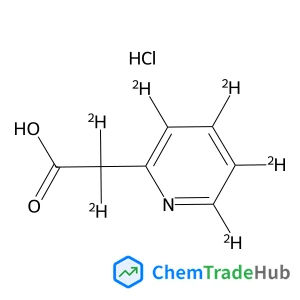
2,2-dideuterio-2-(3,4,5,6-tetradeuterio-2-pyridyl)acetic acid;hydrochloride
CAS Number:
1329799-67-8
Molecular Formula:
C7H2ClD6NO2
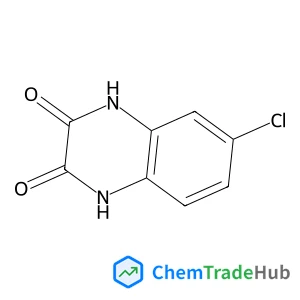
6-CHLORO-2,3-DIOXO-1,2,3,4-TETRAHYDROQUINOXALINE, 97
CAS Number:
169-14-2
Molecular Formula:
C8H5ClN2O2
Recommended Suppliers



Disclaimer
This page provides academic journal information for reference and research purposes only. We are not affiliated with any journal publishers and do not handle publication submissions. For publication-related inquiries, please contact the respective journal publishers directly.
If you notice any inaccuracies in the information displayed, please contact us at support@chemtradehub.com. We will promptly review and address your concerns.