



Structure and energetics of the anisole–Arn (n = 1, 2, 3) complexes: high-resolution resonant two-photon and threshold ionization experiments, and quantum chemical calculations
Literature Information
Publication Date
2015-04-22
DOI
10.1039/C5CP01166C
Impact Factor
3.676
Authors
Maurizio Becucci, Jan Řezáč, Dana Nachtigallová, François Michels, Klaus Müller-Dethlefs
View Original
Abstract
We present a concerted experimental and theoretical study of the anisole⋯Arn complexes with n = 1–3. Experimentally, anisole was seeded into a pulsed supersonic argon jet producing a molecular beam. Resonant two-photon, two-colour ionisation (R2PI) spectra of anisole⋯Arn complexes with n = 1–3 were obtained. Also, the photodissociation of the (1 : 1) cluster was probed synchronously by – Zero Electron Kinetic Energy Photoelectron Spectroscopy (ZEKE) – and – Mass Resolved Threshold Ionization (MATI) – measuring electrons and ions obtained from pulsed field ionization of high-n Rydberg states upon two-colour laser excitation. The experimental results are compared to quantum chemical calculations at the DFT-D3 (B-LYP/def2-QZVP level with Grimme's D3 dispersion correction) level. Structure and energetics due to microsolvation effects by the direct interaction of the argon atoms with the π-system were evaluated. The experimental binding energy of the 1 : 1 cluster is finally compared to computational results; in the S0 ground state the theoretical value based on the “gold standard” CCSD(T)/CBS calculations lies within the error bars of the observed value. In the excited state the agreement between theory and experiment is not so spectacular but relative values of observed dissociation energies (D0) in the ground and excited states and of calculated ones agree well.
Recommended Journals

NDT & E International

Bioorganic & Medicinal Chemistry

Chinese Journal of Chemistry

Critical Reviews in Solid State and Materials Sciences

Heteroatom Chemistry

Journal of Asian Natural Products Research

Topics in Catalysis

Polycyclic Aromatic Compounds

Herald of the Russian Academy of Sciences

Journal of Chemical Sciences
Related Literature
Pair-eigenstates and mutual alignment of coupled molecular rotors in a magnetic field
Ketan Sharma, Bretislav Friedrich
2016-04-22
Paper
DOI: 10.1039/C6CP00390G
Stokes and anti-Stokes luminescence in Tm3+/Yb3+-doped Lu3Ga5O12 nano-garnets: a study of multipolar interactions and energy transfer dynamics
Mamilla Rathaiah, Pamuluri Haritha, Antonio Diego Lozano-Gorrín, Palamandala Babu, Chalicheemalapalli Kulala Jayasankar, Ulises Ruyman Rodríguez-Mendoza, Victor Lavín, Vemula Venkatramu
2016-05-17
Paper
DOI: 10.1039/C6CP01639A
Photoluminescence properties of Yb2+ ions doped in the perovskites CsCaX3 and CsSrX3 (X = Cl, Br, and I) – a comparative study
Markus Suta, Werner Urland, Claude Daul, Claudia Wickleder
2016-02-03
Paper
DOI: 10.1039/C6CP00085A
Correction: Are stabilizing osmolytes preferentially excluded from the protein surface? FTIR and MD studies
P. Bruździak, B. Adamczak, E. Kaczkowska, J. Czub, J. Stangret
2016-05-03
Correction
DOI: 10.1039/C6CP90115H
A spin-Seebeck diode with a negative differential spin-Seebeck effect in a hydrogen-terminated zigzag silicene nanoribbon heterojunction
Lei Gu, Dan-Dan Wu
2016-04-07
Paper
DOI: 10.1039/C6CP00876C
A new strategy to prepare giant vesicles from surface active ionic liquids (SAILs): a study of protein dynamics in a crowded environment using a fluorescence correlation spectroscopic technique
Chiranjib Banerjee, Arpita Roy, Niloy Kundu, Debasis Banik, Nilmoni Sarkar
2016-04-12
Paper
DOI: 10.1039/C5CP07225E
Design of spin-forbidden transitions for polypyridyl metal complexes by time-dependent density functional theory including spin–orbit interaction
Shohei Kanno, Yutaka Imamura, Masahiko Hada
2016-04-28
Paper
DOI: 10.1039/C6CP01461E
Expanding the applicability of electrostatic potentials to the realm of transition states
Priya Bhasi, Zanele P. Nhlabatsi, Sanyasi Sitha
2016-04-11
Paper
DOI: 10.1039/C6CP01506A
Correction: On the stability of manganese tris(β-diketonate) complexes as redox mediators in DSSCs
Stefano Carli, Elisabetta Benazzi, Laura Casarin, Tatiana Bernardi, Valerio Bertolasi, Roberto Argazzi, Stefano Caramori, Carlo Alberto Bignozzi
2016-05-03
Correction
DOI: 10.1039/C6CP90114J
Proline cis–trans isomerization and its implications for the dimerization of analogues of cyclopeptide stylostatin 1: a combined computational and experimental study
C. López-Martínez, P. Flores-Morales, M. Cruz, T. González, M. Feliz, A. Diez, Josep M. Campanera
2016-03-31
Paper
DOI: 10.1039/C5CP05937B
You might also like
Compound Q&A
What are the main uses of 4-Nitrophenyl phosphate disodium salt hexahydrate (CAS: 333338-18-4)?
4-Nitrophenyl phosphate disodium salt hexahydrate is primarily used as a substra...
333338-18-44-Nitrophenyl phosph...
Compound Q&A
What are the main uses of 2-(Trifluoromethyl)-1,3-oxazole-4-carboxylic Acid (CAS: 1060816-01-4)?
2-(Trifluoromethyl)-1,3-oxazole-4-carboxylic Acid (CAS: 1060816-01-4) is widely ...
1060816-01-42-(Trifluoromethyl)-...
Compound Q&A
How should 2-Fluoro-4-biphenylcarboxylic acid (CAS: 137045-30-8) be stored?
2-Fluoro-4-biphenylcarboxylic acid should be stored in a cool, dry place at room...
137045-30-82-Fluoro-4-biphenylc...
Compound Q&A
What industries use Prednisolone-21-Carboxylic Acid (CAS: 61549-70-0)?
Prednisolone-21-Carboxylic Acid is primarily used in the pharmaceutical industry...
61549-70-0Prednisolone-21-Carb...
Compound Q&A
How should 4-(Hydrazinomethyl)-1,2,3-benzenetriol (CAS: 3614-72-0) be stored?
4-(Hydrazinomethyl)-1,2,3-benzenetriol (CAS: 3614-72-0) should be stored in a co...
3614-72-04-(Hydrazinomethyl)-...
Compound Q&A
What industries use 4-Amino-1-methyl-1H-pyrazole-5-carboxylic acid hydrochloride (CAS: 92534-70-8)?
4-Amino-1-methyl-1H-pyrazole-5-carboxylic acid hydrochloride (CAS: 92534-70-8) i...
92534-70-84-Amino-1-methyl-1H-...
Compound Q&A
What regulatory guidelines apply to dehydropachymic acid (CAS: 77012-31-8)?
Dehydropachymic acid (CAS: 77012-31-8) is regulated by various agencies. It fall...
77012-31-8Dehydropachymic acid
Compound Q&A
What is the market or research trend for 6-[(2,2-Dimethylpropanoyl)amino]nicotinic acid (CAS: 898561-66-5)?
The market and research trends for 6-[(2,2-Dimethylpropanoyl)amino]nicotinic aci...
898561-66-56-[(2,2-Dimethylprop...
Compound Q&A
How should 1,10-Phenanthroline-2,9-dicarbaldehyde (CAS: 57709-62-3) be stored?
1,10-Phenanthroline-2,9-dicarbaldehyde should be stored in a cool, dry place awa...
57709-62-31,10-Phenanthroline-...
Compound Q&A
How is 5-Carbamoyl-11-oxo-10,11-dihydro-5H-dibenzo[b,f]azepin-10-yl acetate (CAS: 113952-21-9) typically synthesized?
5-Carbamoyl-11-oxo-10,11-dihydro-5H-dibenzo[b,f]azepin-10-yl acetate can be synt...
113952-21-95-Carbamoyl-11-oxo-1...
Source Journal
Physical Chemistry Chemical Physics

CiteScore:
5.5
Self-citation Rate:
10.3%
Articles per Year:
3036
Physical Chemistry Chemical Physics (PCCP) is an international journal co-owned by 19 physical chemistry and physics societies from around the world. This journal publishes original, cutting-edge research in physical chemistry, chemical physics and biophysical chemistry. To be suitable for publication in PCCP, articles must include significant innovation and/or insight into physical chemistry; this is the most important criterion that reviewers and Editors will judge against when evaluating submissions. The journal has a broad scope and welcomes contributions spanning experiment, theory, computation and data science. Topical coverage includes spectroscopy, dynamics, kinetics, statistical mechanics, thermodynamics, electrochemistry, catalysis, surface science, quantum mechanics, quantum computing and machine learning. Interdisciplinary research areas such as polymers and soft matter, materials, nanoscience, energy, surfaces/interfaces, and biophysical chemistry are welcomed if they demonstrate significant innovation and/or insight into physical chemistry. Joined experimental/theoretical studies are particularly appreciated when complementary and based on up-to-date approaches.
Recommended Compounds
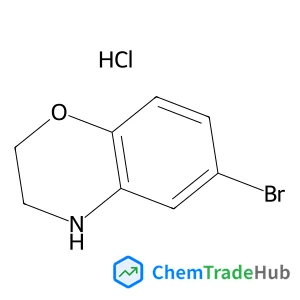
6-Bromo-3,4-dihydro-2H-1,4-benzoxazine hydrochloride (1:1)
CAS Number:
1260803-10-8
Molecular Formula:
C8H9BrClNO
![[(1S,2S,3R,4S,7R,9S,10S,12R,15S)-4,12-Diacetyloxy-15-[(2R,3S)-3-benzamido-3-phenyl-2-(2,2,2-trichloroethoxycarbonyloxy)propanoyl]oxy-1,9-dihydroxy-10,14,17,17-tetramethyl-11-oxo-6-oxatetracyclo[11.3.1.03,10.04,7]heptadec-13-en-2-yl] benzoate structure](https://static.chemtradehub.com/structs/100/100431-55-8-7104.webp "[(1S,2S,3R,4S,7R,9S,10S,12R,15S)-4,12-Diacetyloxy-15-[(2R,3S)-3-benzamido-3-phenyl-2-(2,2,2-trichloroethoxycarbonyloxy)propanoyl]oxy-1,9-dihydroxy-10,14,17,17-tetramethyl-11-oxo-6-oxatetracyclo[11.3.1.03,10.04,7]heptadec-13-en-2-yl] benzoate structure")

cis-3-Amino-1-(trifluoromethyl)cyclobutanol hydrochloride (1:1)
CAS Number:
1408075-16-0
Molecular Formula:
C5H9ClF3NO
Recommended Suppliers




Disclaimer
This page provides academic journal information for reference and research purposes only. We are not affiliated with any journal publishers and do not handle publication submissions. For publication-related inquiries, please contact the respective journal publishers directly.
If you notice any inaccuracies in the information displayed, please contact us at support@chemtradehub.com. We will promptly review and address your concerns.