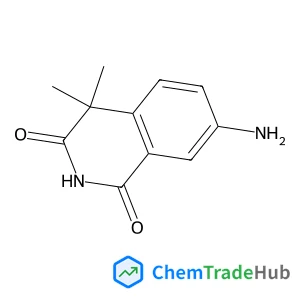
1,3(2H,4H)-Isoquinolinedione, 7-amino-4,4-dimethyl-
CAS Number:
14576-22-8
Molecular Formula:
C11H12N2O2
Niall J. English, Conor J. Waldron
In this review, the application of a wide variety of external electric fields in molecular simulation shall be discussed, including time-varying and electromagnetic, as well as the utility and potential impact and prospects for exploitation of such simulations for real-world and industrial end use. In particular, non-equilibrium molecular dynamics will be discussed, as well as challenges in addressing adequate thermostatting and scaling field amplitudes to more experimentally relevant levels. Attention shall be devoted to recent progress and advances in external fields in ab initio molecular simulation and dynamics, as well as elusive challenges thereof (and, to some extent, for molecular dynamics from empirical potentials), such as timescales required to observe low-frequency and intensity field effects. The challenge of deterministic molecular dynamics in external fields in sampling phase space shall be discussed, along with prospects for application of fields in enhanced-sampling simulations. Finally, the application of external electric fields to a wide variety of aqueous, nanoscale and biological systems will be discussed, often motivated by the possibility of exploitation in real-world applications, which serve to underpin our molecular-level understanding of field effects in terms of microscopic mechanisms, and possibly with a view to control thereof.
Ignacio R. Solá, Jesús González-Vázquez, Rebeca de Nalda, Luis Bañares
DOI: 10.1039/C5CP00627A
Mitra Ashouri, Ali Maghari, M. H. Karimi-Jafari
DOI: 10.1039/C5CP00693G
Caleb A. Class, Jorge Aguilera-Iparraguirre, William H. Green
DOI: 10.1039/C4CP05631K
Saran Long, Meng Zhou, Kun Tang, Xiao-Li Zeng, Yingli Niu, Qianjin Guo, Kai-Hong Zhao, Andong Xia
DOI: 10.1039/C5CP01687H
Paweł Kozyra, Witold Piskorz
DOI: 10.1039/C4CP05932H
Stefano Poggio, Brendan Wang, Ursula J. Gibson, Joseph J. BelBruno
DOI: 10.1039/C5CP00574D
Dariusz M. Niedzwiedzki, Laura Cranston
DOI: 10.1039/C5CP00836K
Zhonglong Zhao, Kuo Bao, Defang Duan, Fubo Tian, Yanping Huang, Hongyu Yu, Yunxian Liu, Bingbing Liu, Tian Cui
DOI: 10.1039/C5CP00147A
Gongbiao Xin, Huiping Yuan, Lijun Jiang, Shumao Wang, Xiaopeng Liu, Xingguo Li
DOI: 10.1039/C5CP01897H
4-Nitrophenyl phosphate disodium salt hexahydrate is primarily used as a substra...
2-(Trifluoromethyl)-1,3-oxazole-4-carboxylic Acid (CAS: 1060816-01-4) is widely ...
2-Fluoro-4-biphenylcarboxylic acid should be stored in a cool, dry place at room...
Prednisolone-21-Carboxylic Acid is primarily used in the pharmaceutical industry...
4-(Hydrazinomethyl)-1,2,3-benzenetriol (CAS: 3614-72-0) should be stored in a co...
4-Amino-1-methyl-1H-pyrazole-5-carboxylic acid hydrochloride (CAS: 92534-70-8) i...
Dehydropachymic acid (CAS: 77012-31-8) is regulated by various agencies. It fall...
The market and research trends for 6-[(2,2-Dimethylpropanoyl)amino]nicotinic aci...
1,10-Phenanthroline-2,9-dicarbaldehyde should be stored in a cool, dry place awa...
5-Carbamoyl-11-oxo-10,11-dihydro-5H-dibenzo[b,f]azepin-10-yl acetate can be synt...

Physical Chemistry Chemical Physics (PCCP) is an international journal co-owned by 19 physical chemistry and physics societies from around the world. This journal publishes original, cutting-edge research in physical chemistry, chemical physics and biophysical chemistry. To be suitable for publication in PCCP, articles must include significant innovation and/or insight into physical chemistry; this is the most important criterion that reviewers and Editors will judge against when evaluating submissions. The journal has a broad scope and welcomes contributions spanning experiment, theory, computation and data science. Topical coverage includes spectroscopy, dynamics, kinetics, statistical mechanics, thermodynamics, electrochemistry, catalysis, surface science, quantum mechanics, quantum computing and machine learning. Interdisciplinary research areas such as polymers and soft matter, materials, nanoscience, energy, surfaces/interfaces, and biophysical chemistry are welcomed if they demonstrate significant innovation and/or insight into physical chemistry. Joined experimental/theoretical studies are particularly appreciated when complementary and based on up-to-date approaches.
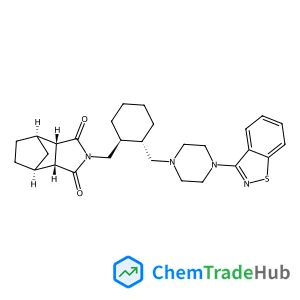
![S-[2,3-Bis(palmitoyloxy)propyl]-N-[(9H-fluoren-9-ylmethoxy)(hydroxy)methylene]cysteine structure](https://static.chemtradehub.com/structs/210/210532-98-2-f6a7.webp "S-[2,3-Bis(palmitoyloxy)propyl]-N-[(9H-fluoren-9-ylmethoxy)(hydroxy)methylene]cysteine structure")