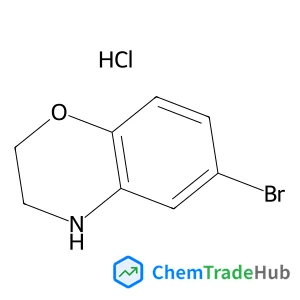
6-Bromo-3,4-dihydro-2H-1,4-benzoxazine hydrochloride (1:1)
CAS Number:
1260803-10-8
Molecular Formula:
C8H9BrClNO
Ignacio R. Solá, Jesús González-Vázquez, Rebeca de Nalda, Luis Bañares
Strong ultrashort laser pulses have opened new avenues for the manipulation of photochemical processes like photoisomerization or photodissociation. The presence of light intense enough to reshape the potential energy surfaces may steer the dynamics of both electrons and nuclei in new directions. A controlled laser pulse, precisely defined in terms of spectrum, time and intensity, is the essential tool in this type of approach to control chemical dynamics at a microscopic level. In this Perspective we examine the current strategies developed to achieve control of chemical processes with strong laser fields, as well as recent experimental advances that demonstrate that properties like the molecular absorption spectrum, the state lifetimes, the quantum yields and the velocity distributions in photodissociation processes can be controlled by the introduction of carefully designed strong laser fields.
Fangjia Fu, Kang Liao, Jing Ma, Zheng Cheng, Dong Zheng, Liuzhou Gao, Chungen Liu, Shuhua Li, Wei Li
DOI: 10.1039/C8CP06152A
Anagh Bhaumik, Jagdish Narayan
DOI: 10.1039/C8CP04592E
D. Mihrin, J. Andersen, P. W. Jakobsen, R. Wugt Larsen
DOI: 10.1039/C8CP05985C
Sean T. Holmes, Wei D. Wang, Guangjin Hou, Cecil Dybowski, Wei Wang
DOI: 10.1039/C8CP07673A
Haina Wang, Ryan P. A. Bettens
DOI: 10.1039/C8CP07640E
Fabrizio Silveri, Matthew G. Quesne, Alberto Roldan, Nora H. de Leeuw, C. Richard A. Catlow
DOI: 10.1039/C8CP05975F
Mark E. Wolf, Boyi Zhang, Justin M. Turney, Henry F. Schaefer, III
DOI: 10.1039/C9CP00422J
Matus E. Diveky, Sandra Roy, Johannes W. Cremer, Grégory David, Ruth Signorell
DOI: 10.1039/C8CP06980H
DOI: 10.1039/C8CP07781A
4-Nitrophenyl phosphate disodium salt hexahydrate is primarily used as a substra...
2-(Trifluoromethyl)-1,3-oxazole-4-carboxylic Acid (CAS: 1060816-01-4) is widely ...
2-Fluoro-4-biphenylcarboxylic acid should be stored in a cool, dry place at room...
Prednisolone-21-Carboxylic Acid is primarily used in the pharmaceutical industry...
4-(Hydrazinomethyl)-1,2,3-benzenetriol (CAS: 3614-72-0) should be stored in a co...
4-Amino-1-methyl-1H-pyrazole-5-carboxylic acid hydrochloride (CAS: 92534-70-8) i...
Dehydropachymic acid (CAS: 77012-31-8) is regulated by various agencies. It fall...
The market and research trends for 6-[(2,2-Dimethylpropanoyl)amino]nicotinic aci...
1,10-Phenanthroline-2,9-dicarbaldehyde should be stored in a cool, dry place awa...
5-Carbamoyl-11-oxo-10,11-dihydro-5H-dibenzo[b,f]azepin-10-yl acetate can be synt...

Physical Chemistry Chemical Physics (PCCP) is an international journal co-owned by 19 physical chemistry and physics societies from around the world. This journal publishes original, cutting-edge research in physical chemistry, chemical physics and biophysical chemistry. To be suitable for publication in PCCP, articles must include significant innovation and/or insight into physical chemistry; this is the most important criterion that reviewers and Editors will judge against when evaluating submissions. The journal has a broad scope and welcomes contributions spanning experiment, theory, computation and data science. Topical coverage includes spectroscopy, dynamics, kinetics, statistical mechanics, thermodynamics, electrochemistry, catalysis, surface science, quantum mechanics, quantum computing and machine learning. Interdisciplinary research areas such as polymers and soft matter, materials, nanoscience, energy, surfaces/interfaces, and biophysical chemistry are welcomed if they demonstrate significant innovation and/or insight into physical chemistry. Joined experimental/theoretical studies are particularly appreciated when complementary and based on up-to-date approaches.