












Properties of transition metal substituted zinc sulfide hexamers and dodecamers
Literature Information
Publication Date
2015-04-30
DOI
10.1039/C5CP00574D
Impact Factor
3.676
Authors
Stefano Poggio, Brendan Wang, Ursula J. Gibson, Joseph J. BelBruno
View Original
Abstract
Density functional theory was used to study the structural and electronic properties of endohedrally- and substitutionally-doped Zn6S6 and Zn12S12 clusters with first-row transition metal atoms. Generally, the lowest energy electronic state of the cluster is that with the maximum multiplicity (Ti and Cr are exceptions). Substitutionally-doped clusters have greater binding energies (per atom) for both cluster sizes, providing an indication that similar doping will be preferred in the bulk material as well. The results are relevant to thin films of doped ZnS in which cluster formation is likely.
Related Literature
Computational microscopy study of the granular structure and pH dependence of PEDOT:PSS
Mohsen Modarresi, Igor Zozoulenko
2019-03-04
Paper
DOI: 10.1039/C8CP07141A
Photophysical properties of structural isomers of homoleptic Ir-complexes derived from xylenyl-substituted N-heterocyclic carbene ligands
Bo-Sun Yun, Jin-Hyoung Kim, So-Yoen Kim, Ho-Jin Son, Sang Ook Kang
2019-03-06
Paper
DOI: 10.1039/C9CP00553F
Magnetic circular dichroism spectra of transition metal complexes calculated from restricted active space wavefunctions
Yonaton N. Heit, Dumitru-Claudiu Sergentu, Jochen Autschbach
2019-02-15
Paper
DOI: 10.1039/C8CP07849A
Singlet excitation in the intermediate magnetic equivalence regime and field-dependent study of singlet–triplet leakage
Boris Kharkov, Xueyou Duan, Emily S. Tovar, James W. Canary, Alexej Jerschow
2019-01-10
Paper
DOI: 10.1039/C8CP06883F
Strong influence of weak hydrogen bonding on actinide–phosphonate complexation: accurate predictions from DFT followed by experimental validation
Aditi Chandrasekar, Tapan K. Ghanty, C. V. S. Brahmmananda Rao, Mahesh Sundararajan, N. Sivaraman
2019-02-13
Paper
DOI: 10.1039/C9CP00479C
A stochastic model study on the self-assembly process of a Pd2L4 cage consisting of rigid ditopic ligands
Satoshi Takahashi, Yuya Sasaki, Shuichi Hiraoka
2018-11-28
Paper
DOI: 10.1039/C8CP06102E
Tuning oxygen electrocatalysis via strain on LaNiO3(001)‡
Simuck F. Yuk, Valentino R. Cooper
2018-10-15
Paper
DOI: 10.1039/C8CP02405G
Temperature dependence of the cooperative out-of-equilibrium elastic switching in a spin-crossover material
Roman Bertoni, Eric Collet, Hervé Cailleau, Marie-Laure Boillot, Antoine Tissot, Jérôme Laisney, Cristian Enachescu, Maciej Lorenc
2019-02-27
Paper
DOI: 10.1039/C8CP07074A
The influence of nanoparticles on the excitation energies of the photochromic dihydroazulene/vinylheptafulvene system
Andreas Erbs Hillers-Bendtsen, Mia Harring Hansen, Kurt V. Mikkelsen
2019-02-22
Paper
DOI: 10.1039/C8CP06539J
Vacancy induced formation of nanoporous silicon, carbon and silicon carbide
G. Opletal, B. Sun, T. C. Petersen, S. P. Russo, A. S. Barnard
2019-02-28
Paper
DOI: 10.1039/C8CP06649C
You might also like
Compound Q&A
What are the main uses of 4-Nitrophenyl phosphate disodium salt hexahydrate (CAS: 333338-18-4)?
4-Nitrophenyl phosphate disodium salt hexahydrate is primarily used as a substra...
333338-18-44-Nitrophenyl phosph...
Compound Q&A
What are the main uses of 2-(Trifluoromethyl)-1,3-oxazole-4-carboxylic Acid (CAS: 1060816-01-4)?
2-(Trifluoromethyl)-1,3-oxazole-4-carboxylic Acid (CAS: 1060816-01-4) is widely ...
1060816-01-42-(Trifluoromethyl)-...
Compound Q&A
How should 2-Fluoro-4-biphenylcarboxylic acid (CAS: 137045-30-8) be stored?
2-Fluoro-4-biphenylcarboxylic acid should be stored in a cool, dry place at room...
137045-30-82-Fluoro-4-biphenylc...
Compound Q&A
What industries use Prednisolone-21-Carboxylic Acid (CAS: 61549-70-0)?
Prednisolone-21-Carboxylic Acid is primarily used in the pharmaceutical industry...
61549-70-0Prednisolone-21-Carb...
Compound Q&A
How should 4-(Hydrazinomethyl)-1,2,3-benzenetriol (CAS: 3614-72-0) be stored?
4-(Hydrazinomethyl)-1,2,3-benzenetriol (CAS: 3614-72-0) should be stored in a co...
3614-72-04-(Hydrazinomethyl)-...
Compound Q&A
What industries use 4-Amino-1-methyl-1H-pyrazole-5-carboxylic acid hydrochloride (CAS: 92534-70-8)?
4-Amino-1-methyl-1H-pyrazole-5-carboxylic acid hydrochloride (CAS: 92534-70-8) i...
92534-70-84-Amino-1-methyl-1H-...
Compound Q&A
What regulatory guidelines apply to dehydropachymic acid (CAS: 77012-31-8)?
Dehydropachymic acid (CAS: 77012-31-8) is regulated by various agencies. It fall...
77012-31-8Dehydropachymic acid
Compound Q&A
What is the market or research trend for 6-[(2,2-Dimethylpropanoyl)amino]nicotinic acid (CAS: 898561-66-5)?
The market and research trends for 6-[(2,2-Dimethylpropanoyl)amino]nicotinic aci...
898561-66-56-[(2,2-Dimethylprop...
Compound Q&A
How should 1,10-Phenanthroline-2,9-dicarbaldehyde (CAS: 57709-62-3) be stored?
1,10-Phenanthroline-2,9-dicarbaldehyde should be stored in a cool, dry place awa...
57709-62-31,10-Phenanthroline-...
Compound Q&A
How is 5-Carbamoyl-11-oxo-10,11-dihydro-5H-dibenzo[b,f]azepin-10-yl acetate (CAS: 113952-21-9) typically synthesized?
5-Carbamoyl-11-oxo-10,11-dihydro-5H-dibenzo[b,f]azepin-10-yl acetate can be synt...
113952-21-95-Carbamoyl-11-oxo-1...
Source Journal
Physical Chemistry Chemical Physics

CiteScore:
5.5
Self-citation Rate:
10.3%
Articles per Year:
3036
Physical Chemistry Chemical Physics (PCCP) is an international journal co-owned by 19 physical chemistry and physics societies from around the world. This journal publishes original, cutting-edge research in physical chemistry, chemical physics and biophysical chemistry. To be suitable for publication in PCCP, articles must include significant innovation and/or insight into physical chemistry; this is the most important criterion that reviewers and Editors will judge against when evaluating submissions. The journal has a broad scope and welcomes contributions spanning experiment, theory, computation and data science. Topical coverage includes spectroscopy, dynamics, kinetics, statistical mechanics, thermodynamics, electrochemistry, catalysis, surface science, quantum mechanics, quantum computing and machine learning. Interdisciplinary research areas such as polymers and soft matter, materials, nanoscience, energy, surfaces/interfaces, and biophysical chemistry are welcomed if they demonstrate significant innovation and/or insight into physical chemistry. Joined experimental/theoretical studies are particularly appreciated when complementary and based on up-to-date approaches.
Recommended Compounds

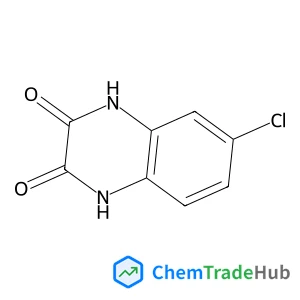
6-CHLORO-2,3-DIOXO-1,2,3,4-TETRAHYDROQUINOXALINE, 97
CAS Number:
169-14-2
Molecular Formula:
C8H5ClN2O2
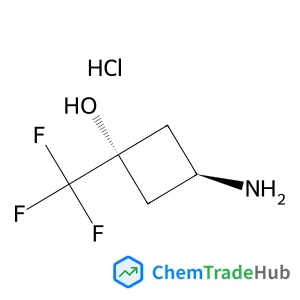
cis-3-Amino-1-(trifluoromethyl)cyclobutanol hydrochloride (1:1)
CAS Number:
1408075-16-0
Molecular Formula:
C5H9ClF3NO
Recommended Suppliers






Disclaimer
This page provides academic journal information for reference and research purposes only. We are not affiliated with any journal publishers and do not handle publication submissions. For publication-related inquiries, please contact the respective journal publishers directly.
If you notice any inaccuracies in the information displayed, please contact us at support@chemtradehub.com. We will promptly review and address your concerns.