












A study of the relationship between water and anions of the Hofmeister series using pressure perturbation calorimetry
Literature Information
Publication Date
2015-04-30
DOI
10.1039/C5CP00571J
Impact Factor
3.676
Authors
Jordan W. Bye, Robert J. Falconer
View Original
Abstract
Pressure perturbation calorimetry (PPC) was used to study the relationship between water and sodium salts with a range of different anions. At temperatures around 25 °C the heat on pressurisation (ΔQ) from 1 to 5 bar was negative for all solutions relative to pure water. The raw data showed that as the temperature rose, the gradient was positive relative to pure water and the transition temperature where ΔQ was zero was related to anion surface charge density and was more pronounced for the low-charge density anions. A three component model was developed comprising bulk water, the hydration layer and the solute to calculate the molar expansivity of the hydration layer around the ions in solution. The calculated molar expansivities of water in the hydration layer around the ions were consistently less than pure water. ΔQ at different disodium hydrogen phosphate concentrations showed that the change in molar enthalpy relative to pure water was not linear even as it approached infinite dilution suggesting that while hydration layers can be allocated to the water around ions this does not rule out interactions between water and ions extending beyond the immediate hydration layer.
Recommended Journals
Related Literature
Fluorinated graphene dielectric films obtained from functionalized graphene suspension: preparation and properties
N. A. Nebogatikova, V. Ya. Prinz, I. I. Kurkina, V. I. Vdovin, G. N. Aleksandrov, V. B. Timofeev, S. A. Smagulova, E. R. Zakirov, V. G. Kesler
2015-04-15
Paper
DOI: 10.1039/C4CP04646C
A kinetic and thermochemical database for organic sulfur and oxygen compounds
Caleb A. Class, Jorge Aguilera-Iparraguirre, William H. Green
2015-04-27
Paper
DOI: 10.1039/C4CP05631K
Electrochemical behavior of thin-film Sm-doped ceria: insights from the point-contact configuration
Tae-Sik Oh, Sossina M. Haile
2015-04-21
Paper
DOI: 10.1039/C4CP05990E
Stiffness and evolution of interfacial micropancakes revealed by AFM quantitative nanomechanical imaging
Xingfei Zhou, Xuehua Zhang
2015-04-27
Paper
DOI: 10.1039/C5CP01366F
First principles prediction of interfacial magnetoelectric coupling in tetragonal La2/3Sr1/3MnO3/BiFeO3 multiferroic superlattices
Nan Feng, Wenbo Mi, Xiaocha Wang
2015-04-24
Paper
DOI: 10.1039/C5CP01857A
Geometries, stabilities and fragmental channels of neutral and charged sulfur clusters: SnQ (n = 3–20, Q = 0, ±1)
Yuanyuan Jin, George Maroulis, Xiaoyu Kuang, Liping Ding, Cheng Lu, Jingjing Wang, Chuanzhao Zhang, Meng Ju
2015-04-23
Paper
DOI: 10.1039/C5CP00728C
Properties of transition metal substituted zinc sulfide hexamers and dodecamers
Stefano Poggio, Brendan Wang, Ursula J. Gibson, Joseph J. BelBruno
2015-04-30
Paper
DOI: 10.1039/C5CP00574D
Role of the reaction of stabilized Criegee intermediates with peroxy radicals in particle formation and growth in air
Yue Zhao, Lisa M. Wingen, Véronique Perraud, John Greaves, Barbara J. Finlayson-Pitts
2015-04-16
Paper
DOI: 10.1039/C5CP01171J
The biocompatibility and anti-biofouling properties of magnetic core–multishell Fe@C NWs–AAO nanocomposites
Eva Pellicer, Muhammad A. Zeeshan, Roman Grisch, Famin Qiu, Jordi Sort, Mahmut S. Sakar, Bradley J. Nelson, Salvador Pané
2015-04-22
Paper
DOI: 10.1039/C5CP01019E
You might also like
Compound Q&A
What are the main uses of 4-Nitrophenyl phosphate disodium salt hexahydrate (CAS: 333338-18-4)?
4-Nitrophenyl phosphate disodium salt hexahydrate is primarily used as a substra...
333338-18-44-Nitrophenyl phosph...
Compound Q&A
What are the main uses of 2-(Trifluoromethyl)-1,3-oxazole-4-carboxylic Acid (CAS: 1060816-01-4)?
2-(Trifluoromethyl)-1,3-oxazole-4-carboxylic Acid (CAS: 1060816-01-4) is widely ...
1060816-01-42-(Trifluoromethyl)-...
Compound Q&A
How should 2-Fluoro-4-biphenylcarboxylic acid (CAS: 137045-30-8) be stored?
2-Fluoro-4-biphenylcarboxylic acid should be stored in a cool, dry place at room...
137045-30-82-Fluoro-4-biphenylc...
Compound Q&A
What industries use Prednisolone-21-Carboxylic Acid (CAS: 61549-70-0)?
Prednisolone-21-Carboxylic Acid is primarily used in the pharmaceutical industry...
61549-70-0Prednisolone-21-Carb...
Compound Q&A
How should 4-(Hydrazinomethyl)-1,2,3-benzenetriol (CAS: 3614-72-0) be stored?
4-(Hydrazinomethyl)-1,2,3-benzenetriol (CAS: 3614-72-0) should be stored in a co...
3614-72-04-(Hydrazinomethyl)-...
Compound Q&A
What industries use 4-Amino-1-methyl-1H-pyrazole-5-carboxylic acid hydrochloride (CAS: 92534-70-8)?
4-Amino-1-methyl-1H-pyrazole-5-carboxylic acid hydrochloride (CAS: 92534-70-8) i...
92534-70-84-Amino-1-methyl-1H-...
Compound Q&A
What regulatory guidelines apply to dehydropachymic acid (CAS: 77012-31-8)?
Dehydropachymic acid (CAS: 77012-31-8) is regulated by various agencies. It fall...
77012-31-8Dehydropachymic acid
Compound Q&A
What is the market or research trend for 6-[(2,2-Dimethylpropanoyl)amino]nicotinic acid (CAS: 898561-66-5)?
The market and research trends for 6-[(2,2-Dimethylpropanoyl)amino]nicotinic aci...
898561-66-56-[(2,2-Dimethylprop...
Compound Q&A
How should 1,10-Phenanthroline-2,9-dicarbaldehyde (CAS: 57709-62-3) be stored?
1,10-Phenanthroline-2,9-dicarbaldehyde should be stored in a cool, dry place awa...
57709-62-31,10-Phenanthroline-...
Compound Q&A
How is 5-Carbamoyl-11-oxo-10,11-dihydro-5H-dibenzo[b,f]azepin-10-yl acetate (CAS: 113952-21-9) typically synthesized?
5-Carbamoyl-11-oxo-10,11-dihydro-5H-dibenzo[b,f]azepin-10-yl acetate can be synt...
113952-21-95-Carbamoyl-11-oxo-1...
Source Journal
Physical Chemistry Chemical Physics

CiteScore:
5.5
Self-citation Rate:
10.3%
Articles per Year:
3036
Physical Chemistry Chemical Physics (PCCP) is an international journal co-owned by 19 physical chemistry and physics societies from around the world. This journal publishes original, cutting-edge research in physical chemistry, chemical physics and biophysical chemistry. To be suitable for publication in PCCP, articles must include significant innovation and/or insight into physical chemistry; this is the most important criterion that reviewers and Editors will judge against when evaluating submissions. The journal has a broad scope and welcomes contributions spanning experiment, theory, computation and data science. Topical coverage includes spectroscopy, dynamics, kinetics, statistical mechanics, thermodynamics, electrochemistry, catalysis, surface science, quantum mechanics, quantum computing and machine learning. Interdisciplinary research areas such as polymers and soft matter, materials, nanoscience, energy, surfaces/interfaces, and biophysical chemistry are welcomed if they demonstrate significant innovation and/or insight into physical chemistry. Joined experimental/theoretical studies are particularly appreciated when complementary and based on up-to-date approaches.
Recommended Compounds
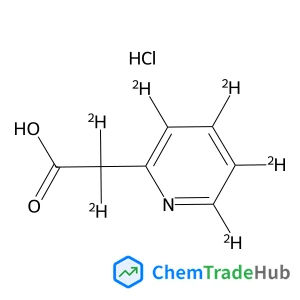
2,2-dideuterio-2-(3,4,5,6-tetradeuterio-2-pyridyl)acetic acid;hydrochloride
CAS Number:
1329799-67-8
Molecular Formula:
C7H2ClD6NO2
![S-[2,3-Bis(palmitoyloxy)propyl]-N-[(9H-fluoren-9-ylmethoxy)(hydroxy)methylene]cysteine structure](https://static.chemtradehub.com/structs/210/210532-98-2-f6a7.webp "S-[2,3-Bis(palmitoyloxy)propyl]-N-[(9H-fluoren-9-ylmethoxy)(hydroxy)methylene]cysteine structure")
S-[2,3-Bis(palmitoyloxy)propyl]-N-[(9H-fluoren-9-ylmethoxy)(hydroxy)methylene]cysteine
CAS Number:
210532-98-2
Molecular Formula:
C53H83NO8S
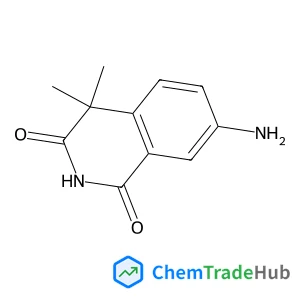
1,3(2H,4H)-Isoquinolinedione, 7-amino-4,4-dimethyl-
CAS Number:
14576-22-8
Molecular Formula:
C11H12N2O2
Recommended Suppliers



Disclaimer
This page provides academic journal information for reference and research purposes only. We are not affiliated with any journal publishers and do not handle publication submissions. For publication-related inquiries, please contact the respective journal publishers directly.
If you notice any inaccuracies in the information displayed, please contact us at support@chemtradehub.com. We will promptly review and address your concerns.