












Atomistic modeling to optimize composition and characterize structure of Ni–Zr–Mo metallic glasses
Literature Information
Publication Date
2015-04-16
DOI
10.1039/C5CP00512D
Impact Factor
3.676
Authors
M. H. Yang, S. N. Li, Y. Li, J. H. Li, B. X. Liu
View Original
Abstract
An interatomic potential was constructed for the Ni–Zr–Mo ternary metal system with the newly proposed long-range empirical formulism, which has been verified to be applicable for fcc, hcp and bcc transition metals and their alloys. Applying the constructed potential, molecular dynamics simulations predict a hexagonal composition region within which metallic glass formation is energetically favored. Based on the simulation results, the driving force for amorphous phase formation is derived, and thus an optimized composition is pinpointed to Ni45Zr40Mo15, of which the metallic glass could be most stable or easiest to obtain. Further structural analysis indicates that the dominant interconnected clusters for Ni64Zr36−xMox MGs are 〈0, 0, 12, 0〉, 〈0, 1, 10, 2〉, 〈0, 2, 8, 2〉 and 〈0, 3, 6, 4〉. In addition, it is found that the appropriate addition of Mo content could not only make a more ordered structure with a higher atomic packing density and a lower energy state, but also improve the glass formation ability of Ni–Zr–Mo alloys. Moreover, inherent hierarchical atomic configurations for ternary Ni–Zr–Mo metallic glasses are clarified via the short-range, medium-range and further in the extended scale of the icosahedral network.
Related Literature
Temperature dependence of the cooperative out-of-equilibrium elastic switching in a spin-crossover material
Roman Bertoni, Eric Collet, Hervé Cailleau, Marie-Laure Boillot, Antoine Tissot, Jérôme Laisney, Cristian Enachescu, Maciej Lorenc
2019-02-27
Paper
DOI: 10.1039/C8CP07074A
Equilibrium structures of the tetramezine diastereomers and their ratio: joint analysis of gas phase electron diffraction, quantum chemistry, and spectroscopic data
Leonid S. Khaikin, Igor V. Kochikov, Anatoliy N. Rykov, Olga E. Grikina, Georgiy G. Ageev, Igor F. Shishkov, Vladimir V. Kuznetsov, Nina N. Makhova
2019-02-08
Paper
DOI: 10.1039/C8CP07607C
Hydrogen adsorption on transition metal carbides: a DFT study
Fabrizio Silveri, Matthew G. Quesne, Alberto Roldan, Nora H. de Leeuw, C. Richard A. Catlow
2019-01-17
Paper
DOI: 10.1039/C8CP05975F
Membrane pore formation and ion selectivity of the Ebola virus delta peptide
Rudramani Pokhrel, Elumalai Pavadai
2019-02-11
Paper
DOI: 10.1039/C8CP07323F
Dithiafulvene derivatized donor–acceptor norbornadienes with redshifted absorption
Martin Drøhse Kilde, Sandeep Kumar Singh, Paul Erhart, Kasper Moth-Poulsen, Mogens Brøndsted Nielsen
2019-01-10
Paper
DOI: 10.1039/C8CP07744D
Reaction of chloride anion with atomic oxygen in aqueous solutions: can cold plasma help in chemistry research?
Yury Gorbanev, Jonas Van der Paal, Wilma Van Boxem, Sylvia Dewilde, Annemie Bogaerts
2019-01-30
Communication
DOI: 10.1039/C8CP07550F
Enhanced thermal transport across a bi-crystalline graphene–polymer interface: an atomistic approach
Akarsh Verma, Rajesh Kumar, Avinash Parashar
2019-02-25
Paper
DOI: 10.1039/C9CP00362B
Structural organization and phase behaviour of meta-substituted dioctadecylaminobenzoquinones at the air/water interface
Shirin Behyan, Dimitrios Gritzalis, Eskedar Kebede
2019-01-03
Paper
DOI: 10.1039/C8CP07186A
You might also like
Compound Q&A
What are the main uses of 4-Nitrophenyl phosphate disodium salt hexahydrate (CAS: 333338-18-4)?
4-Nitrophenyl phosphate disodium salt hexahydrate is primarily used as a substra...
333338-18-44-Nitrophenyl phosph...
Compound Q&A
What are the main uses of 2-(Trifluoromethyl)-1,3-oxazole-4-carboxylic Acid (CAS: 1060816-01-4)?
2-(Trifluoromethyl)-1,3-oxazole-4-carboxylic Acid (CAS: 1060816-01-4) is widely ...
1060816-01-42-(Trifluoromethyl)-...
Compound Q&A
How should 2-Fluoro-4-biphenylcarboxylic acid (CAS: 137045-30-8) be stored?
2-Fluoro-4-biphenylcarboxylic acid should be stored in a cool, dry place at room...
137045-30-82-Fluoro-4-biphenylc...
Compound Q&A
What industries use Prednisolone-21-Carboxylic Acid (CAS: 61549-70-0)?
Prednisolone-21-Carboxylic Acid is primarily used in the pharmaceutical industry...
61549-70-0Prednisolone-21-Carb...
Compound Q&A
How should 4-(Hydrazinomethyl)-1,2,3-benzenetriol (CAS: 3614-72-0) be stored?
4-(Hydrazinomethyl)-1,2,3-benzenetriol (CAS: 3614-72-0) should be stored in a co...
3614-72-04-(Hydrazinomethyl)-...
Compound Q&A
What industries use 4-Amino-1-methyl-1H-pyrazole-5-carboxylic acid hydrochloride (CAS: 92534-70-8)?
4-Amino-1-methyl-1H-pyrazole-5-carboxylic acid hydrochloride (CAS: 92534-70-8) i...
92534-70-84-Amino-1-methyl-1H-...
Compound Q&A
What regulatory guidelines apply to dehydropachymic acid (CAS: 77012-31-8)?
Dehydropachymic acid (CAS: 77012-31-8) is regulated by various agencies. It fall...
77012-31-8Dehydropachymic acid
Compound Q&A
What is the market or research trend for 6-[(2,2-Dimethylpropanoyl)amino]nicotinic acid (CAS: 898561-66-5)?
The market and research trends for 6-[(2,2-Dimethylpropanoyl)amino]nicotinic aci...
898561-66-56-[(2,2-Dimethylprop...
Compound Q&A
How should 1,10-Phenanthroline-2,9-dicarbaldehyde (CAS: 57709-62-3) be stored?
1,10-Phenanthroline-2,9-dicarbaldehyde should be stored in a cool, dry place awa...
57709-62-31,10-Phenanthroline-...
Compound Q&A
How is 5-Carbamoyl-11-oxo-10,11-dihydro-5H-dibenzo[b,f]azepin-10-yl acetate (CAS: 113952-21-9) typically synthesized?
5-Carbamoyl-11-oxo-10,11-dihydro-5H-dibenzo[b,f]azepin-10-yl acetate can be synt...
113952-21-95-Carbamoyl-11-oxo-1...
Source Journal
Physical Chemistry Chemical Physics

CiteScore:
5.5
Self-citation Rate:
10.3%
Articles per Year:
3036
Physical Chemistry Chemical Physics (PCCP) is an international journal co-owned by 19 physical chemistry and physics societies from around the world. This journal publishes original, cutting-edge research in physical chemistry, chemical physics and biophysical chemistry. To be suitable for publication in PCCP, articles must include significant innovation and/or insight into physical chemistry; this is the most important criterion that reviewers and Editors will judge against when evaluating submissions. The journal has a broad scope and welcomes contributions spanning experiment, theory, computation and data science. Topical coverage includes spectroscopy, dynamics, kinetics, statistical mechanics, thermodynamics, electrochemistry, catalysis, surface science, quantum mechanics, quantum computing and machine learning. Interdisciplinary research areas such as polymers and soft matter, materials, nanoscience, energy, surfaces/interfaces, and biophysical chemistry are welcomed if they demonstrate significant innovation and/or insight into physical chemistry. Joined experimental/theoretical studies are particularly appreciated when complementary and based on up-to-date approaches.
Recommended Compounds

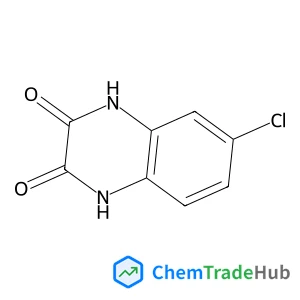
6-CHLORO-2,3-DIOXO-1,2,3,4-TETRAHYDROQUINOXALINE, 97
CAS Number:
169-14-2
Molecular Formula:
C8H5ClN2O2

Recommended Suppliers





Disclaimer
This page provides academic journal information for reference and research purposes only. We are not affiliated with any journal publishers and do not handle publication submissions. For publication-related inquiries, please contact the respective journal publishers directly.
If you notice any inaccuracies in the information displayed, please contact us at support@chemtradehub.com. We will promptly review and address your concerns.