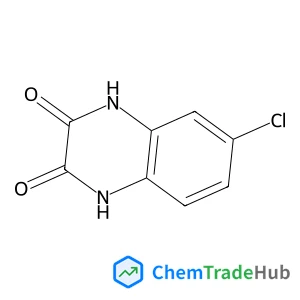
6-CHLORO-2,3-DIOXO-1,2,3,4-TETRAHYDROQUINOXALINE, 97
CAS Number:
169-14-2
Molecular Formula:
C8H5ClN2O2
Linjun Wang, Oleg V. Prezhdo, David Beljonne
Charge transport plays a crucial role in the working principle of most opto-electronic and energy devices. This is especially true for organic materials where the first theoretical models date back to the 1950s and have continuously evolved ever since. Most of these descriptions rely on perturbation theory to treat small interactions in the Hamiltonian. In particular, applying a perturbative treatment to the electron–phonon and electron–electron coupling results in the band and hopping models, respectively, the signature of which is conveyed by a characteristic temperature dependence of mobility. This perspective describes recent progress of studying charge transport in organics using mixed quantum-classical dynamics techniques, including mean field and surface hopping theories. The studies go beyond the perturbation treatments and represent the processes explicitly in the time-domain, as they occur in real life. The challenges, advantages, and disadvantages of both approaches are systematically discussed. Special focus is dedicated to the temperature dependence of mobility, the role of local and nonlocal electron–phonon couplings, as well as the interplay between electronic and electron–phonon interactions.
Steve J. Spencer, Dario Imbraguglio, Andrea M. Rossi, Andrew J. Wain, Bert M. Weckhuysen, Debdulal Roy
DOI: 10.1039/C6CP01641C
Mohammad Abu Sayem Karal, Victor Levadnyy
DOI: 10.1039/C6CP01184E
Prabhat Gautam, Rajneesh Misra, Subhayan Biswas, Ganesh D. Sharma
DOI: 10.1039/C6CP01163B
Hongxia Guan, Yanhua Song, Keyan Zheng, Ye Sheng, Haifeng Zou
DOI: 10.1039/C6CP01798C
Stefano Carli, Elisabetta Benazzi, Laura Casarin, Tatiana Bernardi, Valerio Bertolasi, Roberto Argazzi, Stefano Caramori, Carlo Alberto Bignozzi
DOI: 10.1039/C6CP90114J
D. Karpinsky, P. B. Tavares, Soma Das, J. V. Leitão, E. H. Brück, J. Agostinho Moreira, V. S. Amaral
DOI: 10.1039/C6CP01562J
Yuxu Wang, Kun Zhou, Ziliang Shi
DOI: 10.1039/C6CP01836J
DOI: 10.1039/C6CP02613C
4-Nitrophenyl phosphate disodium salt hexahydrate is primarily used as a substra...
2-(Trifluoromethyl)-1,3-oxazole-4-carboxylic Acid (CAS: 1060816-01-4) is widely ...
2-Fluoro-4-biphenylcarboxylic acid should be stored in a cool, dry place at room...
Prednisolone-21-Carboxylic Acid is primarily used in the pharmaceutical industry...
4-(Hydrazinomethyl)-1,2,3-benzenetriol (CAS: 3614-72-0) should be stored in a co...
4-Amino-1-methyl-1H-pyrazole-5-carboxylic acid hydrochloride (CAS: 92534-70-8) i...
Dehydropachymic acid (CAS: 77012-31-8) is regulated by various agencies. It fall...
The market and research trends for 6-[(2,2-Dimethylpropanoyl)amino]nicotinic aci...
1,10-Phenanthroline-2,9-dicarbaldehyde should be stored in a cool, dry place awa...
5-Carbamoyl-11-oxo-10,11-dihydro-5H-dibenzo[b,f]azepin-10-yl acetate can be synt...

Physical Chemistry Chemical Physics (PCCP) is an international journal co-owned by 19 physical chemistry and physics societies from around the world. This journal publishes original, cutting-edge research in physical chemistry, chemical physics and biophysical chemistry. To be suitable for publication in PCCP, articles must include significant innovation and/or insight into physical chemistry; this is the most important criterion that reviewers and Editors will judge against when evaluating submissions. The journal has a broad scope and welcomes contributions spanning experiment, theory, computation and data science. Topical coverage includes spectroscopy, dynamics, kinetics, statistical mechanics, thermodynamics, electrochemistry, catalysis, surface science, quantum mechanics, quantum computing and machine learning. Interdisciplinary research areas such as polymers and soft matter, materials, nanoscience, energy, surfaces/interfaces, and biophysical chemistry are welcomed if they demonstrate significant innovation and/or insight into physical chemistry. Joined experimental/theoretical studies are particularly appreciated when complementary and based on up-to-date approaches.
![N-[2-(4-Hydroxyphenoxy)-4-nitrophenyl]methanesulfonamide structure](https://static.chemtradehub.com/structs/109/109032-22-6-7c88.webp "N-[2-(4-Hydroxyphenoxy)-4-nitrophenyl]methanesulfonamide structure")