


Visible-light photocatalysis in Cu2Se nanowires with exposed {111} facets and charge separation between (111) and () polar surfaces
Literature Information
Publication Date
2015-04-16
DOI
10.1039/C5CP00450K
Impact Factor
3.676
Authors
Bin Liu, Lichao Ning, Hua Zhao, Congjie Zhang, Heqing Yang, Shengzhong (Frank) Liu
View Original
Abstract
The search for active narrow band gap semiconductor photocatalysts that directly split water or degrade organic pollutants under solar irradiation remains an open issue. We synthesized Cu2Se nanowires with exposed {111} facets using ethanol and glycerol as morphology controlling agents. The {111} facets were found to be the active facets for decomposing organic contaminants in the entire solar spectrum. Based on the polar structure of the Cu2Se {111} facets, a charge separation model between polar (111) and () surfaces is proposed. The internal electric field between polar (111) and () surfaces created by spontaneous polarization drives charge separation. The reduction and oxidation reactions occur on the positive (111) and negative () polar surfaces, respectively. This suggests the surface-engineering of narrow band gap semiconductors as a strategy to fabricate photocatalysts with high reactivity in the entire solar spectrum. The charge separation model can deepen the understanding of charge transfer in other semiconductor nanocrystals with high photocatalytic activities and offer guidance to design more effective photocatalysts as well as new types of solar cells, photoelectrodes and photoelectric devices.
Recommended Journals

Critical Reviews in Solid State and Materials Sciences

NDT & E International

Biocatalysis and Biotransformation

Electroanalysis

Journal of Asian Natural Products Research

Chinese Journal of Chemistry

Journal of the Indian Institute of Science

Polycyclic Aromatic Compounds

Journal of Chemical Sciences

Heteroatom Chemistry
Related Literature
On urea's ability to stabilize the globule state of poly(N-isopropylacrylamide)
Andrea Pica, Giuseppe Graziano
2016-04-28
Paper
DOI: 10.1039/C5CP07507F
Improved electron transport properties of n-type naphthalenediimide polymers through refined molecular ordering and orientation induced by processing solvents
Yujin An, Dang Xuan Long, Yiho Kim, Yong-Young Noh, Changduk Yang
2016-03-24
Paper
DOI: 10.1039/C6CP01314G
Conceptual design of tetraazaporphyrin- and subtetraazaporphyrin-based functional nanocarbon materials: electronic structures, topologies, optical properties, and methane storage capacities
Rodion V. Belosludov, Hannah M. Rhoda, Ravil K. Zhdanov, Vladimir R. Belosludov, Yoshiyuki Kawazoe, Victor N. Nemykin
2016-04-12
Paper
DOI: 10.1039/C5CP07552A
Effects of a TiC substrate on the catalytic activity of Pt for NO reduction
Xingli Chu, Zhaoming Fu, Shasha Li, Xilin Zhang
2016-04-12
Paper
DOI: 10.1039/C6CP00194G
The effect of the metal fragment on the aromaticity and synchronicity of the gold(i)-catalysed divinylcyclopropane–cycloheptadiene rearrangement
Israel Fernández
2015-11-19
Paper
DOI: 10.1039/C5CP06523B
Solvation dependence observed in the electronic dissymmetry factor spectra: how much information are we missing by analyzing the circular dichroism spectra alone?
Cody L. Covington, Prasad L. Polavarapu
2016-04-27
Paper
DOI: 10.1039/C6CP01247G
A spin-Seebeck diode with a negative differential spin-Seebeck effect in a hydrogen-terminated zigzag silicene nanoribbon heterojunction
Lei Gu, Dan-Dan Wu
2016-04-07
Paper
DOI: 10.1039/C6CP00876C
Correlating single-molecule and ensemble-average measurements of peptide adsorption onto different inorganic materials
Seong-Oh Kim, Joshua A. Jackman, Masahito Mochizuki, Bo Kyeong Yoon
2016-05-09
Paper
DOI: 10.1039/C6CP01168C
You might also like
Compound Q&A
What are the main uses of 4-Nitrophenyl phosphate disodium salt hexahydrate (CAS: 333338-18-4)?
4-Nitrophenyl phosphate disodium salt hexahydrate is primarily used as a substra...
333338-18-44-Nitrophenyl phosph...
Compound Q&A
What are the main uses of 2-(Trifluoromethyl)-1,3-oxazole-4-carboxylic Acid (CAS: 1060816-01-4)?
2-(Trifluoromethyl)-1,3-oxazole-4-carboxylic Acid (CAS: 1060816-01-4) is widely ...
1060816-01-42-(Trifluoromethyl)-...
Compound Q&A
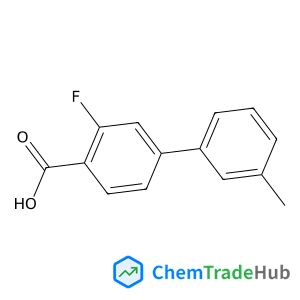
How should 2-Fluoro-4-biphenylcarboxylic acid (CAS: 137045-30-8) be stored?
2-Fluoro-4-biphenylcarboxylic acid should be stored in a cool, dry place at room...
137045-30-82-Fluoro-4-biphenylc...
Compound Q&A
What industries use Prednisolone-21-Carboxylic Acid (CAS: 61549-70-0)?
Prednisolone-21-Carboxylic Acid is primarily used in the pharmaceutical industry...
61549-70-0Prednisolone-21-Carb...
Compound Q&A
How should 4-(Hydrazinomethyl)-1,2,3-benzenetriol (CAS: 3614-72-0) be stored?
4-(Hydrazinomethyl)-1,2,3-benzenetriol (CAS: 3614-72-0) should be stored in a co...
3614-72-04-(Hydrazinomethyl)-...
Compound Q&A
What industries use 4-Amino-1-methyl-1H-pyrazole-5-carboxylic acid hydrochloride (CAS: 92534-70-8)?
4-Amino-1-methyl-1H-pyrazole-5-carboxylic acid hydrochloride (CAS: 92534-70-8) i...
92534-70-84-Amino-1-methyl-1H-...
Compound Q&A
What regulatory guidelines apply to dehydropachymic acid (CAS: 77012-31-8)?
Dehydropachymic acid (CAS: 77012-31-8) is regulated by various agencies. It fall...
77012-31-8Dehydropachymic acid
Compound Q&A
What is the market or research trend for 6-[(2,2-Dimethylpropanoyl)amino]nicotinic acid (CAS: 898561-66-5)?
The market and research trends for 6-[(2,2-Dimethylpropanoyl)amino]nicotinic aci...
898561-66-56-[(2,2-Dimethylprop...
Compound Q&A
How should 1,10-Phenanthroline-2,9-dicarbaldehyde (CAS: 57709-62-3) be stored?
1,10-Phenanthroline-2,9-dicarbaldehyde should be stored in a cool, dry place awa...
57709-62-31,10-Phenanthroline-...
Compound Q&A
How is 5-Carbamoyl-11-oxo-10,11-dihydro-5H-dibenzo[b,f]azepin-10-yl acetate (CAS: 113952-21-9) typically synthesized?
5-Carbamoyl-11-oxo-10,11-dihydro-5H-dibenzo[b,f]azepin-10-yl acetate can be synt...
113952-21-95-Carbamoyl-11-oxo-1...
Source Journal
Physical Chemistry Chemical Physics

CiteScore:
5.5
Self-citation Rate:
10.3%
Articles per Year:
3036
Physical Chemistry Chemical Physics (PCCP) is an international journal co-owned by 19 physical chemistry and physics societies from around the world. This journal publishes original, cutting-edge research in physical chemistry, chemical physics and biophysical chemistry. To be suitable for publication in PCCP, articles must include significant innovation and/or insight into physical chemistry; this is the most important criterion that reviewers and Editors will judge against when evaluating submissions. The journal has a broad scope and welcomes contributions spanning experiment, theory, computation and data science. Topical coverage includes spectroscopy, dynamics, kinetics, statistical mechanics, thermodynamics, electrochemistry, catalysis, surface science, quantum mechanics, quantum computing and machine learning. Interdisciplinary research areas such as polymers and soft matter, materials, nanoscience, energy, surfaces/interfaces, and biophysical chemistry are welcomed if they demonstrate significant innovation and/or insight into physical chemistry. Joined experimental/theoretical studies are particularly appreciated when complementary and based on up-to-date approaches.
Recommended Compounds

cis-3-Amino-1-(trifluoromethyl)cyclobutanol hydrochloride (1:1)
CAS Number:
1408075-16-0
Molecular Formula:
C5H9ClF3NO
![(2E)-3-(3-Chlorophenyl)-N-{2-[4-(methylsulfonyl)-1-piperazinyl]-2-oxoethyl}acrylamide structure](https://static.chemtradehub.com/structs/250/2505001-54-5-c1e9.webp "(2E)-3-(3-Chlorophenyl)-N-{2-[4-(methylsulfonyl)-1-piperazinyl]-2-oxoethyl}acrylamide structure")
(2E)-3-(3-Chlorophenyl)-N-{2-[4-(methylsulfonyl)-1-piperazinyl]-2-oxoethyl}acrylamide
CAS Number:
2505001-54-5
Molecular Formula:
C16H20ClN3O4S
![(3R,5R)-1-[(Benzyloxy)carbonyl]-5-methyl-3-piperidinecarboxylic acid structure](https://static.chemtradehub.com/structs/126/1269757-29-0-c552.webp "(3R,5R)-1-[(Benzyloxy)carbonyl]-5-methyl-3-piperidinecarboxylic acid structure")
(3R,5R)-1-[(Benzyloxy)carbonyl]-5-methyl-3-piperidinecarboxylic acid
CAS Number:
1269757-29-0
Molecular Formula:
C15H19NO4
Recommended Suppliers





Disclaimer
This page provides academic journal information for reference and research purposes only. We are not affiliated with any journal publishers and do not handle publication submissions. For publication-related inquiries, please contact the respective journal publishers directly.
If you notice any inaccuracies in the information displayed, please contact us at support@chemtradehub.com. We will promptly review and address your concerns.