


Theoretical simulation of the reduction of graphene oxide by lithium naphthalenide
Literature Information
Publication Date
2015-04-23
DOI
10.1039/C5CP00357A
Impact Factor
3.676
Authors
Chu Chen, Weixing Kong, Haiming Duan, Jun Zhang
View Original
Abstract
Based on density functional theory, we investigated the mechanism of graphene oxide reduction by lithium naphthalenide (C10H8Li). C10H8− easily reacts with GO to form a neutral C10H8 and the negatively charged GO, which can attach to Li+ ions to form lithium oxide on a graphene skeleton. The reduction mechanism is similar to the reduction of GO by metallic Li; the C10H8 is used to disperse Li in THF solution. Furthermore, the lithium oxide on GO can react with CO2 to form Li2CO3 and be further reduced by MeOH washing. In the negatively charged GO, the carboxyl at the edge of GO transfers an electron to GO and releases a CO2 molecule by overcoming a barrier of 0.19 eV. CO2 can also be adsorbed by lithium oxide to form Li2CO3 that is tightly attached on graphene skeleton. After GO is partially reduced, the adsorption of CO2 eliminates O in the form of Li2CO3 without any barrier. This mechanism can be helpful for further understanding the nature of GO reduction among various reducing agents and for exploring new and efficient GO reducing agents.
Recommended Journals

Critical Reviews in Solid State and Materials Sciences

Journal of Chemical Sciences

Polycyclic Aromatic Compounds

Electroanalysis

Journal of Asian Natural Products Research

Acta Metallurgica Sinica-English Letters

Chinese Journal of Chemistry

Journal of the Indian Institute of Science

Atomization and Sprays

Colloid Journal
Related Literature
One-pot synthesis and Nb4N5 surface modification of Nb4+ self-doped KNbO3 nanorods for enhanced visible-light-driven hydrogen production
Xia Wang, Zhentao Cui, Bing Liu, Minhua Cao
2015-04-27
Paper
DOI: 10.1039/C5CP01199J
Theoretical study of the oxidation mechanisms of naphthalene initiated by hydroxyl radicals: the O2 addition reaction pathways
A. Shiroudi, M. S. Deleuze, S. Canneaux
2015-04-27
Paper
DOI: 10.1039/C5CP01934F
The thermal reorganization of DNA immobilized at the silica/buffer interface: a vibrational sum frequency generation investigation
Zhiguo Li, Champika N. Weeraman, Md. Shafiul Azam, Eiman Osman, Julianne M. Gibbs-Davis
2015-04-16
Communication
DOI: 10.1039/C5CP00781J
Single-molecule spectroscopy and femtosecond transient absorption studies on the excitation energy transfer process in ApcE(1–240) dimers
Saran Long, Meng Zhou, Kun Tang, Xiao-Li Zeng, Yingli Niu, Qianjin Guo, Kai-Hong Zhao, Andong Xia
2015-04-23
Paper
DOI: 10.1039/C5CP01687H
Synergy and pinning effects in a monatomic liquid film in confined conditions
Weikang Wu, Leining Zhang, Hongru Ren, Hui Li
2015-04-23
Paper
DOI: 10.1039/C5CP00354G
Mesoscale simulation of the formation and dynamics of lipid-structured poly(ethylene oxide)-block-poly(methyl methacrylate) diblock copolymers
Dan Mu, Jian-Quan Li, Sheng-Yu Feng
2015-04-07
Paper
DOI: 10.1039/C5CP00561B
High-resolution probing heparan sulfate–antithrombin interaction on a single endothelial cell surface: single-molecule AFM studies
Cunlan Guo, Xian Fan, Hong Qiu, Wenyuan Xiao, Lianchun Wang, Bingqian Xu
2015-04-16
Paper
DOI: 10.1039/C5CP01305D
Correction: Orbital entanglement and CASSCF analysis of the Ru–NO bond in a Ruthenium nitrosyl complex
Leon Freitag, Stefan Knecht, Sebastian F. Keller, Mickaël G. Delcey, Thomas Bondon Pedersen, Roland Lindh, Markus Reiher, Leticia Gonzalez
2015-05-01
Correction
DOI: 10.1039/C5CP90073E
Irreversible structural change of a dry ionic liquid under nanoconfinement
L. Andres Jurado, Hojun Kim, Andrea Arcifa, Cecilia Leal, Nicholas D. Spencer
2015-04-27
Paper
DOI: 10.1039/C4CP05592F
You might also like
Compound Q&A
What are the main uses of 4-Nitrophenyl phosphate disodium salt hexahydrate (CAS: 333338-18-4)?
4-Nitrophenyl phosphate disodium salt hexahydrate is primarily used as a substra...
333338-18-44-Nitrophenyl phosph...
Compound Q&A
What are the main uses of 2-(Trifluoromethyl)-1,3-oxazole-4-carboxylic Acid (CAS: 1060816-01-4)?
2-(Trifluoromethyl)-1,3-oxazole-4-carboxylic Acid (CAS: 1060816-01-4) is widely ...
1060816-01-42-(Trifluoromethyl)-...
Compound Q&A
How should 2-Fluoro-4-biphenylcarboxylic acid (CAS: 137045-30-8) be stored?
2-Fluoro-4-biphenylcarboxylic acid should be stored in a cool, dry place at room...
137045-30-82-Fluoro-4-biphenylc...
Compound Q&A
What industries use Prednisolone-21-Carboxylic Acid (CAS: 61549-70-0)?
Prednisolone-21-Carboxylic Acid is primarily used in the pharmaceutical industry...
61549-70-0Prednisolone-21-Carb...
Compound Q&A
How should 4-(Hydrazinomethyl)-1,2,3-benzenetriol (CAS: 3614-72-0) be stored?
4-(Hydrazinomethyl)-1,2,3-benzenetriol (CAS: 3614-72-0) should be stored in a co...
3614-72-04-(Hydrazinomethyl)-...
Compound Q&A
What industries use 4-Amino-1-methyl-1H-pyrazole-5-carboxylic acid hydrochloride (CAS: 92534-70-8)?
4-Amino-1-methyl-1H-pyrazole-5-carboxylic acid hydrochloride (CAS: 92534-70-8) i...
92534-70-84-Amino-1-methyl-1H-...
Compound Q&A
What regulatory guidelines apply to dehydropachymic acid (CAS: 77012-31-8)?
Dehydropachymic acid (CAS: 77012-31-8) is regulated by various agencies. It fall...
77012-31-8Dehydropachymic acid
Compound Q&A
What is the market or research trend for 6-[(2,2-Dimethylpropanoyl)amino]nicotinic acid (CAS: 898561-66-5)?
The market and research trends for 6-[(2,2-Dimethylpropanoyl)amino]nicotinic aci...
898561-66-56-[(2,2-Dimethylprop...
Compound Q&A
How should 1,10-Phenanthroline-2,9-dicarbaldehyde (CAS: 57709-62-3) be stored?
1,10-Phenanthroline-2,9-dicarbaldehyde should be stored in a cool, dry place awa...
57709-62-31,10-Phenanthroline-...
Compound Q&A
How is 5-Carbamoyl-11-oxo-10,11-dihydro-5H-dibenzo[b,f]azepin-10-yl acetate (CAS: 113952-21-9) typically synthesized?
5-Carbamoyl-11-oxo-10,11-dihydro-5H-dibenzo[b,f]azepin-10-yl acetate can be synt...
113952-21-95-Carbamoyl-11-oxo-1...
Source Journal
Physical Chemistry Chemical Physics

CiteScore:
5.5
Self-citation Rate:
10.3%
Articles per Year:
3036
Physical Chemistry Chemical Physics (PCCP) is an international journal co-owned by 19 physical chemistry and physics societies from around the world. This journal publishes original, cutting-edge research in physical chemistry, chemical physics and biophysical chemistry. To be suitable for publication in PCCP, articles must include significant innovation and/or insight into physical chemistry; this is the most important criterion that reviewers and Editors will judge against when evaluating submissions. The journal has a broad scope and welcomes contributions spanning experiment, theory, computation and data science. Topical coverage includes spectroscopy, dynamics, kinetics, statistical mechanics, thermodynamics, electrochemistry, catalysis, surface science, quantum mechanics, quantum computing and machine learning. Interdisciplinary research areas such as polymers and soft matter, materials, nanoscience, energy, surfaces/interfaces, and biophysical chemistry are welcomed if they demonstrate significant innovation and/or insight into physical chemistry. Joined experimental/theoretical studies are particularly appreciated when complementary and based on up-to-date approaches.
Recommended Compounds
![[(1S,2S,3R,4S,7R,9S,10S,12R,15S)-4,12-Diacetyloxy-15-[(2R,3S)-3-benzamido-3-phenyl-2-(2,2,2-trichloroethoxycarbonyloxy)propanoyl]oxy-1,9-dihydroxy-10,14,17,17-tetramethyl-11-oxo-6-oxatetracyclo[11.3.1.03,10.04,7]heptadec-13-en-2-yl] benzoate structure](https://static.chemtradehub.com/structs/100/100431-55-8-7104.webp "[(1S,2S,3R,4S,7R,9S,10S,12R,15S)-4,12-Diacetyloxy-15-[(2R,3S)-3-benzamido-3-phenyl-2-(2,2,2-trichloroethoxycarbonyloxy)propanoyl]oxy-1,9-dihydroxy-10,14,17,17-tetramethyl-11-oxo-6-oxatetracyclo[11.3.1.03,10.04,7]heptadec-13-en-2-yl] benzoate structure")
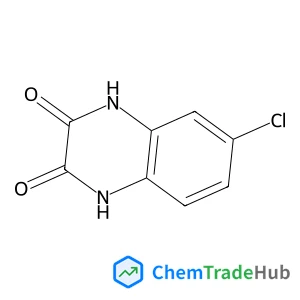
6-CHLORO-2,3-DIOXO-1,2,3,4-TETRAHYDROQUINOXALINE, 97
CAS Number:
169-14-2
Molecular Formula:
C8H5ClN2O2

6-Bromo-3,4-dihydro-2H-1,4-benzoxazine hydrochloride (1:1)
CAS Number:
1260803-10-8
Molecular Formula:
C8H9BrClNO
Recommended Suppliers






Disclaimer
This page provides academic journal information for reference and research purposes only. We are not affiliated with any journal publishers and do not handle publication submissions. For publication-related inquiries, please contact the respective journal publishers directly.
If you notice any inaccuracies in the information displayed, please contact us at support@chemtradehub.com. We will promptly review and address your concerns.