


Extraction, purification and characterization of the crystallin protein of cataractous eye lens nucleus
Literature Information
Publication Date
2015-08-03
DOI
10.1039/C5AN01212K
Impact Factor
4.616
Authors
Muhammad Sher, Ayesha Hameed, Sobia Noreen, Muhammad Fayyaz-ur-Rehman, Muhammad Ajaz Hussain, Syed Nasir Abbas Bukhari
View Original
Abstract
The purpose of this study is to separate and identify the crystallin protein present in the nucleus of a human cataractous eye lens. Cataractous lenses were collected from different eye hospitals from patients of different etiologies with ages between 40 and 80 years. Lens nucleus proteins were extracted into four fractions on the basis of their solubility in different media by applying a reported method. These fractions were buffer-soluble proteins (PS), urea-soluble proteins (PU), yellow fraction proteins (PY) and insoluble proteins (PI). All three soluble fractions were subjected to HPLC and GPC analysis. Both HPLC and GPC analysis showed that each fraction contains α-, β- and γ-crystallins, a major class of protein present in the lenses of vertebrates. Various chromatographic parameters including precision, accuracy and linearity have been evaluated. Studies of water-insoluble crystallins using sodium dodecylsulphate polyacrylamide gel electrophoresis (SDS-PAGE) have demonstrated extreme homogeneity with evidence of major components with molecular masses of 18–70 kDa, similar to the crystallin of the water-soluble portion. The method was found to be suitable for the analysis of various isomers of crystallin protein present in human cataractous eye lens nuclei. The detailed results of the GPC are discussed. This study provides the first HPLC and GPC analysis of a human cataractous eye lens nucleus.
Recommended Journals

Critical Reviews in Solid State and Materials Sciences

Main Group Chemistry

Acta Metallurgica Sinica-English Letters

Bioorganic & Medicinal Chemistry Letters

Herald of the Russian Academy of Sciences

Bioorganic & Medicinal Chemistry

Electroanalysis

Chinese Journal of Chemistry

Atomization and Sprays

Polycyclic Aromatic Compounds
Related Literature
Rearranged limonoids with unique 6/5/6/5 tetracarbocyclic skeletons from Toona ciliata and biomimetic structure divergence
Jun Luo, Wan-Sha Huang, Sheng-Mou Hu, Pan-Pan Zhang, Xu-Wei Zhou, Xiao-Bing Wang, Ming-Hua Yang, Jian-Guang Luo, Chen Wang, Chang Liu, He-Quan Yao, Can Zhang, Hong-Bin Sun, Yi-Jun Chen, Ling-Yi Kong
2017-09-06
Research Article
DOI: 10.1039/C7QO00678K
Synthesis of withasomnine and pyrazole derivatives via intramolecular dehydrogenative cyclization, as well as biological evaluation of withasomnine-based scaffolds
Tingting Xia, Zhenyi Hu, Wenzhi Ji, Shujie Zhang, Hui Shi, Chenguang Liu, Bo Pang, Guijian Liu, Xuebin Liao
2017-11-29
Research Article
DOI: 10.1039/C7QO00847C
Oxidant- and hydrogen acceptor-free palladium catalyzed dehydrogenative cyclization of acylhydrazones to substituted oxadiazoles
Qiangqiang Jiang, Xinghui Qi, Chenyang Zhang, Xuan Ji, Jin Li, Renhua Liu
2017-10-12
Research Article
DOI: 10.1039/C7QO00749C
Correction: Facile synthesis of carbo- and heterocycles via Fe(iii)-catalyzed alkene hydrofunctionalization
Jifeng Qi, Jing Zheng, Sunliang Cui
2018-01-09
Correction
DOI: 10.1039/C7QO90053H
A redox-responsive supramolecular amphiphile fabricated by selenium-containing pillar[5]arene-based host–guest recognition
Yujuan Zhou, Kecheng Jie, Feihe Huang
2017-09-05
Research Article
DOI: 10.1039/C7QO00736A
New D–π-A push–pull chromophores as low band gap molecular semiconductors for organic small molecule solar cell applications
Abbasriyaludeen Abdul Raheem, Santhosh Kamaraj, Veeman Sannasi, Chandrasekar Praveen
2017-11-22
Research Article
DOI: 10.1039/C7QO00920H
Multiple noncovalent interaction constructed polymeric supramolecular crystals: recognition of butyl viologen by para-dicyclohexanocucurbit[6]uril and α,α′,δ,δ′-tetramethylcucurbit[6]uril
Zhi-You Xiao, Rui-Lian Lin, Zhu Tao, Qing-Yun Liu, Jing-Xin Liu, Xin Xiao
2017-09-05
Research Article
DOI: 10.1039/C7QO00708F
Organocopper triggered cyclization of conjugated dienynes via tandem SN2′/Alder-ene reaction
Tanzeel Arif, Cyril Borie, Marion Jean, Nicolas Vanthuyne, Michèle P. Bertrand, Didier Siri, Malek Nechab
2017-11-24
Research Article
DOI: 10.1039/C7QO00288B
Rhodium-catalyzed intramolecular carbosilylation of alkynes via C(sp3)–Si bond cleavage
Qi Yang, Liang Liu, Yue Chi, Wei Hao, Wen-Xiong Zhang
2017-12-04
Research Article
DOI: 10.1039/C7QO00927E
A one-pot, metal-free approach to bicyclic 2-pyridones
Wannaporn Disadee
2017-07-03
Research Article
DOI: 10.1039/C7QO00406K
You might also like
Compound Q&A
What precautions should be taken when handling 4-Methyl-6-(trifluoromethyl)quinoline (CAS: 40716-16-3)?
When handling 4-Methyl-6-(trifluoromethyl)quinoline (CAS: 40716-16-3), safety go...
40716-16-34-Methyl-6-(trifluor...
Compound Q&A
What is 4-(3,5-Difluorophenyl)aniline (CAS: 405058-00-6)?
4-(3,5-Difluorophenyl)aniline is an aromatic organic compound with the CAS numbe...
405058-00-64-(3,5-Difluoropheny...
Compound Q&A
How is 5-{[4-(Trifluoromethyl)phenyl]sulfanyl}-1,2,3-thiadiazole-4-carboxylic acid (CAS: 338982-07-3) typically synthesized?
5-{[4-(Trifluoromethyl)phenyl]sulfanyl}-1,2,3-thiadiazole-4-carboxylic acid can ...
338982-07-35-{[4-(Trifluorometh...
Compound Q&A
What is the market or research trend for 4-Benzylaniline hydrochloride (CAS: 6317-57-3)?
The market for 4-Benzylaniline hydrochloride (CAS: 6317-57-3) is steadily growin...
6317-57-34-Benzylaniline hydr...
Compound Q&A
Is [3-(Diethylsulfamoyl)phenyl]boronic acid (CAS: 871329-58-7) safe?
[3-(Diethylsulfamoyl)phenyl]boronic acid is generally considered safe when handl...
871329-58-7[3-(Diethylsulfamoyl...
Compound Q&A
What are the main uses of 3-Bromo-2,5-dimethoxyaniline (CAS: 115929-62-9)?
3-Bromo-2,5-dimethoxyaniline is mainly used in the pharmaceutical and chemical i...
115929-62-93-Bromo-2,5-dimethox...
Compound Q&A
What regulatory guidelines apply to N-Methyl-1-(5-methyl-1H-indol-3-yl)methanamine (CAS: 915922-67-7)?
N-Methyl-1-(5-methyl-1H-indol-3-yl)methanamine (CAS: 915922-67-7) is subject to ...
915922-67-7N-Methyl-1-(5-methyl...
Compound Q&A
What industries use Carbamic acid, N-[(5S)-5,6-diamino-6-oxohexyl]-, 1,1-dimethylethyl ester (CAS: 24828-96-4)?
This compound is primarily used in the pharmaceutical industry for the synthesis...
24828-96-4Carbamic acid, N-[(5...
Compound Q&A
How should 2-Methyl-2-propanyl [(1S,3R)-3-aminocyclohexyl]carbamate (CAS: 1298101-47-9) be stored?
2-Methyl-2-propanyl [(1S,3R)-3-aminocyclohexyl]carbamate (CAS: 1298101-47-9) sho...
1298101-47-92-Methyl-2-propanyl ...
Compound Q&A
What industries use Ethyl 2-bromo-4,4,4-trifluorobutanoate (CAS: 367-33-9)?
Ethyl 2-bromo-4,4,4-trifluorobutanoate (CAS: 367-33-9) is utilized in the pharma...
367-33-9Ethyl 2-bromo-4,4,4-...
Source Journal
Analyst

CiteScore:
7.8
Self-citation Rate:
5.6%
Articles per Year:
653
Analyst publishes analytical and bioanalytical research that reports premier fundamental discoveries and inventions, and the applications of those discoveries, unconfined by traditional discipline barriers.
Recommended Compounds
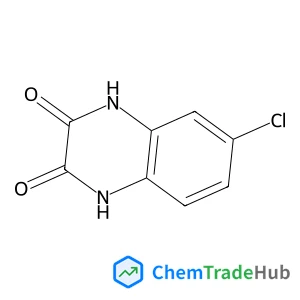
6-CHLORO-2,3-DIOXO-1,2,3,4-TETRAHYDROQUINOXALINE, 97
CAS Number:
169-14-2
Molecular Formula:
C8H5ClN2O2
Recommended Suppliers






Disclaimer
This page provides academic journal information for reference and research purposes only. We are not affiliated with any journal publishers and do not handle publication submissions. For publication-related inquiries, please contact the respective journal publishers directly.
If you notice any inaccuracies in the information displayed, please contact us at support@chemtradehub.com. We will promptly review and address your concerns.