












Recapitulation of in vivo-like neutrophil transendothelial migration using a microfluidic platform
Literature Information
Publication Date
2015-06-09
DOI
10.1039/C5AN00967G
Impact Factor
4.616
Authors
Xiaojie Wu, Molly A. Newbold, Christy L. Haynes
View Original
Abstract
Neutrophil transendothelial migration (TEM) is an essential physiological process that regulates the recruitment of neutrophils in response to inflammatory signals. Herein, a versatile hydrogel scaffold is embedded in a microfluidic platform that supports an endothelial cell layer cultured in the vertical direction and highly stable chemical gradients; this construct is employed to mimic the in vivo neutrophil TEM process. We found that the number of neutrophils migrating across the endothelial cell layer is dependent on the presented chemoattractant concentration and the spatial profile of the chemical gradient. Endothelial cells play a critical role in neutrophil TEM by promoting neutrophil morphological changes as well as expressing surface receptor molecules that are indispensable for inducing neutrophil attachment and migration. Furthermore, the microfluidic device also supports competing chemoattractant gradients to facilitate neutrophil TEM studies in complex microenvironments that more accurately model the in vivo system than simplified microenvironments without the complexity of chemical gradients. This work demonstrates that combinations of any two different chemoattractants induce more significant neutrophil migration than a single chemoattractant in the same total amount, indicating synergistic effects between distinct chemoattractants. The in vitro reconstitution of neutrophil TEM successfully translates planar neutrophil movement into in vivo-like neutrophil recruitment and accelerates understanding of cellular interactions between neutrophils and endothelial cells within the complicated physiological milieu.
Related Literature
pFe3+ determination of multidentate ligands by a fluorescence assay
Yongmin Ma, Tao Zhou, Robert C. Hider
2015-03-23
Paper
DOI: 10.1039/C5AN00123D
Label-free monitoring of plasmonic catalysis on the nanoscale
Zhenglong Zhang, Tanja Deckert-Gaudig
2015-05-07
Minireview
DOI: 10.1039/C5AN00630A
A highly efficient three-phase single drop microextraction technique for sample preconcentration
Sharmin Jahan, Haiyang Xie, Ran Zhong, Jian Yan, Hua Xiao, Liuyin Fan, Chengxi Cao
2015-02-16
Paper
DOI: 10.1039/C4AN02324B
Nanopore analysis of amyloid fibrils formed by lysozyme aggregation
Nikolay Martyushenko, Nicholas A. W. Bell, Robin D. Lamboll, Ulrich F. Keyser
2015-05-12
Paper
DOI: 10.1039/C5AN00530B
A quantitative metabolomics peek into planarian regeneration
Nivedita Natarajan, Padma Ramakrishnan, Vairavan Lakshmanan, Dasaradhi Palakodeti, Kannan Rangiah
2015-02-03
Paper
DOI: 10.1039/C4AN02037E
Squaramide-based tripodal ionophores for potentiometric sulfate-selective sensors with high selectivity
Yueling Liu, Yu Qin
2015-05-27
Paper
DOI: 10.1039/C5AN00259A
Flow induced dispersion analysis rapidly quantifies proteins in human plasma samples
Nicklas N. Poulsen, Nina Z. Andersen, Jesper Østergaard, Guisheng Zhuang, Nickolaj J. Petersen, Henrik Jensen
2015-05-27
Communication
DOI: 10.1039/C5AN00697J
Unilateral horizontal semicircular canal occlusion induces serotonin increase in medial vestibular nuclei: a study using microdialysis in vivo coupled with HPLC–ECD
Ke Zhang, Qian Li, Jia Xu, Junxiu Liu, Jia Ke, Wei Kang, Tao Li, Furong Ma
2015-05-05
Paper
DOI: 10.1039/C5AN00110B
MoS2 nanosheets as an effective fluorescence quencher for DNA methyltransferase activity detection
Huimin Deng, Xinjian Yang, Zhiqiang Gao
2015-03-02
Paper
DOI: 10.1039/C4AN02133A
Facile synthesis of porous bimetallic alloyed PdAg nanoflowers supported on reduced graphene oxide for simultaneous detection of ascorbic acid, dopamine, and uric acid
Li-Xian Chen, Jie-Ning Zheng, Ai-Jun Wang, Lan-Ju Wu, Jian-Rong Chen, Jiu-Ju Feng
2015-02-12
Paper
DOI: 10.1039/C4AN02200A
You might also like
Compound Q&A
What precautions should be taken when handling 4-Methyl-6-(trifluoromethyl)quinoline (CAS: 40716-16-3)?
When handling 4-Methyl-6-(trifluoromethyl)quinoline (CAS: 40716-16-3), safety go...
40716-16-34-Methyl-6-(trifluor...
Compound Q&A
What is 4-(3,5-Difluorophenyl)aniline (CAS: 405058-00-6)?
4-(3,5-Difluorophenyl)aniline is an aromatic organic compound with the CAS numbe...
405058-00-64-(3,5-Difluoropheny...
Compound Q&A
How is 5-{[4-(Trifluoromethyl)phenyl]sulfanyl}-1,2,3-thiadiazole-4-carboxylic acid (CAS: 338982-07-3) typically synthesized?
5-{[4-(Trifluoromethyl)phenyl]sulfanyl}-1,2,3-thiadiazole-4-carboxylic acid can ...
338982-07-35-{[4-(Trifluorometh...
Compound Q&A
What is the market or research trend for 4-Benzylaniline hydrochloride (CAS: 6317-57-3)?
The market for 4-Benzylaniline hydrochloride (CAS: 6317-57-3) is steadily growin...
6317-57-34-Benzylaniline hydr...
Compound Q&A
Is [3-(Diethylsulfamoyl)phenyl]boronic acid (CAS: 871329-58-7) safe?
[3-(Diethylsulfamoyl)phenyl]boronic acid is generally considered safe when handl...
871329-58-7[3-(Diethylsulfamoyl...
Compound Q&A
What are the main uses of 3-Bromo-2,5-dimethoxyaniline (CAS: 115929-62-9)?
3-Bromo-2,5-dimethoxyaniline is mainly used in the pharmaceutical and chemical i...
115929-62-93-Bromo-2,5-dimethox...
Compound Q&A
What regulatory guidelines apply to N-Methyl-1-(5-methyl-1H-indol-3-yl)methanamine (CAS: 915922-67-7)?
N-Methyl-1-(5-methyl-1H-indol-3-yl)methanamine (CAS: 915922-67-7) is subject to ...
915922-67-7N-Methyl-1-(5-methyl...
Compound Q&A
What industries use Carbamic acid, N-[(5S)-5,6-diamino-6-oxohexyl]-, 1,1-dimethylethyl ester (CAS: 24828-96-4)?
This compound is primarily used in the pharmaceutical industry for the synthesis...
24828-96-4Carbamic acid, N-[(5...
Compound Q&A
How should 2-Methyl-2-propanyl [(1S,3R)-3-aminocyclohexyl]carbamate (CAS: 1298101-47-9) be stored?
2-Methyl-2-propanyl [(1S,3R)-3-aminocyclohexyl]carbamate (CAS: 1298101-47-9) sho...
1298101-47-92-Methyl-2-propanyl ...
Compound Q&A
What industries use Ethyl 2-bromo-4,4,4-trifluorobutanoate (CAS: 367-33-9)?
Ethyl 2-bromo-4,4,4-trifluorobutanoate (CAS: 367-33-9) is utilized in the pharma...
367-33-9Ethyl 2-bromo-4,4,4-...
Source Journal
Analyst

CiteScore:
7.8
Self-citation Rate:
5.6%
Articles per Year:
653
Analyst publishes analytical and bioanalytical research that reports premier fundamental discoveries and inventions, and the applications of those discoveries, unconfined by traditional discipline barriers.
Recommended Compounds
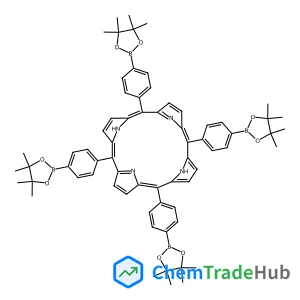
5,10,15,20-tetrakis(4-boronic acid pinacol ester phenyl) porphyrin
CAS Number:
1332748-00-1
Molecular Formula:
C68H74B4N4O8
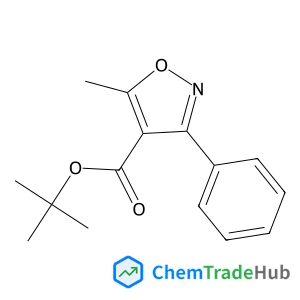
2-Methyl-2-propanyl 5-methyl-3-phenyl-1,2-oxazole-4-carboxylate
CAS Number:
211429-79-7
Molecular Formula:
C15H17NO3
![Methyl 3-({2'-[(E)-(hydroxyhydrazono)methyl]-4-biphenylyl}methyl)-2-oxo-2,3-dihydro-1H-benzimidazole-4-carboxylate structure](https://static.chemtradehub.com/structs/149/1499167-72-4-034a.webp "Methyl 3-({2'-[(E)-(hydroxyhydrazono)methyl]-4-biphenylyl}methyl)-2-oxo-2,3-dihydro-1H-benzimidazole-4-carboxylate structure")
Methyl 3-({2'-[(E)-(hydroxyhydrazono)methyl]-4-biphenylyl}methyl)-2-oxo-2,3-dihydro-1H-benzimidazole-4-carboxylate
CAS Number:
1499167-72-4
Molecular Formula:
C23H20N4O4
Recommended Suppliers





Disclaimer
This page provides academic journal information for reference and research purposes only. We are not affiliated with any journal publishers and do not handle publication submissions. For publication-related inquiries, please contact the respective journal publishers directly.
If you notice any inaccuracies in the information displayed, please contact us at support@chemtradehub.com. We will promptly review and address your concerns.