












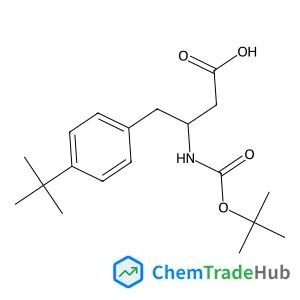
(S)-3-((tert-Butoxycarbonyl)amino)-4-(4-(tert-butyl)phenyl)butanoic acid
CAS Number:
403661-85-8
Molecular Formula:
C19H29NO4
Megan M. Maurer, Gregory C. Donohoe, Stephen J. Valentine
Over the last decade, the field of ion mobility-mass spectrometry (IM-MS) has experienced dramatic growth in its application toward ion structure characterization. Enabling advances in instrumentation during this time period include improved conformation resolution and ion sensitivity. Such advances have rendered IM-MS a powerful approach for characterizing samples presenting a diverse array of ion structures. The structural heterogeneity that can be interrogated by IM-MS techniques now ranges from samples containing mixtures of small molecules exhibiting a variety of structural types to those containing very large protein complexes and subcomplexes. In addition to this diversity, IM-MS techniques have been used to probe spontaneous and induced structural transformations occurring in solution or the gas phase. To support these measurement efforts, significant advances have been made in theoretical methods aimed at translating IM-MS data into structural information. These efforts have ranged from providing more reliable trial structures for comparison to the experimental measurements to dramatically reducing the time required to calculate collision cross sections for such structures. In this short review, recent advances in developments in IM-MS instrumentation, techniques, and theory are discussed with regard to their implications for characterization of gas- and solution-phase structural heterogeneity.
DOI: 10.1039/C5AN00712G
Mohammad Ali Al-Ameen, Ji Li, David G. Beer, Gargi Ghosh
DOI: 10.1039/C5AN00358J
Huimin Deng, Xinjian Yang, Zhiqiang Gao
DOI: 10.1039/C4AN02133A
Huadong Xu, Panli Zuo, Shirong Wang, Li Zhou, Xiaoxuan Sun, Meiqin Hu, Bin Liu, Qihui Wu, Haiqiang Dou, Bing Liu, Feipeng Zhu, Sasa Teng, Xiaoyu Zhang, Li Wang, Qing Li, Mu Jin, Xinjiang Kang, Wei Xiong, Changhe Wang, Zhuan Zhou
DOI: 10.1039/C4AN02074J
M. A. Prieto, J. A. Vazquez, M. A. Murado
DOI: 10.1039/C4AN02136C
Ke Zhang, Qian Li, Jia Xu, Junxiu Liu, Jia Ke, Wei Kang, Tao Li, Furong Ma
DOI: 10.1039/C5AN00110B
Yongmin Ma, Tao Zhou, Robert C. Hider
DOI: 10.1039/C5AN00123D
Na Weng, Lingyan Liu
DOI: 10.1039/C4AN00815D
When handling 4-Methyl-6-(trifluoromethyl)quinoline (CAS: 40716-16-3), safety go...
4-(3,5-Difluorophenyl)aniline is an aromatic organic compound with the CAS numbe...
5-{[4-(Trifluoromethyl)phenyl]sulfanyl}-1,2,3-thiadiazole-4-carboxylic acid can ...
The market for 4-Benzylaniline hydrochloride (CAS: 6317-57-3) is steadily growin...
[3-(Diethylsulfamoyl)phenyl]boronic acid is generally considered safe when handl...
3-Bromo-2,5-dimethoxyaniline is mainly used in the pharmaceutical and chemical i...
N-Methyl-1-(5-methyl-1H-indol-3-yl)methanamine (CAS: 915922-67-7) is subject to ...
This compound is primarily used in the pharmaceutical industry for the synthesis...
2-Methyl-2-propanyl [(1S,3R)-3-aminocyclohexyl]carbamate (CAS: 1298101-47-9) sho...
Ethyl 2-bromo-4,4,4-trifluorobutanoate (CAS: 367-33-9) is utilized in the pharma...

Analyst publishes analytical and bioanalytical research that reports premier fundamental discoveries and inventions, and the applications of those discoveries, unconfined by traditional discipline barriers.
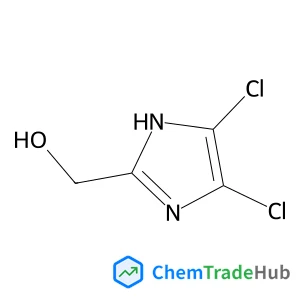
![Imidazo[1,2-c]pyrimidine structure](https://static.chemtradehub.com/structs/274/274-78-2-8b4c.webp "Imidazo[1,2-c]pyrimidine structure")
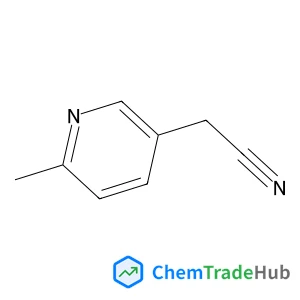
![N-{3-[Benzyl(methyl)amino]propyl}-9-chloro-5,6,7,8-tetrahydro-2-acridinecarboxamide structure](https://static.chemtradehub.com/structs/142/1426944-49-1-1e4c.webp "N-{3-[Benzyl(methyl)amino]propyl}-9-chloro-5,6,7,8-tetrahydro-2-acridinecarboxamide structure")





