












![Imidazo[1,2-c]pyrimidine structure](https://static.chemtradehub.com/structs/274/274-78-2-8b4c.webp "Imidazo[1,2-c]pyrimidine structure")
Synchrotron DUV luminescence micro-imaging to identify and map historical organic coatings on wood
Literature Information
Publication Date
2015-05-22
DOI
10.1039/C5AN00483G
Impact Factor
4.616
Authors
Jean-Philippe Echard, Barbara H. Berrie, Alessandra Vichi, Marie Didier, Matthieu Réfrégiers
View Original
Abstract
Deep ultraviolet (DUV) photoluminescence (PL) microimaging is an emerging approach to characterise materials from historical artefacts (see M. Thoury, J.-P. Echard, M. Réfrégiers, B. H. Berrie, A. Nevin, F. Jamme and L. Bertrand, Anal. Chem., 2011, 83, 1737–1745). Here we further assess the potential of the method to access a deeper understanding of multi-layered varnishes coating wooden violins and lutes. Cross-section micro samples from important 16th- to 18th-century instruments were investigated using synchrotron PL microimaging and microspectroscopy. Excitation was performed in the DUV and the near ultraviolet (NUV) regions, and emission recorded from the DUV to the visible region, at a submicrometric spatial resolution. Intercomparison of microspectroscopy and microimaging was made possible by radiometrically correcting PL spectra both in excitation and emission. Based on an optimised selection of emission and excitation bands, the specific PL features of the organic binding materials allowed a vastly enhanced discrimination between collagen-based sizing layers and oil/resin-based layers compared to epiluminescence microscopy. PL therefore appears to be a very promising analytical tool to provide new insights into the diversity of surface coating techniques used by instrument-makers. More generally, our results demonstrate the potential of synchrotron PL for studying complex heterogeneous materials beyond the core application of the technique to life sciences.
Related Literature
Oxygen-induced degradation of the electronic properties of thin-layer InSe
Xin Wei, Chaofang Dong, Aoni Xu, Xiaogang Li, Digby D. Macdonald
2017-12-19
Paper
DOI: 10.1039/C7CP07446H
A QM/MM and QM/QM/MM study of Kerr, Cotton–Mouton and Jones linear birefringences in liquid acetonitrile
Tobias Fahleson, Jógvan Magnus Haugaard Olsen, Patrick Norman, Antonio Rizzo
2018-01-04
Paper
DOI: 10.1039/C7CP07421B
Correction: Escape of anions from geminate recombination in THF due to charge delocalization
Hung-Cheng Chen, Andrew R. Cook, Sadayuki Asaoka, Jeffery S. Boschen, Theresa L. Windus, John R. Miller
2018-01-23
Correction
DOI: 10.1039/C8CP90016G
Local structural changes in graphene oxide layers induced by silver nanoparticles‡
Sanpon Vantasin, Oraporn Wong-u-ra, Yasutaka Kitahama, Sanong Ekgasit, Yukihiro Ozaki
2018-07-24
Paper
DOI: 10.1039/C8CP02108B
The reaction between the methyl Criegee intermediate and hydrogen chloride: an FTMW spectroscopic study
Carlos Cabezas, Yasuki Endo
2018-08-13
Paper
DOI: 10.1039/C8CP04171G
pH-Dependent cooperativity and existence of a dry molten globule in the folding of a miniprotein BBL
Zhi Yue, Jana Shen
2018-01-10
Paper
DOI: 10.1039/C7CP08296G
Electronic-dimensionality reduction of bulk MoS2 by hydrogen treatment
Beomyoung Kim, Min Park, Kiyohisa Tanaka, Jonathan D. Denlinger, Dorj Odkhuu, Seung Ryong Park
2018-08-22
Paper
DOI: 10.1039/C8CP02365D
Non-Gaussianity, population heterogeneity, and transient superdiffusion in the spreading dynamics of amoeboid cells
Andrey G. Cherstvy, Oliver Nagel, Carsten Beta, Ralf Metzler
2018-08-08
Paper
DOI: 10.1039/C8CP04254C
A computational study of CO oxidation reactions on metal impurities in graphene divacancies
Yanan Tang, Weiguang Chen, Zigang Shen, Chenggang Li, Dongwei Ma, Xianqi Dai
2017-12-15
Paper
DOI: 10.1039/C7CP07397F
Probing molecular forces in multi-component physiological membranes
2017-11-27
Paper
DOI: 10.1039/C7CP05981G
You might also like
Compound Q&A
What precautions should be taken when handling 4-Methyl-6-(trifluoromethyl)quinoline (CAS: 40716-16-3)?
When handling 4-Methyl-6-(trifluoromethyl)quinoline (CAS: 40716-16-3), safety go...
40716-16-34-Methyl-6-(trifluor...
Compound Q&A
What is 4-(3,5-Difluorophenyl)aniline (CAS: 405058-00-6)?
4-(3,5-Difluorophenyl)aniline is an aromatic organic compound with the CAS numbe...
405058-00-64-(3,5-Difluoropheny...
Compound Q&A
How is 5-{[4-(Trifluoromethyl)phenyl]sulfanyl}-1,2,3-thiadiazole-4-carboxylic acid (CAS: 338982-07-3) typically synthesized?
5-{[4-(Trifluoromethyl)phenyl]sulfanyl}-1,2,3-thiadiazole-4-carboxylic acid can ...
338982-07-35-{[4-(Trifluorometh...
Compound Q&A
What is the market or research trend for 4-Benzylaniline hydrochloride (CAS: 6317-57-3)?
The market for 4-Benzylaniline hydrochloride (CAS: 6317-57-3) is steadily growin...
6317-57-34-Benzylaniline hydr...
Compound Q&A
Is [3-(Diethylsulfamoyl)phenyl]boronic acid (CAS: 871329-58-7) safe?
[3-(Diethylsulfamoyl)phenyl]boronic acid is generally considered safe when handl...
871329-58-7[3-(Diethylsulfamoyl...
Compound Q&A
What are the main uses of 3-Bromo-2,5-dimethoxyaniline (CAS: 115929-62-9)?
3-Bromo-2,5-dimethoxyaniline is mainly used in the pharmaceutical and chemical i...
115929-62-93-Bromo-2,5-dimethox...
Compound Q&A
What regulatory guidelines apply to N-Methyl-1-(5-methyl-1H-indol-3-yl)methanamine (CAS: 915922-67-7)?
N-Methyl-1-(5-methyl-1H-indol-3-yl)methanamine (CAS: 915922-67-7) is subject to ...
915922-67-7N-Methyl-1-(5-methyl...
Compound Q&A
What industries use Carbamic acid, N-[(5S)-5,6-diamino-6-oxohexyl]-, 1,1-dimethylethyl ester (CAS: 24828-96-4)?
This compound is primarily used in the pharmaceutical industry for the synthesis...
24828-96-4Carbamic acid, N-[(5...
Compound Q&A
How should 2-Methyl-2-propanyl [(1S,3R)-3-aminocyclohexyl]carbamate (CAS: 1298101-47-9) be stored?
2-Methyl-2-propanyl [(1S,3R)-3-aminocyclohexyl]carbamate (CAS: 1298101-47-9) sho...
1298101-47-92-Methyl-2-propanyl ...
Compound Q&A
What industries use Ethyl 2-bromo-4,4,4-trifluorobutanoate (CAS: 367-33-9)?
Ethyl 2-bromo-4,4,4-trifluorobutanoate (CAS: 367-33-9) is utilized in the pharma...
367-33-9Ethyl 2-bromo-4,4,4-...
Source Journal
Analyst

CiteScore:
7.8
Self-citation Rate:
5.6%
Articles per Year:
653
Analyst publishes analytical and bioanalytical research that reports premier fundamental discoveries and inventions, and the applications of those discoveries, unconfined by traditional discipline barriers.
Recommended Compounds
![2,4-Dichloro-6-isopropyl-5H-pyrrolo[3,4-d]pyrimidin-7(6H)-one structure](https://static.chemtradehub.com/structs/107/1079649-94-7-ad4a.webp "2,4-Dichloro-6-isopropyl-5H-pyrrolo[3,4-d]pyrimidin-7(6H)-one structure")
2,4-Dichloro-6-isopropyl-5H-pyrrolo[3,4-d]pyrimidin-7(6H)-one
CAS Number:
1079649-94-7
Molecular Formula:
C9H9Cl2N3O

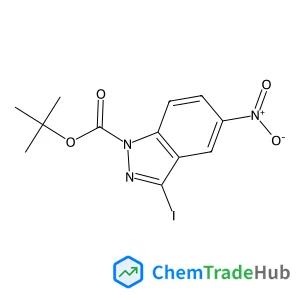
Tert-butyl 3-iodo-5-nitro-1H-indazole-1-carboxylate
CAS Number:
459133-69-8
Molecular Formula:
C12H12IN3O4
Recommended Suppliers






Disclaimer
This page provides academic journal information for reference and research purposes only. We are not affiliated with any journal publishers and do not handle publication submissions. For publication-related inquiries, please contact the respective journal publishers directly.
If you notice any inaccuracies in the information displayed, please contact us at support@chemtradehub.com. We will promptly review and address your concerns.