



Separating the contributions of the volume change upon mixing, permittivity contrast and molecular interactions in the excess relative permittivity of liquid mixtures
Literature Information
Publication Date
2015-04-20
DOI
10.1039/C4CP05987E
Impact Factor
3.676
Authors
T. P. Iglesias, João Carlos R. Reis
View Original
Abstract
The excess relative permittivity of binary systems is separated into three parts. The excess molar volume is the basis for estimating the volume-change contribution. It is proposed to evaluate the electrical permittivity of liquid mixtures, which is solely due to the composition and the relative permittivities of pure components, named permittivity contrast contribution, using the classic local field approach in the case of point-dipoles contained in Lorentz's spherical cavities embedded in the corresponding ideal mixture. The effect of molecular interactions is simply estimated by the difference required to make up experimental excess relative permittivities. This analysis has been applied to 16 binary aqueous organic and organic–organic systems and the estimated values for the contribution of molecular interactions provide interesting insights into the molecular arrangement of these liquid mixtures and the suitability of solvents for determining solute dipole moments.
Recommended Journals

Journal of Chemical Sciences

Main Group Chemistry

Atomization and Sprays

Bioorganic & Medicinal Chemistry Letters

Electroanalysis

Bioorganic & Medicinal Chemistry

Journal of the Indian Institute of Science

Herald of the Russian Academy of Sciences

Biocatalysis and Biotransformation

Medicinal Chemistry Research
Related Literature
Freezing and melting line invariants of the Lennard-Jones system
Lorenzo Costigliola, Thomas B. Schrøder, Jeppe C. Dyre
2016-04-18
Paper
DOI: 10.1039/C5CP06363A
Determination of accurate electron chiral asymmetries in fenchone and camphor in the VUV range: sensitivity to isomerism and enantiomeric purity
Laurent Nahon, Lipsa Nag, Gustavo A. Garcia, Uwe Meierhenrich, Samuel Beaulieu, Vincent Wanie, Valérie Blanchet, Romain Géneaux, Ivan Powis
2016-04-11
Paper
DOI: 10.1039/C6CP01293K
The relative diffusive transport rate of SrI2 in water changes over the nanometer length scale as measured by coherent quasielastic neutron scattering
2016-04-08
Paper
DOI: 10.1039/C5CP05663B
A quantitative assessment of chemical perturbations in thermotropic cyanobiphenyls
Sebastiano Guerra, Thibault Dutronc, Emmanuel Terazzi, Laure Guénée, Claude Piguet
2016-05-13
Paper
DOI: 10.1039/C6CP01058J
Heat transport through a solid–solid junction: the interface as an autonomous thermodynamic system
Riccardo Rurali, Xavier Cartoixà, Thuat T. Trinh, Dick Bedeaux, Signe Kjelstrup
2016-04-26
Communication
DOI: 10.1039/C6CP01872F
Evaluating the solid electrolyte interphase formed on silicon electrodes: a comparison of ex situ X-ray photoelectron spectroscopy and in situ neutron reflectometry
T. M. Fears, M. Doucet, J. F. Browning, J. K. S. Baldwin, J. G. Winiarz, H. Kaiser, H. Taub, R. L. Sacci, G. M. Veith
2016-04-15
Paper
DOI: 10.1039/C6CP00978F
Stokes and anti-Stokes luminescence in Tm3+/Yb3+-doped Lu3Ga5O12 nano-garnets: a study of multipolar interactions and energy transfer dynamics
Mamilla Rathaiah, Pamuluri Haritha, Antonio Diego Lozano-Gorrín, Palamandala Babu, Chalicheemalapalli Kulala Jayasankar, Ulises Ruyman Rodríguez-Mendoza, Victor Lavín, Vemula Venkatramu
2016-05-17
Paper
DOI: 10.1039/C6CP01639A
The effect of the metal fragment on the aromaticity and synchronicity of the gold(i)-catalysed divinylcyclopropane–cycloheptadiene rearrangement
Israel Fernández
2015-11-19
Paper
DOI: 10.1039/C5CP06523B
Structural reconstruction and spontaneous formation of Fe polynuclears: a self-assembly of Fe–porphyrin coordination chains on Au(111) revealed by scanning tunneling microscopy
Yuxu Wang, Kun Zhou, Ziliang Shi
2016-04-27
Paper
DOI: 10.1039/C6CP01836J
You might also like
Compound Q&A
What are the main uses of 4-Nitrophenyl phosphate disodium salt hexahydrate (CAS: 333338-18-4)?
4-Nitrophenyl phosphate disodium salt hexahydrate is primarily used as a substra...
333338-18-44-Nitrophenyl phosph...
Compound Q&A
What are the main uses of 2-(Trifluoromethyl)-1,3-oxazole-4-carboxylic Acid (CAS: 1060816-01-4)?
2-(Trifluoromethyl)-1,3-oxazole-4-carboxylic Acid (CAS: 1060816-01-4) is widely ...
1060816-01-42-(Trifluoromethyl)-...
Compound Q&A
How should 2-Fluoro-4-biphenylcarboxylic acid (CAS: 137045-30-8) be stored?
2-Fluoro-4-biphenylcarboxylic acid should be stored in a cool, dry place at room...
137045-30-82-Fluoro-4-biphenylc...
Compound Q&A
What industries use Prednisolone-21-Carboxylic Acid (CAS: 61549-70-0)?
Prednisolone-21-Carboxylic Acid is primarily used in the pharmaceutical industry...
61549-70-0Prednisolone-21-Carb...
Compound Q&A
How should 4-(Hydrazinomethyl)-1,2,3-benzenetriol (CAS: 3614-72-0) be stored?
4-(Hydrazinomethyl)-1,2,3-benzenetriol (CAS: 3614-72-0) should be stored in a co...
3614-72-04-(Hydrazinomethyl)-...
Compound Q&A
What industries use 4-Amino-1-methyl-1H-pyrazole-5-carboxylic acid hydrochloride (CAS: 92534-70-8)?
4-Amino-1-methyl-1H-pyrazole-5-carboxylic acid hydrochloride (CAS: 92534-70-8) i...
92534-70-84-Amino-1-methyl-1H-...
Compound Q&A
What regulatory guidelines apply to dehydropachymic acid (CAS: 77012-31-8)?
Dehydropachymic acid (CAS: 77012-31-8) is regulated by various agencies. It fall...
77012-31-8Dehydropachymic acid
Compound Q&A
What is the market or research trend for 6-[(2,2-Dimethylpropanoyl)amino]nicotinic acid (CAS: 898561-66-5)?
The market and research trends for 6-[(2,2-Dimethylpropanoyl)amino]nicotinic aci...
898561-66-56-[(2,2-Dimethylprop...
Compound Q&A
How should 1,10-Phenanthroline-2,9-dicarbaldehyde (CAS: 57709-62-3) be stored?
1,10-Phenanthroline-2,9-dicarbaldehyde should be stored in a cool, dry place awa...
57709-62-31,10-Phenanthroline-...
Compound Q&A
How is 5-Carbamoyl-11-oxo-10,11-dihydro-5H-dibenzo[b,f]azepin-10-yl acetate (CAS: 113952-21-9) typically synthesized?
5-Carbamoyl-11-oxo-10,11-dihydro-5H-dibenzo[b,f]azepin-10-yl acetate can be synt...
113952-21-95-Carbamoyl-11-oxo-1...
Source Journal
Physical Chemistry Chemical Physics

CiteScore:
5.5
Self-citation Rate:
10.3%
Articles per Year:
3036
Physical Chemistry Chemical Physics (PCCP) is an international journal co-owned by 19 physical chemistry and physics societies from around the world. This journal publishes original, cutting-edge research in physical chemistry, chemical physics and biophysical chemistry. To be suitable for publication in PCCP, articles must include significant innovation and/or insight into physical chemistry; this is the most important criterion that reviewers and Editors will judge against when evaluating submissions. The journal has a broad scope and welcomes contributions spanning experiment, theory, computation and data science. Topical coverage includes spectroscopy, dynamics, kinetics, statistical mechanics, thermodynamics, electrochemistry, catalysis, surface science, quantum mechanics, quantum computing and machine learning. Interdisciplinary research areas such as polymers and soft matter, materials, nanoscience, energy, surfaces/interfaces, and biophysical chemistry are welcomed if they demonstrate significant innovation and/or insight into physical chemistry. Joined experimental/theoretical studies are particularly appreciated when complementary and based on up-to-date approaches.
Recommended Compounds
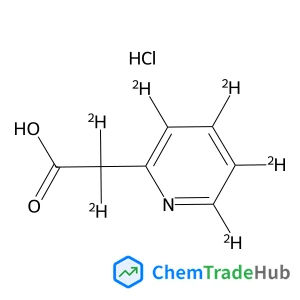
2,2-dideuterio-2-(3,4,5,6-tetradeuterio-2-pyridyl)acetic acid;hydrochloride
CAS Number:
1329799-67-8
Molecular Formula:
C7H2ClD6NO2
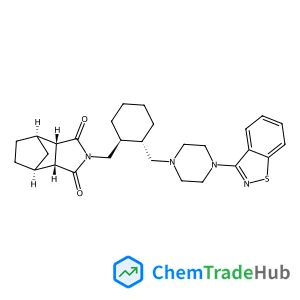


4-Methyl-3-morpholinecarboxylic acid hydrochloride (1:1)
CAS Number:
1240518-90-4
Molecular Formula:
C6H12ClNO3
Recommended Suppliers







Disclaimer
This page provides academic journal information for reference and research purposes only. We are not affiliated with any journal publishers and do not handle publication submissions. For publication-related inquiries, please contact the respective journal publishers directly.
If you notice any inaccuracies in the information displayed, please contact us at support@chemtradehub.com. We will promptly review and address your concerns.