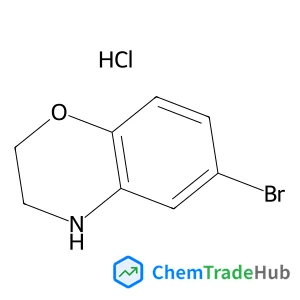
phosphoryl}methyl 4-methylbenzenesulfonate structure](https://static.chemtradehub.com/structs/864/864068-45-1-ba7c.webp "{[3-(Hexadecyloxy)propoxy](hydroxy)phosphoryl}methyl 4-methylbenzenesulfonate structure")
{[3-(Hexadecyloxy)propoxy](hydroxy)phosphoryl}methyl 4-methylbenzenesulfonate
CAS Number:
864068-45-1
Molecular Formula:
C27H49O7PS
Recep Kas, Ruud Kortlever, Alexander Milbrat, Marc T. M. Koper, Guido Mul, Jonas Baltrusaitis
The catalytic activity and hydrocarbon selectivity in electrochemical carbon dioxide (CO2) reduction on cuprous oxide (Cu2O) derived copper nanoparticles is discussed. Cuprous oxide films with [100], [110] and [111] orientation and variable thickness were electrodeposited by reduction of copper(II) lactate on commercially available copper plates. After initiation of the electrochemical CO2 reduction by these oxide structures, the selectivity of the process was found to largely depend on the parent Cu2O film thickness, rather than on the initial crystal orientation. Starting with thin Cu2O films, besides CO and hydrogen, selective formation of ethylene is observed with very high ethylene-to-methane ratios (∼8 to 12). In addition to these products, thicker Cu2O films yield a remarkably large amount of ethane. Long term Faradaic efficiency analysis of hydrocarbons shows no sign of deactivation of the electrodes after 5 hours of continuous experiment. Online mass spectroscopy studies combined with X-ray diffraction data suggest the reduction of the Cu2O films in the presence of CO2, generating a nanoparticulate Cu morphology, prior to the production of hydrogen, CO, and hydrocarbons. Optimizing coverage, number density and size of the copper nanoparticles, as well as local surface pH, may allow highly selective formation of the industrially important product ethylene.

Main Group Chemistry

Bioorganic & Medicinal Chemistry Letters

Journal of the Indian Institute of Science

Critical Reviews in Solid State and Materials Sciences

Bioorganic & Medicinal Chemistry

Chinese Journal of Chemistry

NDT & E International

Medicinal Chemistry Research

Electroanalysis

Herald of the Russian Academy of Sciences
Jing Liu, Weipeng Li, Jin Xie
DOI: 10.1039/C7QO00808B
Yujuan Zhou, Kecheng Jie, Feihe Huang
DOI: 10.1039/C7QO00736A
Changchun Yuan, Bo Liu
DOI: 10.1039/C8QO90004C
Benjamin Laroche
DOI: 10.1039/C7QO00633K
Feng Liu, Jiaxin Tian, Yong Liu, Chuangan Tao, Hao Zhu, Aina Zhang, Dongfang Xu, Baoguo Zhao
DOI: 10.1039/C6QO00846A
Xinling Yu, Qiang Ma, Songyang Lv, Jue Li, Chen Zhang, Li Hai, Qiantao Wang, Yong Wu
DOI: 10.1039/C7QO00556C
Yanni An, Jianxiao Li, Shaorong Yang, Zhongzhi Zhu, Huanfeng Jiang
DOI: 10.1039/C7QO00326A
Yasuhiro Kubota, Masahiro Tsukamoto, Katsuhiro Ohnishi, Jiye Jin, Kazumasa Funabiki, Masaki Matsui
DOI: 10.1039/C7QO00225D
When handling 4-Methyl-6-(trifluoromethyl)quinoline (CAS: 40716-16-3), safety go...
4-(3,5-Difluorophenyl)aniline is an aromatic organic compound with the CAS numbe...
5-{[4-(Trifluoromethyl)phenyl]sulfanyl}-1,2,3-thiadiazole-4-carboxylic acid can ...
The market for 4-Benzylaniline hydrochloride (CAS: 6317-57-3) is steadily growin...
[3-(Diethylsulfamoyl)phenyl]boronic acid is generally considered safe when handl...
3-Bromo-2,5-dimethoxyaniline is mainly used in the pharmaceutical and chemical i...
N-Methyl-1-(5-methyl-1H-indol-3-yl)methanamine (CAS: 915922-67-7) is subject to ...
This compound is primarily used in the pharmaceutical industry for the synthesis...
2-Methyl-2-propanyl [(1S,3R)-3-aminocyclohexyl]carbamate (CAS: 1298101-47-9) sho...
Ethyl 2-bromo-4,4,4-trifluorobutanoate (CAS: 367-33-9) is utilized in the pharma...

Physical Chemistry Chemical Physics (PCCP) is an international journal co-owned by 19 physical chemistry and physics societies from around the world. This journal publishes original, cutting-edge research in physical chemistry, chemical physics and biophysical chemistry. To be suitable for publication in PCCP, articles must include significant innovation and/or insight into physical chemistry; this is the most important criterion that reviewers and Editors will judge against when evaluating submissions. The journal has a broad scope and welcomes contributions spanning experiment, theory, computation and data science. Topical coverage includes spectroscopy, dynamics, kinetics, statistical mechanics, thermodynamics, electrochemistry, catalysis, surface science, quantum mechanics, quantum computing and machine learning. Interdisciplinary research areas such as polymers and soft matter, materials, nanoscience, energy, surfaces/interfaces, and biophysical chemistry are welcomed if they demonstrate significant innovation and/or insight into physical chemistry. Joined experimental/theoretical studies are particularly appreciated when complementary and based on up-to-date approaches.
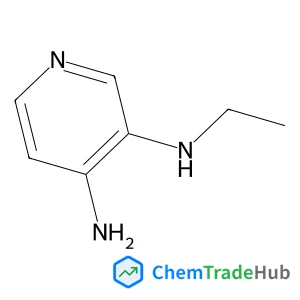
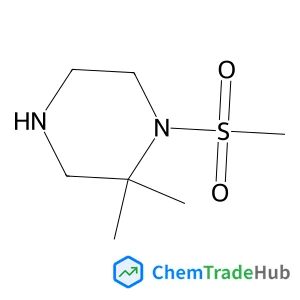
![(2E)-3-(3-Chlorophenyl)-N-{2-[4-(methylsulfonyl)-1-piperazinyl]-2-oxoethyl}acrylamide structure](https://static.chemtradehub.com/structs/250/2505001-54-5-c1e9.webp "(2E)-3-(3-Chlorophenyl)-N-{2-[4-(methylsulfonyl)-1-piperazinyl]-2-oxoethyl}acrylamide structure")