












Built-in potential shift and Schottky-barrier narrowing in organic solar cells with UV-sensitive electron transport layers
Literature Information
Publication Date
2014-04-11
DOI
10.1039/C4CP01251H
Impact Factor
3.676
Authors
Cheng Li, Dan Credgington, Doo-Hyun Ko, Zhuxia Rong, Jianpu Wang, Neil C. Greenham
View Original
Abstract
The performance of organic solar cells incorporating solution-processed titanium suboxide (TiOx) as electron-collecting layers can be improved by UV illumination. We study the mechanism of this improvement using electrical measurements and electroabsorption spectroscopy. We propose a model in which UV illumination modifies the effective work function of the oxide layer through a significant increase in its free electron density. This leads to a dramatic improvement in device power conversion efficiency through several mechanisms – increasing the built-in potential by 0.3 V, increasing the conductivity of the TiOx layer and narrowing the interfacial Schottky barrier between the suboxide and the underlying transparent electrode. This work highlights the importance of considering Fermi-level equilibration when designing multi-layer transparent electrodes.
Recommended Journals
Related Literature
Photoredox meets gold Lewis acid catalysis in the alkylative semipinacol rearrangement: a photocatalyst with a dark side
M. Zidan, T. McCallum, L. Thai-Savard, L. Barriault
2017-08-01
Research Article
DOI: 10.1039/C7QO00590C
Transition-metal-free dehydrogenation coupling of pyridinium through a self-promoted hydride transfer process
Yuzhen Ding, Zhiqiang Pan, Xiaogang Tong
2017-06-12
Research Article
DOI: 10.1039/C7QO00389G
Phosphinodifluoroalkylation of alkynes using P(O)H compounds and ethyl difluoroiodoacetate
Pengbo Zhang, Jianxi Ying, Guo Tang
2017-07-17
Research Article
DOI: 10.1039/C7QO00466D
Manganese-mediated/-catalyzed oxidative carboazidation of acrylamides
Danwei Zhao, Kai Kang, Haizhen Jiang, Hongmei Deng, Yunrong Chen
2017-05-04
Research Article
DOI: 10.1039/C7QO00217C
Tunable regiodivergent phosphine-catalyzed [3 + 2] cycloaddition of alkynones and trifluoroacetyl phenylamides
Yao-Liang Sun, Yin Wei
2017-08-29
Research Article
DOI: 10.1039/C7QO00512A
Ball-milling and cheap reagents breathe green life into the one hundred-year-old Hofmann reaction
Rita Mocci, Sergio Murgia, Lidia De Luca, Francesco Delogu, Andrea Porcheddu
2017-12-11
Research Article
DOI: 10.1039/C7QO01006K
l-Phenylalanine potassium catalyzed asymmetric formal [3 + 3] annulation of 2-enoyl-pyridine N-oxides with acetone
Youguo Xu, Sheng Zhang, Lijun Li, Yukang Wang, Zhenggen Zha, Zhiyong Wang
2017-10-09
Research Article
DOI: 10.1039/C7QO00796E
Copper(ii) catalyzed domino synthesis of quinoline derivatives from arylamines and alkynes
Huimin Dai, Chun-Xiao Li, Chao Yu, Zihao Wang, Hong Yan, Changsheng Lu
2017-07-04
Research Article
DOI: 10.1039/C7QO00333A
A practical approach for the synthesis of oxindole and isatin derivatives by Pd-catalyzed intramolecular amination
Yubo Pang, Mingyu Guan, Runsheng Zeng, Yingsheng Zhao
2017-09-05
Research Article
DOI: 10.1039/C7QO00710H
You might also like
Compound Q&A
What precautions should be taken when handling 4-Methyl-6-(trifluoromethyl)quinoline (CAS: 40716-16-3)?
When handling 4-Methyl-6-(trifluoromethyl)quinoline (CAS: 40716-16-3), safety go...
40716-16-34-Methyl-6-(trifluor...
Compound Q&A
What is 4-(3,5-Difluorophenyl)aniline (CAS: 405058-00-6)?
4-(3,5-Difluorophenyl)aniline is an aromatic organic compound with the CAS numbe...
405058-00-64-(3,5-Difluoropheny...
Compound Q&A
How is 5-{[4-(Trifluoromethyl)phenyl]sulfanyl}-1,2,3-thiadiazole-4-carboxylic acid (CAS: 338982-07-3) typically synthesized?
5-{[4-(Trifluoromethyl)phenyl]sulfanyl}-1,2,3-thiadiazole-4-carboxylic acid can ...
338982-07-35-{[4-(Trifluorometh...
Compound Q&A
What is the market or research trend for 4-Benzylaniline hydrochloride (CAS: 6317-57-3)?
The market for 4-Benzylaniline hydrochloride (CAS: 6317-57-3) is steadily growin...
6317-57-34-Benzylaniline hydr...
Compound Q&A
Is [3-(Diethylsulfamoyl)phenyl]boronic acid (CAS: 871329-58-7) safe?
[3-(Diethylsulfamoyl)phenyl]boronic acid is generally considered safe when handl...
871329-58-7[3-(Diethylsulfamoyl...
Compound Q&A
What are the main uses of 3-Bromo-2,5-dimethoxyaniline (CAS: 115929-62-9)?
3-Bromo-2,5-dimethoxyaniline is mainly used in the pharmaceutical and chemical i...
115929-62-93-Bromo-2,5-dimethox...
Compound Q&A
What regulatory guidelines apply to N-Methyl-1-(5-methyl-1H-indol-3-yl)methanamine (CAS: 915922-67-7)?
N-Methyl-1-(5-methyl-1H-indol-3-yl)methanamine (CAS: 915922-67-7) is subject to ...
915922-67-7N-Methyl-1-(5-methyl...
Compound Q&A
What industries use Carbamic acid, N-[(5S)-5,6-diamino-6-oxohexyl]-, 1,1-dimethylethyl ester (CAS: 24828-96-4)?
This compound is primarily used in the pharmaceutical industry for the synthesis...
24828-96-4Carbamic acid, N-[(5...
Compound Q&A
How should 2-Methyl-2-propanyl [(1S,3R)-3-aminocyclohexyl]carbamate (CAS: 1298101-47-9) be stored?
2-Methyl-2-propanyl [(1S,3R)-3-aminocyclohexyl]carbamate (CAS: 1298101-47-9) sho...
1298101-47-92-Methyl-2-propanyl ...
Compound Q&A
What industries use Ethyl 2-bromo-4,4,4-trifluorobutanoate (CAS: 367-33-9)?
Ethyl 2-bromo-4,4,4-trifluorobutanoate (CAS: 367-33-9) is utilized in the pharma...
367-33-9Ethyl 2-bromo-4,4,4-...
Source Journal
Physical Chemistry Chemical Physics

CiteScore:
5.5
Self-citation Rate:
10.3%
Articles per Year:
3036
Physical Chemistry Chemical Physics (PCCP) is an international journal co-owned by 19 physical chemistry and physics societies from around the world. This journal publishes original, cutting-edge research in physical chemistry, chemical physics and biophysical chemistry. To be suitable for publication in PCCP, articles must include significant innovation and/or insight into physical chemistry; this is the most important criterion that reviewers and Editors will judge against when evaluating submissions. The journal has a broad scope and welcomes contributions spanning experiment, theory, computation and data science. Topical coverage includes spectroscopy, dynamics, kinetics, statistical mechanics, thermodynamics, electrochemistry, catalysis, surface science, quantum mechanics, quantum computing and machine learning. Interdisciplinary research areas such as polymers and soft matter, materials, nanoscience, energy, surfaces/interfaces, and biophysical chemistry are welcomed if they demonstrate significant innovation and/or insight into physical chemistry. Joined experimental/theoretical studies are particularly appreciated when complementary and based on up-to-date approaches.
Recommended Compounds
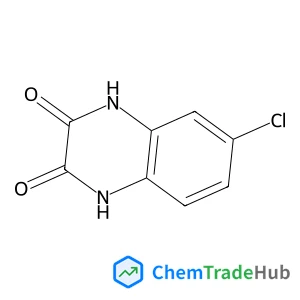
6-CHLORO-2,3-DIOXO-1,2,3,4-TETRAHYDROQUINOXALINE, 97
CAS Number:
169-14-2
Molecular Formula:
C8H5ClN2O2
Recommended Suppliers






Disclaimer
This page provides academic journal information for reference and research purposes only. We are not affiliated with any journal publishers and do not handle publication submissions. For publication-related inquiries, please contact the respective journal publishers directly.
If you notice any inaccuracies in the information displayed, please contact us at support@chemtradehub.com. We will promptly review and address your concerns.