












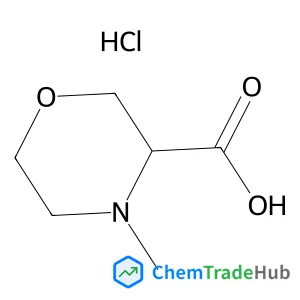
4-Methyl-3-morpholinecarboxylic acid hydrochloride (1:1)
CAS Number:
1240518-90-4
Molecular Formula:
C6H12ClNO3
Eric A. C. Bushnell, Thomas D. Burns, Russell J. Boyd
Herein we present an assessment to determine which of nine well-established DFT functionals best describes the reduction of C2H2Se2−˙. In addition, we have also studied the effects of changing the substituents bound to the alkene functional group of dithiolene and diselenolene ligands. Such ligands are important due to their unique electrochemical and physical properties when ligated to metals. The M06-L functional shows best agreement with the QCISD/cc-pVTZ value of −2.45 V for the reduction potential of the (C2H2Se2˙−/C2H2Se2−2) redox couple. At the M06-L/6-311+G(d,p) level of theory the calculated reduction potential for the (C2H2Se2˙−/C2H2Se2−2) redox couple is only 0.09 V in error. However, as a result of the nature of the oxidized species for the respective ligands the absolute reduction potential of the (C2H2Se2˙−/C2H2Se2−2) redox couple is 0.57 V more oxidizing than the (C2H2S2˙−/C2H2S2−2) redox couple. This is due to the radical electron in C2H2S2˙− being delocalized within the alkene backbone, whereas in C2H2Se2˙− the electron is largely localized on the Se atoms. The relative reducing power of the S- and Se-containing redox couples is shown to vary depending on the choice of substituents. In particular the reduction potential of the various S-containing redox couples range from being 0.34 V more reducing to 0.28 V more oxidizing than the analogous Se-containing redox couples. This difference in the relative reducing power appears to be a result of the nature of the oxidized ligand. Thus, depending on the choice of moiety very different chemistry is seen between the analogous dithiolate and diselenolate ligands.
Pengbo Zhang, Jianxi Ying, Guo Tang
DOI: 10.1039/C7QO00466D
Wen-Zhu Bi, Kai Sun, Chen Qu, Xiao-Lan Chen, Shao-Hua Zhu, Xu Li, Hai-Tao Wu, Li-Kun Duan
DOI: 10.1039/C7QO00311K
Wei-Wei Zhao
DOI: 10.1039/C7QO00621G
Yuzhen Ding, Zhiqiang Pan, Xiaogang Tong
DOI: 10.1039/C7QO00389G
Hongtai Chen, Xiaoyang Wang, Minjie Guo, Wentao Zhao, Xiangyang Tang
DOI: 10.1039/C7QO00611J
Sarah Saint-Auret, Hajer Abdelkafi, Didier Le Nouen, Philippe Bisseret, Nicolas Blanchard
DOI: 10.1039/C7QO00608J
Zi Yang, Xing Lin, Lianhui Wang, Xiuling Cui
DOI: 10.1039/C7QO00541E
Changchun Yuan, Bo Liu
DOI: 10.1039/C8QO90004C
When handling 4-Methyl-6-(trifluoromethyl)quinoline (CAS: 40716-16-3), safety go...
4-(3,5-Difluorophenyl)aniline is an aromatic organic compound with the CAS numbe...
5-{[4-(Trifluoromethyl)phenyl]sulfanyl}-1,2,3-thiadiazole-4-carboxylic acid can ...
The market for 4-Benzylaniline hydrochloride (CAS: 6317-57-3) is steadily growin...
[3-(Diethylsulfamoyl)phenyl]boronic acid is generally considered safe when handl...
3-Bromo-2,5-dimethoxyaniline is mainly used in the pharmaceutical and chemical i...
N-Methyl-1-(5-methyl-1H-indol-3-yl)methanamine (CAS: 915922-67-7) is subject to ...
This compound is primarily used in the pharmaceutical industry for the synthesis...
2-Methyl-2-propanyl [(1S,3R)-3-aminocyclohexyl]carbamate (CAS: 1298101-47-9) sho...
Ethyl 2-bromo-4,4,4-trifluorobutanoate (CAS: 367-33-9) is utilized in the pharma...

Physical Chemistry Chemical Physics (PCCP) is an international journal co-owned by 19 physical chemistry and physics societies from around the world. This journal publishes original, cutting-edge research in physical chemistry, chemical physics and biophysical chemistry. To be suitable for publication in PCCP, articles must include significant innovation and/or insight into physical chemistry; this is the most important criterion that reviewers and Editors will judge against when evaluating submissions. The journal has a broad scope and welcomes contributions spanning experiment, theory, computation and data science. Topical coverage includes spectroscopy, dynamics, kinetics, statistical mechanics, thermodynamics, electrochemistry, catalysis, surface science, quantum mechanics, quantum computing and machine learning. Interdisciplinary research areas such as polymers and soft matter, materials, nanoscience, energy, surfaces/interfaces, and biophysical chemistry are welcomed if they demonstrate significant innovation and/or insight into physical chemistry. Joined experimental/theoretical studies are particularly appreciated when complementary and based on up-to-date approaches.
![(2E)-3-(3-Chlorophenyl)-N-{2-[4-(methylsulfonyl)-1-piperazinyl]-2-oxoethyl}acrylamide structure](https://static.chemtradehub.com/structs/250/2505001-54-5-c1e9.webp "(2E)-3-(3-Chlorophenyl)-N-{2-[4-(methylsulfonyl)-1-piperazinyl]-2-oxoethyl}acrylamide structure")
phosphoryl}methyl 4-methylbenzenesulfonate structure](https://static.chemtradehub.com/structs/864/864068-45-1-ba7c.webp "{[3-(Hexadecyloxy)propoxy](hydroxy)phosphoryl}methyl 4-methylbenzenesulfonate structure")
![[(1S,2S,3R,4S,7R,9S,10S,12R,15S)-4,12-Diacetyloxy-15-[(2R,3S)-3-benzamido-3-phenyl-2-(2,2,2-trichloroethoxycarbonyloxy)propanoyl]oxy-1,9-dihydroxy-10,14,17,17-tetramethyl-11-oxo-6-oxatetracyclo[11.3.1.03,10.04,7]heptadec-13-en-2-yl] benzoate structure](https://static.chemtradehub.com/structs/100/100431-55-8-7104.webp "[(1S,2S,3R,4S,7R,9S,10S,12R,15S)-4,12-Diacetyloxy-15-[(2R,3S)-3-benzamido-3-phenyl-2-(2,2,2-trichloroethoxycarbonyloxy)propanoyl]oxy-1,9-dihydroxy-10,14,17,17-tetramethyl-11-oxo-6-oxatetracyclo[11.3.1.03,10.04,7]heptadec-13-en-2-yl] benzoate structure")




