












Probing crystal structure and mesoscale assembly of cellulose microfibrils in plant cell walls, tunicate tests, and bacterial films using vibrational Sum Frequency Generation (SFG) spectroscopy
Literature Information
Publication Date
2014-04-24
DOI
10.1039/C4CP00515E
Impact Factor
3.676
Authors
Christopher M. Lee, Kabindra Kafle, Yong Bum Park, Seong H. Kim
View Original
Abstract
This study reports that the noncentrosymmetry and phase synchronization requirements of the sum frequency generation (SFG) process can be used to distinguish the three-dimensional organization of crystalline cellulose distributed in amorphous matrices. Crystalline cellulose is produced as microfibrils with a few nanometer diameters by plants, tunicates, and bacteria. Crystalline cellulose microfibrils are embedded in wall matrix polymers and assembled into hierarchical structures that are precisely designed for specific biological and mechanical functions. The cellulose microfibril assemblies inside cell walls are extremely difficult to probe. The comparison of vibrational SFG spectra of uniaxially-aligned and disordered films of cellulose Iβ nanocrystals revealed that the spectral features cannot be fully explained with the crystallographic unit structure of cellulose. The overall SFG intensity, the alkyl peak shape, and the alkyl/hydroxyl intensity ratio are sensitive to the lateral packing and net directionality of the cellulose microfibrils within the SFG coherence length scale. It was also found that the OH SFG stretch peaks could be deconvoluted to find the polymorphic crystal structures of cellulose (Iα and Iβ). These findings were used to investigate the cellulose crystal structure and mesoscale cellulose microfibril packing in intact plant cell walls, tunicate tests, and bacterial films.
Related Literature
Electrochemical CO2 reduction on Cu2O-derived copper nanoparticles: controlling the catalytic selectivity of hydrocarbons
Recep Kas, Ruud Kortlever, Alexander Milbrat, Marc T. M. Koper, Guido Mul, Jonas Baltrusaitis
2014-04-29
Paper
DOI: 10.1039/C4CP01520G
Enhanced thermoelectric efficiency in ferromagnetic silicene nanoribbons terminated with hydrogen atoms
K. Zberecki, R. Swirkowicz, M. Wierzbicki
2014-05-01
Paper
DOI: 10.1039/C4CP01039F
Interactions of ionic liquids with hydration layer of poly(N-isopropylacrylamide): comprehensive analysis of biophysical techniques results
P. Madhusudhana Reddy, R. Umapathi, P. Venkatesu
2014-03-05
Paper
DOI: 10.1039/C4CP00010B
Electrochemical tuning of oxygen-containing groups on graphene oxides: towards control of the performance for the analysis of biomarkers
Chee Shan Lim, Adriano Ambrosi, Martin Pumera
2014-05-09
Paper
DOI: 10.1039/C4CP01558D
Synergistic contributions by decreasing overpotential and enhancing charge-transfer in α-Fe2O3/Mn3O4/graphene catalysts with heterostructures for photocatalytic water oxidation
Shunli Yin, Xiaomei Wang, Zhigang Mou, Yijie Wu, Hui Huang, Mingshan Zhu, Yukou Du, Ping Yang
2014-03-11
Paper
DOI: 10.1039/C4CP00384E
Graphene mechanics: II. Atomic stress distribution during indentation until rupture
Bogdan I. Costescu
2014-04-15
Paper
DOI: 10.1039/C3CP55341H
Computer simulation studies on passive recruitment dynamics of lipids induced by the adsorption of charged nanoparticles
2014-05-07
Paper
DOI: 10.1039/C4CP00553H
Oxygen vacancy formation and the ion migration mechanism in layered perovskite (Sr,La)3Fe2O7−δ
Isao Kagomiya, Keigo Jimbo, Ken-ichi Kakimoto, Masanobu Nakayama, Olivier Masson
2014-04-02
Paper
DOI: 10.1039/C4CP00736K
Thermoresponsive fluorescence of a graphene–polymer composite based on a local surface plasmon resonance effect
Yunyun Huang, Wensheng Lin, Kan Chen, Wenkai Zhang, Xudong Chen, Ming Qiu Zhang
2014-03-14
Paper
DOI: 10.1039/C4CP00773E
You might also like
Compound Q&A
What precautions should be taken when handling 4-Methyl-6-(trifluoromethyl)quinoline (CAS: 40716-16-3)?
When handling 4-Methyl-6-(trifluoromethyl)quinoline (CAS: 40716-16-3), safety go...
40716-16-34-Methyl-6-(trifluor...
Compound Q&A
What is 4-(3,5-Difluorophenyl)aniline (CAS: 405058-00-6)?
4-(3,5-Difluorophenyl)aniline is an aromatic organic compound with the CAS numbe...
405058-00-64-(3,5-Difluoropheny...
Compound Q&A
How is 5-{[4-(Trifluoromethyl)phenyl]sulfanyl}-1,2,3-thiadiazole-4-carboxylic acid (CAS: 338982-07-3) typically synthesized?
5-{[4-(Trifluoromethyl)phenyl]sulfanyl}-1,2,3-thiadiazole-4-carboxylic acid can ...
338982-07-35-{[4-(Trifluorometh...
Compound Q&A
What is the market or research trend for 4-Benzylaniline hydrochloride (CAS: 6317-57-3)?
The market for 4-Benzylaniline hydrochloride (CAS: 6317-57-3) is steadily growin...
6317-57-34-Benzylaniline hydr...
Compound Q&A
Is [3-(Diethylsulfamoyl)phenyl]boronic acid (CAS: 871329-58-7) safe?
[3-(Diethylsulfamoyl)phenyl]boronic acid is generally considered safe when handl...
871329-58-7[3-(Diethylsulfamoyl...
Compound Q&A
What are the main uses of 3-Bromo-2,5-dimethoxyaniline (CAS: 115929-62-9)?
3-Bromo-2,5-dimethoxyaniline is mainly used in the pharmaceutical and chemical i...
115929-62-93-Bromo-2,5-dimethox...
Compound Q&A
What regulatory guidelines apply to N-Methyl-1-(5-methyl-1H-indol-3-yl)methanamine (CAS: 915922-67-7)?
N-Methyl-1-(5-methyl-1H-indol-3-yl)methanamine (CAS: 915922-67-7) is subject to ...
915922-67-7N-Methyl-1-(5-methyl...
Compound Q&A
What industries use Carbamic acid, N-[(5S)-5,6-diamino-6-oxohexyl]-, 1,1-dimethylethyl ester (CAS: 24828-96-4)?
This compound is primarily used in the pharmaceutical industry for the synthesis...
24828-96-4Carbamic acid, N-[(5...
Compound Q&A
How should 2-Methyl-2-propanyl [(1S,3R)-3-aminocyclohexyl]carbamate (CAS: 1298101-47-9) be stored?
2-Methyl-2-propanyl [(1S,3R)-3-aminocyclohexyl]carbamate (CAS: 1298101-47-9) sho...
1298101-47-92-Methyl-2-propanyl ...
Compound Q&A
What industries use Ethyl 2-bromo-4,4,4-trifluorobutanoate (CAS: 367-33-9)?
Ethyl 2-bromo-4,4,4-trifluorobutanoate (CAS: 367-33-9) is utilized in the pharma...
367-33-9Ethyl 2-bromo-4,4,4-...
Source Journal
Physical Chemistry Chemical Physics

CiteScore:
5.5
Self-citation Rate:
10.3%
Articles per Year:
3036
Physical Chemistry Chemical Physics (PCCP) is an international journal co-owned by 19 physical chemistry and physics societies from around the world. This journal publishes original, cutting-edge research in physical chemistry, chemical physics and biophysical chemistry. To be suitable for publication in PCCP, articles must include significant innovation and/or insight into physical chemistry; this is the most important criterion that reviewers and Editors will judge against when evaluating submissions. The journal has a broad scope and welcomes contributions spanning experiment, theory, computation and data science. Topical coverage includes spectroscopy, dynamics, kinetics, statistical mechanics, thermodynamics, electrochemistry, catalysis, surface science, quantum mechanics, quantum computing and machine learning. Interdisciplinary research areas such as polymers and soft matter, materials, nanoscience, energy, surfaces/interfaces, and biophysical chemistry are welcomed if they demonstrate significant innovation and/or insight into physical chemistry. Joined experimental/theoretical studies are particularly appreciated when complementary and based on up-to-date approaches.
Recommended Compounds
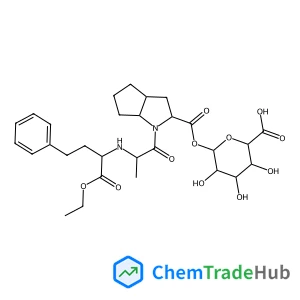
phosphoryl}methyl 4-methylbenzenesulfonate structure](https://static.chemtradehub.com/structs/864/864068-45-1-ba7c.webp "{[3-(Hexadecyloxy)propoxy](hydroxy)phosphoryl}methyl 4-methylbenzenesulfonate structure")
{[3-(Hexadecyloxy)propoxy](hydroxy)phosphoryl}methyl 4-methylbenzenesulfonate
CAS Number:
864068-45-1
Molecular Formula:
C27H49O7PS
Recommended Suppliers





Disclaimer
This page provides academic journal information for reference and research purposes only. We are not affiliated with any journal publishers and do not handle publication submissions. For publication-related inquiries, please contact the respective journal publishers directly.
If you notice any inaccuracies in the information displayed, please contact us at support@chemtradehub.com. We will promptly review and address your concerns.