












Tandem differential mobility spectrometry with ion dissociation in air at ambient pressure and temperature
Literature Information
Publication Date
2015-03-13
DOI
10.1039/C4AN02159B
Impact Factor
4.616
Authors
M. R. Menlyadiev, A. Tarassov, A. M. Kielnecker, G. A. Eiceman
View Original
Abstract
Proton-bound dimers were dissociated to protonated monomers in air at ambient pressure and temperature using electric fields of ultrahigh Field Asymmetric Ion Mobility Spectrometry (ultraFAIMS) with the onset of dissociation for ethyl acetate as 96 Td and for dimethyl methyl phosphonate as 170 Td. Ions then were measured by differential mobility spectrometry (DMS). Fragment ions were formed with propyl acetate at electric fields of 90 Td or greater. The dissociation in ultraFAIMS of ions, with compensation fields near zero, to form smaller ions with new compensation fields, provided a method to improve peak capacity in DMS without gas modifiers. These findings also lay the foundation for a triple stage DMS with a centre stage for ion dissociation or fragmentation.
Related Literature
Flow induced dispersion analysis rapidly quantifies proteins in human plasma samples
Nicklas N. Poulsen, Nina Z. Andersen, Jesper Østergaard, Guisheng Zhuang, Nickolaj J. Petersen, Henrik Jensen
2015-05-27
Communication
DOI: 10.1039/C5AN00697J
Recapitulation of in vivo-like neutrophil transendothelial migration using a microfluidic platform
Xiaojie Wu, Molly A. Newbold, Christy L. Haynes
2015-06-09
Paper
DOI: 10.1039/C5AN00967G
A new and general model to describe, characterize, quantify and classify the interactive effects of temperature and pH on the activity of enzymes
M. A. Prieto, J. A. Vazquez, M. A. Murado
2015-03-27
Paper
DOI: 10.1039/C4AN02136C
Real-time detection of hypochlorite in tap water and biological samples by a colorimetric, ratiometric and near-infrared fluorescent turn-on probe
Shuangshuang Ding, Qiong Zhang, Shuanghong Xue, Guoqiang Feng
2015-05-15
Paper
DOI: 10.1039/C5AN00465A
Di-oxime based selective fluorescent probe for arsenate and arsenite ions in a purely aqueous medium with living cell imaging applications and H-bonding induced microstructure formation
Abu Saleh Musha Islam, Rabiul Alam, Atul Katarkar, Keya Chaudhuri, Mahammad Ali
2015-03-09
Communication
DOI: 10.1039/C5AN00236B
Simultaneous imaging of the topography and electrochemical activity of a 2D carbon nanotube network using a dual functional L-shaped nanoprobe
Eunjoo Lee, Jungwoo Sung, Taechang An, Heungjoo Shin, Hong Gil Nam, Geunbae Lim
2015-03-10
Paper
DOI: 10.1039/C4AN02139H
Simple preparation of positively charged silver nanoparticles for detection of anions by surface-enhanced Raman spectroscopy
A. Stewart, S. Murray, S. E. J. Bell
2015-02-25
Paper
DOI: 10.1039/C4AN02305F
Sensing applications based on plasmonic nanopores: The hole story
2015-02-05
Critical Review
DOI: 10.1039/C4AN02258K
You might also like
Compound Q&A
What precautions should be taken when handling 4-Methyl-6-(trifluoromethyl)quinoline (CAS: 40716-16-3)?
When handling 4-Methyl-6-(trifluoromethyl)quinoline (CAS: 40716-16-3), safety go...
40716-16-34-Methyl-6-(trifluor...
Compound Q&A
What is 4-(3,5-Difluorophenyl)aniline (CAS: 405058-00-6)?
4-(3,5-Difluorophenyl)aniline is an aromatic organic compound with the CAS numbe...
405058-00-64-(3,5-Difluoropheny...
Compound Q&A
How is 5-{[4-(Trifluoromethyl)phenyl]sulfanyl}-1,2,3-thiadiazole-4-carboxylic acid (CAS: 338982-07-3) typically synthesized?
5-{[4-(Trifluoromethyl)phenyl]sulfanyl}-1,2,3-thiadiazole-4-carboxylic acid can ...
338982-07-35-{[4-(Trifluorometh...
Compound Q&A
What is the market or research trend for 4-Benzylaniline hydrochloride (CAS: 6317-57-3)?
The market for 4-Benzylaniline hydrochloride (CAS: 6317-57-3) is steadily growin...
6317-57-34-Benzylaniline hydr...
Compound Q&A
Is [3-(Diethylsulfamoyl)phenyl]boronic acid (CAS: 871329-58-7) safe?
[3-(Diethylsulfamoyl)phenyl]boronic acid is generally considered safe when handl...
871329-58-7[3-(Diethylsulfamoyl...
Compound Q&A
What are the main uses of 3-Bromo-2,5-dimethoxyaniline (CAS: 115929-62-9)?
3-Bromo-2,5-dimethoxyaniline is mainly used in the pharmaceutical and chemical i...
115929-62-93-Bromo-2,5-dimethox...
Compound Q&A
What regulatory guidelines apply to N-Methyl-1-(5-methyl-1H-indol-3-yl)methanamine (CAS: 915922-67-7)?
N-Methyl-1-(5-methyl-1H-indol-3-yl)methanamine (CAS: 915922-67-7) is subject to ...
915922-67-7N-Methyl-1-(5-methyl...
Compound Q&A
What industries use Carbamic acid, N-[(5S)-5,6-diamino-6-oxohexyl]-, 1,1-dimethylethyl ester (CAS: 24828-96-4)?
This compound is primarily used in the pharmaceutical industry for the synthesis...
24828-96-4Carbamic acid, N-[(5...
Compound Q&A
How should 2-Methyl-2-propanyl [(1S,3R)-3-aminocyclohexyl]carbamate (CAS: 1298101-47-9) be stored?
2-Methyl-2-propanyl [(1S,3R)-3-aminocyclohexyl]carbamate (CAS: 1298101-47-9) sho...
1298101-47-92-Methyl-2-propanyl ...
Compound Q&A
What industries use Ethyl 2-bromo-4,4,4-trifluorobutanoate (CAS: 367-33-9)?
Ethyl 2-bromo-4,4,4-trifluorobutanoate (CAS: 367-33-9) is utilized in the pharma...
367-33-9Ethyl 2-bromo-4,4,4-...
Source Journal
Analyst

CiteScore:
7.8
Self-citation Rate:
5.6%
Articles per Year:
653
Analyst publishes analytical and bioanalytical research that reports premier fundamental discoveries and inventions, and the applications of those discoveries, unconfined by traditional discipline barriers.
Recommended Compounds
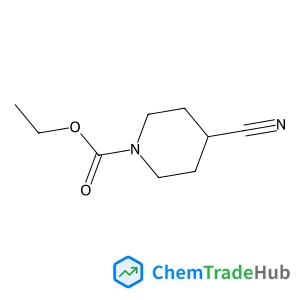
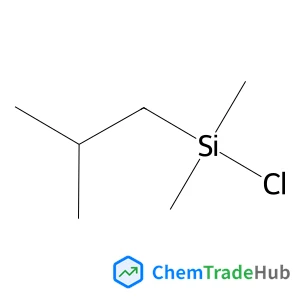
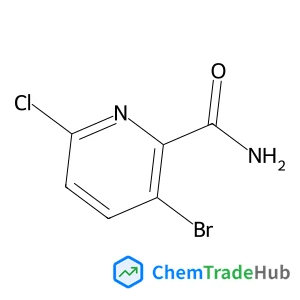
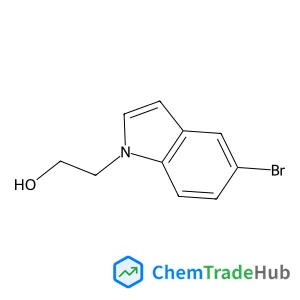
![Methyl 3-({2'-[(E)-(hydroxyhydrazono)methyl]-4-biphenylyl}methyl)-2-oxo-2,3-dihydro-1H-benzimidazole-4-carboxylate structure](https://static.chemtradehub.com/structs/149/1499167-72-4-034a.webp "Methyl 3-({2'-[(E)-(hydroxyhydrazono)methyl]-4-biphenylyl}methyl)-2-oxo-2,3-dihydro-1H-benzimidazole-4-carboxylate structure")
Methyl 3-({2'-[(E)-(hydroxyhydrazono)methyl]-4-biphenylyl}methyl)-2-oxo-2,3-dihydro-1H-benzimidazole-4-carboxylate
CAS Number:
1499167-72-4
Molecular Formula:
C23H20N4O4
Recommended Suppliers







Disclaimer
This page provides academic journal information for reference and research purposes only. We are not affiliated with any journal publishers and do not handle publication submissions. For publication-related inquiries, please contact the respective journal publishers directly.
If you notice any inaccuracies in the information displayed, please contact us at support@chemtradehub.com. We will promptly review and address your concerns.