


phosphoryl}methyl 4-methylbenzenesulfonate structure](https://static.chemtradehub.com/structs/864/864068-45-1-ba7c.webp "{[3-(Hexadecyloxy)propoxy](hydroxy)phosphoryl}methyl 4-methylbenzenesulfonate structure")
{[3-(Hexadecyloxy)propoxy](hydroxy)phosphoryl}methyl 4-methylbenzenesulfonate
CAS Number:
864068-45-1
Molecular Formula:
C27H49O7PS
Siham Telitel, Yoshifumi Amamoto, Julien Poly, Fabrice Morlet-Savary, Olivier Soppera, Jacques Lalevée, Krzysztof Matyjaszewski
Poly(n-butyl acrylate) networks were prepared by conducting click chemistry between dialkyne alkoxyamines and azide functionalized star-like oligomers synthesized by ATRP. The dissociation of alkoxyamines under UV irradiation was exploited to cleave the junctions between the network of star-like precursors. The efficiency of the cleavage, generating dangling nitroxides and increased mobility of poly(n-butyl acrylate) segments, was examined by ESR monitoring. The network progressively reformed after irradiation via the recombination of radical species. These reactions resulted in self-healing behavior, which was observed by AFM.

Russian Journal of Applied Chemistry

Russian Journal of Organic Chemistry

Journal of Saudi Chemical Society

Journal of Natural Medicines

Current Opinion in Solid State & Materials Science

Nature Medicine

Chemical Communications

Chemistry Education Research and Practice

Russian Chemical Bulletin

Organic Process Research & Development
C. Emilio Cárdenas, A. Tlahuice-Flores
DOI: 10.1039/D1CP02332B
Rabindranath Paul, Sandip Paul
DOI: 10.1039/D1CP01187A
Yoichi Murakami, Kenji Kamada
DOI: 10.1039/D1CP02654B
Chao He, Shane J. Goettl, Zhenghai Yang, Srinivas Doddipatla, Ralf I. Kaiser, Mateus Xavier Silva, Breno R. L. Galvão
DOI: 10.1039/D1CP02812J
Joanne L. Woodhouse, Alice Henley, Ross Lewin, John M. Ward, Helen C. Hailes, Anastasia V. Bochenkova, Helen H. Fielding
DOI: 10.1039/D1CP01901E
DOI: 10.1039/D1CP02697F
Anastasia D. Volosatova, Mariia A. Lukianova, Pavel V. Zasimov, Vladimir I. Feldman
DOI: 10.1039/D1CP01598B
Yudai Samejima, Seiichiro Nakabayashi
DOI: 10.1039/D1CP02371C
Shiliang (Johnathan) Tan, D. D. Do
DOI: 10.1039/D1CP02308J
Qianqian Wang, Qinggao Zhang, Elaine Lai Han Leung, Yingqing Chen, Xiaojun Yao
DOI: 10.1039/D1CP02783B
4-Nitrophenyl phosphate disodium salt hexahydrate is primarily used as a substra...
2-(Trifluoromethyl)-1,3-oxazole-4-carboxylic Acid (CAS: 1060816-01-4) is widely ...
2-Fluoro-4-biphenylcarboxylic acid should be stored in a cool, dry place at room...
Prednisolone-21-Carboxylic Acid is primarily used in the pharmaceutical industry...
4-(Hydrazinomethyl)-1,2,3-benzenetriol (CAS: 3614-72-0) should be stored in a co...
4-Amino-1-methyl-1H-pyrazole-5-carboxylic acid hydrochloride (CAS: 92534-70-8) i...
Dehydropachymic acid (CAS: 77012-31-8) is regulated by various agencies. It fall...
The market and research trends for 6-[(2,2-Dimethylpropanoyl)amino]nicotinic aci...
1,10-Phenanthroline-2,9-dicarbaldehyde should be stored in a cool, dry place awa...
5-Carbamoyl-11-oxo-10,11-dihydro-5H-dibenzo[b,f]azepin-10-yl acetate can be synt...

Polymer Chemistry welcomes submissions in all areas of polymer science that have a strong focus on macromolecular chemistry. Manuscripts may cover a broad range of fields, yet no direct application focus is required.
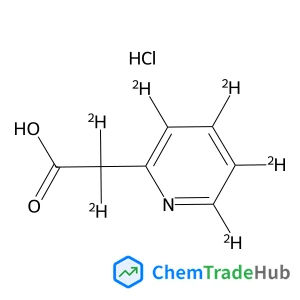
![(3R,5R)-1-[(Benzyloxy)carbonyl]-5-methyl-3-piperidinecarboxylic acid structure](https://static.chemtradehub.com/structs/126/1269757-29-0-c552.webp "(3R,5R)-1-[(Benzyloxy)carbonyl]-5-methyl-3-piperidinecarboxylic acid structure")
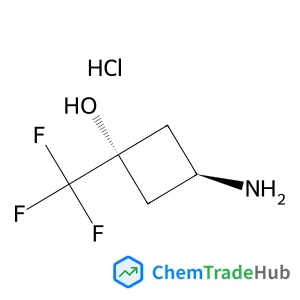
![1-[(4-Methylphenyl)sulfonyl]-3-(4,4,5,5-tetramethyl-1,3,2-dioxaborolan-2-yl)-1H-pyrrolo[2,3-b]pyridine-5-carbonitrile structure](https://static.chemtradehub.com/structs/143/1434747-57-5-fc0d.webp "1-[(4-Methylphenyl)sulfonyl]-3-(4,4,5,5-tetramethyl-1,3,2-dioxaborolan-2-yl)-1H-pyrrolo[2,3-b]pyridine-5-carbonitrile structure")


