



The synthesis and characterization of supramolecular elastomers based on linear carboxyl-terminated polydimethylsiloxane oligomers
Literature Information
Publication Date
2013-08-07
DOI
10.1039/C3PY01005H
Impact Factor
5.582
Authors
Lin Yang, Yaling Lin, Lianshi Wang, Anqiang Zhang
View Original
Abstract
Supramolecular elastomers obtained through a two-step reaction of linear carboxyl-terminated polydimethylsiloxane oligomers (PDMS–COOH2) with diethylenetriamine (DETA) and urea show reasonable hysteresis and acceptable self-healing properties. The results of temperature-dependent infrared analysis suggest the existence of hydrogen bonding interactions with good thermal reversibility in the matrix. Differential scanning calorimetry (DSC) and X-ray diffraction (XRD) analyses demonstrate that the supramolecular network structure is totally amorphous at room temperature. The rheological, mechanical and self-healing properties are closely related to the PDMS chain length, whereas the stability seems to be independent of the PDMS chain length. The viscoelastic properties of these materials are believed to be the result of entangled chains in the amorphous matrix. Only the hydrogen bonds formed by 1,1-dialkylurea groups and imidazolidone derivatives serve as effective crosslinks for contributing to the stability of the supramolecular network.
Recommended Journals

Nature Medicine

Chemistry Education Research and Practice

Russian Journal of Applied Chemistry

Chemical Communications

Acta Materialia

Journal of Peptide Science

Current Opinion in Solid State & Materials Science

Current Opinion in Colloid & Interface Science

Saudi Pharmaceutical Journal

Russian Journal of Coordination Chemistry
Related Literature
Subtle structure matters: boosting surface-directed photoelectron transfer via the introduction of specific monovalent oxygen vacancies in TiO2
Fei Li, Dong Wang, Xue-Qing Gong
2021-08-18
Paper
DOI: 10.1039/D1CP02787E
Experimental and computational investigation of the bond energy of thorium dicarbonyl cation and theoretical elucidation of its isomerization mechanism to the thermodynamically most stable isomer, thorium oxide ketenylidene cation, OTh+CCO
Arjun Kafle, P. B. Armentrout
2021-12-07
Paper
DOI: 10.1039/D1CP04263G
Investigating the role of Cu-oxo species in Cu-nitrate formation over Cu-CHA catalysts
Chiara Negri, Gabriele Deplano, Kirill A. Lomachenko, Ton V. W. Janssens, Elisa Borfecchia, Gloria Berlier, Silvia Bordiga
2021-08-13
Paper
DOI: 10.1039/D1CP01754C
Kinetics of photon upconversion by triplet–triplet annihilation: a comprehensive tutorial
Yoichi Murakami, Kenji Kamada
2021-08-02
Perspective
DOI: 10.1039/D1CP02654B
Transient absorption spectroscopy of the electron transfer step in the photochemically activated polymerizations of N-ethylcarbazole and 9-phenylcarbazole
Georgia L. Thornton, Ryan Phelps, Andrew J. Orr-Ewing
2021-08-05
Paper
DOI: 10.1039/D1CP03137F
Directed gas-phase preparation of the elusive phosphinosilylidyne (SiPH2, X2A′′) and cis/trans phosphinidenesilyl (HSiPH; X2A′) radicals under single-collision conditions
Chao He, Shane J. Goettl, Zhenghai Yang, Srinivas Doddipatla, Ralf I. Kaiser, Mateus Xavier Silva, Breno R. L. Galvão
2021-08-12
Paper
DOI: 10.1039/D1CP02812J
Reduced-dimensional surface hopping with offline–online computations
Zachary Morrow, Hyuk-Yong Kwon, C. T. Kelley, Elena Jakubikova
2021-08-19
Paper
DOI: 10.1039/D1CP03446D
Adsorption and reaction mechanisms of single and double H2O molecules on graphene surfaces with defects: a density functional theory study
Zeng Liang, Kejiang Li, Ziming Wang, Yushan Bu, Jianliang Zhang
2021-08-11
Paper
DOI: 10.1039/D1CP02595C
Wide-angle X-ray scattering and molecular dynamics simulations of supercooled protein hydration water
Maddalena Bin, Rafat Yousif, Sharon Berkowicz, Sudipta Das, Daniel Schlesinger, Fivos Perakis
2021-07-12
Paper
DOI: 10.1039/D1CP02126E
You might also like
Compound Q&A
What are the main uses of 4-Nitrophenyl phosphate disodium salt hexahydrate (CAS: 333338-18-4)?
4-Nitrophenyl phosphate disodium salt hexahydrate is primarily used as a substra...
333338-18-44-Nitrophenyl phosph...
Compound Q&A
What are the main uses of 2-(Trifluoromethyl)-1,3-oxazole-4-carboxylic Acid (CAS: 1060816-01-4)?
2-(Trifluoromethyl)-1,3-oxazole-4-carboxylic Acid (CAS: 1060816-01-4) is widely ...
1060816-01-42-(Trifluoromethyl)-...
Compound Q&A
How should 2-Fluoro-4-biphenylcarboxylic acid (CAS: 137045-30-8) be stored?
2-Fluoro-4-biphenylcarboxylic acid should be stored in a cool, dry place at room...
137045-30-82-Fluoro-4-biphenylc...
Compound Q&A
What industries use Prednisolone-21-Carboxylic Acid (CAS: 61549-70-0)?
Prednisolone-21-Carboxylic Acid is primarily used in the pharmaceutical industry...
61549-70-0Prednisolone-21-Carb...
Compound Q&A
How should 4-(Hydrazinomethyl)-1,2,3-benzenetriol (CAS: 3614-72-0) be stored?
4-(Hydrazinomethyl)-1,2,3-benzenetriol (CAS: 3614-72-0) should be stored in a co...
3614-72-04-(Hydrazinomethyl)-...
Compound Q&A
What industries use 4-Amino-1-methyl-1H-pyrazole-5-carboxylic acid hydrochloride (CAS: 92534-70-8)?
4-Amino-1-methyl-1H-pyrazole-5-carboxylic acid hydrochloride (CAS: 92534-70-8) i...
92534-70-84-Amino-1-methyl-1H-...
Compound Q&A
What regulatory guidelines apply to dehydropachymic acid (CAS: 77012-31-8)?
Dehydropachymic acid (CAS: 77012-31-8) is regulated by various agencies. It fall...
77012-31-8Dehydropachymic acid
Compound Q&A
What is the market or research trend for 6-[(2,2-Dimethylpropanoyl)amino]nicotinic acid (CAS: 898561-66-5)?
The market and research trends for 6-[(2,2-Dimethylpropanoyl)amino]nicotinic aci...
898561-66-56-[(2,2-Dimethylprop...
Compound Q&A
How should 1,10-Phenanthroline-2,9-dicarbaldehyde (CAS: 57709-62-3) be stored?
1,10-Phenanthroline-2,9-dicarbaldehyde should be stored in a cool, dry place awa...
57709-62-31,10-Phenanthroline-...
Compound Q&A
How is 5-Carbamoyl-11-oxo-10,11-dihydro-5H-dibenzo[b,f]azepin-10-yl acetate (CAS: 113952-21-9) typically synthesized?
5-Carbamoyl-11-oxo-10,11-dihydro-5H-dibenzo[b,f]azepin-10-yl acetate can be synt...
113952-21-95-Carbamoyl-11-oxo-1...
Source Journal
Polymer Chemistry

CiteScore:
8.6
Self-citation Rate:
7.3%
Articles per Year:
457
Polymer Chemistry welcomes submissions in all areas of polymer science that have a strong focus on macromolecular chemistry. Manuscripts may cover a broad range of fields, yet no direct application focus is required.
Recommended Compounds
![(3R,5R)-1-[(Benzyloxy)carbonyl]-5-methyl-3-piperidinecarboxylic acid structure](https://static.chemtradehub.com/structs/126/1269757-29-0-c552.webp "(3R,5R)-1-[(Benzyloxy)carbonyl]-5-methyl-3-piperidinecarboxylic acid structure")
(3R,5R)-1-[(Benzyloxy)carbonyl]-5-methyl-3-piperidinecarboxylic acid
CAS Number:
1269757-29-0
Molecular Formula:
C15H19NO4
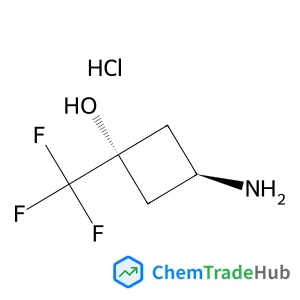
cis-3-Amino-1-(trifluoromethyl)cyclobutanol hydrochloride (1:1)
CAS Number:
1408075-16-0
Molecular Formula:
C5H9ClF3NO
Recommended Suppliers





Disclaimer
This page provides academic journal information for reference and research purposes only. We are not affiliated with any journal publishers and do not handle publication submissions. For publication-related inquiries, please contact the respective journal publishers directly.
If you notice any inaccuracies in the information displayed, please contact us at support@chemtradehub.com. We will promptly review and address your concerns.