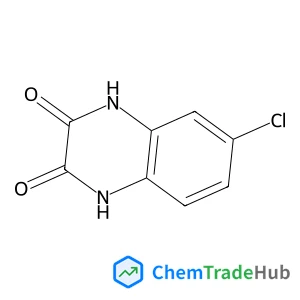
6-CHLORO-2,3-DIOXO-1,2,3,4-TETRAHYDROQUINOXALINE, 97
CAS Number:
169-14-2
Molecular Formula:
C8H5ClN2O2
Yi Wang, Alina M. Alb, Jibao He, Scott M. Grayson
A novel neutral amphiphilic monomer bearing tri(ethylene glycol) monomethyl ether as the hydrophilic part and a decyl group as the hydrophobic part was successfully synthesized and its structure was confirmed by NMR. The monomer was readily polymerized via atom transfer radical polymerization (ATRP) resulting in control over the molecular weight and a narrow dispersity. As a result of the contrasting solubilities of the two side chains, the amphiphilic homopolymers readily self-assembled in a variety of solvents, forming micelles in polar environments and reverse micelles in non-polar environments. The critical micelle concentrations (CMCs) were determined by fluorescence spectroscopy as 0.12 mg mL−1 in hexanes solution and 0.002 mg mL−1 in aqueous solution. The average diameter of the self-assembled aggregates in aqueous solution was calculated by dynamic light scattering (DLS) to be ∼180 nm and this aggregate size was confirmed by transmission electron microscopy (TEM).

Russian Journal of Organic Chemistry

Saudi Pharmaceutical Journal

Journal of Saudi Chemical Society

Organic Process Research & Development

Journal of Peptide Science

Chemistry Education Research and Practice

Russian Journal of Bioorganic Chemistry

Russian Chemical Bulletin

Russian Journal of Applied Chemistry

Chemical Communications
Yiran Cao, Li Zhao, Jieqi Wang, Yunqi Shao, Xuelian He
DOI: 10.1039/D1CP01067K
Fei Li, Dong Wang, Xue-Qing Gong
DOI: 10.1039/D1CP02787E
Amit Kumar, Subhasish Mallick, Pradeep Kumar
DOI: 10.1039/D1CP01048D
Leandro H. Z. Cocca, Jean-Christophe Mulatier, Delphine Pitrat, Chantal Andraud, Lino Misoguti, Cleber R. Mendonça, Marcelo G. Vivas, Leonardo De Boni
DOI: 10.1039/D1CP02553H
Weiliang Wang
DOI: 10.1039/D1CP03117A
Chao He, Shane J. Goettl, Zhenghai Yang, Srinivas Doddipatla, Ralf I. Kaiser, Mateus Xavier Silva, Breno R. L. Galvão
DOI: 10.1039/D1CP02812J
DOI: 10.1039/D1CP03146E
You Yu, Yanhong Shen, Jiangfeng Song
DOI: 10.1039/D1CP01803E
DOI: 10.1039/D1CP04071E
4-Nitrophenyl phosphate disodium salt hexahydrate is primarily used as a substra...
2-(Trifluoromethyl)-1,3-oxazole-4-carboxylic Acid (CAS: 1060816-01-4) is widely ...
2-Fluoro-4-biphenylcarboxylic acid should be stored in a cool, dry place at room...
Prednisolone-21-Carboxylic Acid is primarily used in the pharmaceutical industry...
4-(Hydrazinomethyl)-1,2,3-benzenetriol (CAS: 3614-72-0) should be stored in a co...
4-Amino-1-methyl-1H-pyrazole-5-carboxylic acid hydrochloride (CAS: 92534-70-8) i...
Dehydropachymic acid (CAS: 77012-31-8) is regulated by various agencies. It fall...
The market and research trends for 6-[(2,2-Dimethylpropanoyl)amino]nicotinic aci...
1,10-Phenanthroline-2,9-dicarbaldehyde should be stored in a cool, dry place awa...
5-Carbamoyl-11-oxo-10,11-dihydro-5H-dibenzo[b,f]azepin-10-yl acetate can be synt...

Polymer Chemistry welcomes submissions in all areas of polymer science that have a strong focus on macromolecular chemistry. Manuscripts may cover a broad range of fields, yet no direct application focus is required.