












The relationship between the degree of branching and glass transition temperature of branched polyethylene: experiment and simulation
Literature Information
Publication Date
2013-10-23
DOI
10.1039/C3PY00896G
Impact Factor
5.582
Authors
Xiang Luo, Shijie Xie, Jun Liu, Haibin Hu, Jing Jiang, Wei Huang, Haiyang Gao, Dongshan Zhou, Zhongyuan Lü, Deyue Yan
View Original
Abstract
Polyethylene (PE) samples with similar number-averaged molecular weight but various degrees of branching (DBs) were synthesized by means of ethylene coordination polymerization catalyzed by an amine–imine nickel catalyst or α-diimine palladium catalyst, respectively. Different from the conventional DB of branched PE, here we calculated the DB according to the equation proposed by Hawker et al., i.e., DB is the ratio of the number of dendritic units (–CHCH2–) and terminal units (–CH2CH3) to the number of all units (dendritic, terminal and linear units (–CH2CH2–)) in the PE backbone and branches. The glass transition temperature (Tg) of the prepared PE samples was studied by dynamic mechanical analysis (DMA), differential scanning calorimetry (DSC) and ultra-fast differential scanning calorimetry (UF-DSC). The DSC data show that the crystallization and the glass transition processes of branched PE samples are correlated with each other, and both the melting temperature and the glass transition temperature decreased with increasing DB. The UF-DSC results show that the crystallization of the PE samples with high DB can be prevented when the cooling rate in calorimetry is high enough. For example, the crystallization peak of branched PE with DB = 0.310 totally disappears when the cooling rate in calorimetry reaches more than 5000 K s−1 and only a glass transition takes place at −51.3 °C. Furthermore, correlation between the glass transition temperature and the DB of branched PE has been well established by atomistic molecular dynamics (MD) simulations. The values of MD-determined Tg are in good agreement with experimental results. The difference of free volume in PE systems with different DBs, which is reflected by the calculated radial distribution function, is the reason for the observed change of Tg on DB.
Recommended Journals
Related Literature
Designing new ferromagnetic double perovskites: the coexistence of polar distortion and half-metallicity
Neda Rahmani, Mohammad Ebrahim Ghazi, Morteza Izadifard, Alireza Shabani, Jost Adam
2021-08-26
Paper
DOI: 10.1039/D1CP02479E
Progress in phase-sensitive sum frequency generation spectroscopy
Shoichi Yamaguchi, Takuhiro Otosu
2021-06-25
Perspective
DOI: 10.1039/D1CP01994E
Covalent photofunctionalization and electronic repair of 2H-MoS2via nitrogen incorporation
Helena Osthues, Christian Schwermann, Johann A. Preuß, Thorsten Deilmann, Rudolf Bratschitsch, Michael Rohlfing, Nikos L. Doltsinis
2021-08-13
Paper
DOI: 10.1039/D1CP02313F
The n-type and p-type conductivity mechanisms of the bulk BiOCl photocatalyst from hybrid density functional theory calculations
Bo Kong, Wentao Wang
2021-08-17
Paper
DOI: 10.1039/D1CP02794H
Experimental and computational investigation of the bond energy of thorium dicarbonyl cation and theoretical elucidation of its isomerization mechanism to the thermodynamically most stable isomer, thorium oxide ketenylidene cation, OTh+CCO
Arjun Kafle, P. B. Armentrout
2021-12-07
Paper
DOI: 10.1039/D1CP04263G
Interfacial interactions and structures of protic ionic liquids on a graphite surface: A first-principles study and comparison with aprotic ionic liquids
Yunxiang Lu, Yanmin Xu, Ling Lu, Zhijian Xu, Honglai Liu
2021-08-04
Paper
DOI: 10.1039/D1CP02100A
Electrochemical Pourbaix diagrams of Mg–Zn alloys from first-principles calculations and experimental thermodynamic data
Dominik Legut
2021-08-06
Paper
DOI: 10.1039/D1CP02754A
Catalyzed reaction of isocyanates (RNCO) with water
Mark E. Wolf, Henry F. Schaefer, III
2021-08-19
Paper
DOI: 10.1039/D1CP03302F
On the structure of Au11(SR)9 and Au13(SR)11 clusters
C. Emilio Cárdenas, A. Tlahuice-Flores
2021-08-06
Paper
DOI: 10.1039/D1CP02332B
You might also like
Compound Q&A
What are the main uses of 4-Nitrophenyl phosphate disodium salt hexahydrate (CAS: 333338-18-4)?
4-Nitrophenyl phosphate disodium salt hexahydrate is primarily used as a substra...
333338-18-44-Nitrophenyl phosph...
Compound Q&A
What are the main uses of 2-(Trifluoromethyl)-1,3-oxazole-4-carboxylic Acid (CAS: 1060816-01-4)?
2-(Trifluoromethyl)-1,3-oxazole-4-carboxylic Acid (CAS: 1060816-01-4) is widely ...
1060816-01-42-(Trifluoromethyl)-...
Compound Q&A
How should 2-Fluoro-4-biphenylcarboxylic acid (CAS: 137045-30-8) be stored?
2-Fluoro-4-biphenylcarboxylic acid should be stored in a cool, dry place at room...
137045-30-82-Fluoro-4-biphenylc...
Compound Q&A
What industries use Prednisolone-21-Carboxylic Acid (CAS: 61549-70-0)?
Prednisolone-21-Carboxylic Acid is primarily used in the pharmaceutical industry...
61549-70-0Prednisolone-21-Carb...
Compound Q&A
How should 4-(Hydrazinomethyl)-1,2,3-benzenetriol (CAS: 3614-72-0) be stored?
4-(Hydrazinomethyl)-1,2,3-benzenetriol (CAS: 3614-72-0) should be stored in a co...
3614-72-04-(Hydrazinomethyl)-...
Compound Q&A
What industries use 4-Amino-1-methyl-1H-pyrazole-5-carboxylic acid hydrochloride (CAS: 92534-70-8)?
4-Amino-1-methyl-1H-pyrazole-5-carboxylic acid hydrochloride (CAS: 92534-70-8) i...
92534-70-84-Amino-1-methyl-1H-...
Compound Q&A
What regulatory guidelines apply to dehydropachymic acid (CAS: 77012-31-8)?
Dehydropachymic acid (CAS: 77012-31-8) is regulated by various agencies. It fall...
77012-31-8Dehydropachymic acid
Compound Q&A
What is the market or research trend for 6-[(2,2-Dimethylpropanoyl)amino]nicotinic acid (CAS: 898561-66-5)?
The market and research trends for 6-[(2,2-Dimethylpropanoyl)amino]nicotinic aci...
898561-66-56-[(2,2-Dimethylprop...
Compound Q&A
How should 1,10-Phenanthroline-2,9-dicarbaldehyde (CAS: 57709-62-3) be stored?
1,10-Phenanthroline-2,9-dicarbaldehyde should be stored in a cool, dry place awa...
57709-62-31,10-Phenanthroline-...
Compound Q&A
How is 5-Carbamoyl-11-oxo-10,11-dihydro-5H-dibenzo[b,f]azepin-10-yl acetate (CAS: 113952-21-9) typically synthesized?
5-Carbamoyl-11-oxo-10,11-dihydro-5H-dibenzo[b,f]azepin-10-yl acetate can be synt...
113952-21-95-Carbamoyl-11-oxo-1...
Source Journal
Polymer Chemistry

CiteScore:
8.6
Self-citation Rate:
7.3%
Articles per Year:
457
Polymer Chemistry welcomes submissions in all areas of polymer science that have a strong focus on macromolecular chemistry. Manuscripts may cover a broad range of fields, yet no direct application focus is required.
Recommended Compounds

cis-3-Amino-1-(trifluoromethyl)cyclobutanol hydrochloride (1:1)
CAS Number:
1408075-16-0
Molecular Formula:
C5H9ClF3NO
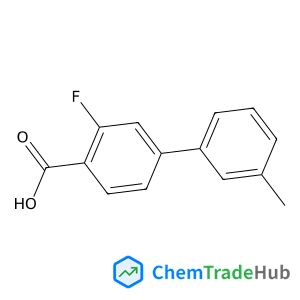
![N-[2-(4-Hydroxyphenoxy)-4-nitrophenyl]methanesulfonamide structure](https://static.chemtradehub.com/structs/109/109032-22-6-7c88.webp "N-[2-(4-Hydroxyphenoxy)-4-nitrophenyl]methanesulfonamide structure")
N-[2-(4-Hydroxyphenoxy)-4-nitrophenyl]methanesulfonamide
CAS Number:
109032-22-6
Molecular Formula:
C13H12N2O6S
Recommended Suppliers






Disclaimer
This page provides academic journal information for reference and research purposes only. We are not affiliated with any journal publishers and do not handle publication submissions. For publication-related inquiries, please contact the respective journal publishers directly.
If you notice any inaccuracies in the information displayed, please contact us at support@chemtradehub.com. We will promptly review and address your concerns.