



A biomimic pH-sensitive polymeric prodrug based on polycarbonate for intracellular drug delivery
Literature Information
Publication Date
2013-09-09
DOI
10.1039/C3PY00861D
Impact Factor
5.582
Authors
Haibo Wang, Yin Wang, Yangjun Chen, Qiao Jin, Jian Ji
View Original
Abstract
A biodegradable and endosomal pH-sensitive polymeric prodrug poly(5-methyl-5-allyloxycarbonyl-1,3-dioxan-2-one)-graft-12-acryloyloxy dodecyl phosphorylcholine-co-6-maleimidocaproyl-doxorubicin (PMAC-graft-(ADPC-co-Mal-DOX) was synthesized by ring-opening polymerization (ROP) and “click” reaction. DOX was conjugated to the polymer by hydrazone bonds which would result in a pH-sensitive controlled release of drug. The polymeric prodrug can form a self-assembled micellar structure which was confirmed by dynamic light scattering (DLS) and transmission electron microscopy (TEM). Flow cytometry and fluorescence microscopy results demonstrated that prodrug micelles could be internalized by cancer cells remarkably. In vitro drug release studies showed that the release of DOX was faster at endosomal pH (pH = 5.0) than at normal physiological environment (pH = 7.4). Moreover, this prodrug exhibited high cytotoxicity against HepG2 cells and HeLa cells, indicating its great potential for cancer therapy.
Recommended Journals

Journal of Peptide Science

Russian Journal of Bioorganic Chemistry

Crystallography Reports

New Journal of Chemistry

Acta Materialia

Drug Discovery Today

Current Opinion in Solid State & Materials Science

Organic Process Research & Development

Saudi Pharmaceutical Journal

Chemistry Education Research and Practice
Related Literature
Effect of solvent motions on the dynamics of the Diels–Alder reaction
Xiaoyong Zhang, Jeremy N. Harvey
2021-12-13
Paper
DOI: 10.1039/D1CP05272A
First-principles prediction of infrared phonon and dielectric function in biaxial hyperbolic van der Waals crystal α-MoO3
Zhen Tong, Traian Dumitrică
2021-08-11
Paper
DOI: 10.1039/D1CP00682G
Exploring the thermodynamic, kinetic and inhibitory mechanisms of 5-iTU targeting mitotic kinase haspin by integrated molecular dynamics
Qianqian Wang, Qinggao Zhang, Elaine Lai Han Leung, Yingqing Chen, Xiaojun Yao
2021-08-03
Paper
DOI: 10.1039/D1CP02783B
Defect evolution behaviors from single sulfur point vacancies to line vacancies in monolayer molybdenum disulfide
Xiaoyong Yang, Ming Jiang, Lixin Chen, Zhiwen Chen
2021-08-10
Paper
DOI: 10.1039/D1CP02852A
Fcc vs. hcp competition in colloidal hard-sphere nucleation: on their relative stability, interfacial free energy and nucleation rate
Ignacio Sanchez-Burgos, Eduardo Sanz, Carlos Vega, Jorge R. Espinosa
2021-08-13
Paper
DOI: 10.1039/D1CP01784E
Massive dipoles across the metal–semiconductor cluster interface: towards chemically controlled rectification
Dinesh Bista, Turbasu Sengupta, Shiv N. Khanna
2021-08-11
Paper
DOI: 10.1039/D1CP02420E
Effect of Hf doping on He behavior in tritium storage material ZrCo
You Yu, Yanhong Shen, Jiangfeng Song
2021-08-13
Paper
DOI: 10.1039/D1CP01803E
The NV−⋯N+ charged pair in diamond: a quantum-mechanical investigation
Anna Maria Ferrari, Khaled E. El-Kelany, Francesco Silvio Gentile, Maddalena D’Amore, Roberto Dovesi
2021-08-12
Paper
DOI: 10.1039/D1CP02363B
The extrinsic nature of double broadband photoluminescence from the BaTiO3 perovskite: generation of white light emitters
J. L. Clabel H., G. Nicolodelli, G. Lozano C., V. A. G. Rivera, S. O. Ferreira, Alexandre H. Pinto, M. Siu Li, E. Marega, Jr.
2021-07-26
Paper
DOI: 10.1039/D1CP01765A
Novel Janus diamane C4FCl: a stable and moderate bandgap semiconductor with a huge excitonic effect
2021-08-09
Paper
DOI: 10.1039/D1CP02632A
You might also like
Compound Q&A
What are the main uses of 4-Nitrophenyl phosphate disodium salt hexahydrate (CAS: 333338-18-4)?
4-Nitrophenyl phosphate disodium salt hexahydrate is primarily used as a substra...
333338-18-44-Nitrophenyl phosph...
Compound Q&A
What are the main uses of 2-(Trifluoromethyl)-1,3-oxazole-4-carboxylic Acid (CAS: 1060816-01-4)?
2-(Trifluoromethyl)-1,3-oxazole-4-carboxylic Acid (CAS: 1060816-01-4) is widely ...
1060816-01-42-(Trifluoromethyl)-...
Compound Q&A
How should 2-Fluoro-4-biphenylcarboxylic acid (CAS: 137045-30-8) be stored?
2-Fluoro-4-biphenylcarboxylic acid should be stored in a cool, dry place at room...
137045-30-82-Fluoro-4-biphenylc...
Compound Q&A
What industries use Prednisolone-21-Carboxylic Acid (CAS: 61549-70-0)?
Prednisolone-21-Carboxylic Acid is primarily used in the pharmaceutical industry...
61549-70-0Prednisolone-21-Carb...
Compound Q&A
How should 4-(Hydrazinomethyl)-1,2,3-benzenetriol (CAS: 3614-72-0) be stored?
4-(Hydrazinomethyl)-1,2,3-benzenetriol (CAS: 3614-72-0) should be stored in a co...
3614-72-04-(Hydrazinomethyl)-...
Compound Q&A
What industries use 4-Amino-1-methyl-1H-pyrazole-5-carboxylic acid hydrochloride (CAS: 92534-70-8)?
4-Amino-1-methyl-1H-pyrazole-5-carboxylic acid hydrochloride (CAS: 92534-70-8) i...
92534-70-84-Amino-1-methyl-1H-...
Compound Q&A
What regulatory guidelines apply to dehydropachymic acid (CAS: 77012-31-8)?
Dehydropachymic acid (CAS: 77012-31-8) is regulated by various agencies. It fall...
77012-31-8Dehydropachymic acid
Compound Q&A
What is the market or research trend for 6-[(2,2-Dimethylpropanoyl)amino]nicotinic acid (CAS: 898561-66-5)?
The market and research trends for 6-[(2,2-Dimethylpropanoyl)amino]nicotinic aci...
898561-66-56-[(2,2-Dimethylprop...
Compound Q&A
How should 1,10-Phenanthroline-2,9-dicarbaldehyde (CAS: 57709-62-3) be stored?
1,10-Phenanthroline-2,9-dicarbaldehyde should be stored in a cool, dry place awa...
57709-62-31,10-Phenanthroline-...
Compound Q&A
How is 5-Carbamoyl-11-oxo-10,11-dihydro-5H-dibenzo[b,f]azepin-10-yl acetate (CAS: 113952-21-9) typically synthesized?
5-Carbamoyl-11-oxo-10,11-dihydro-5H-dibenzo[b,f]azepin-10-yl acetate can be synt...
113952-21-95-Carbamoyl-11-oxo-1...
Source Journal
Polymer Chemistry

CiteScore:
8.6
Self-citation Rate:
7.3%
Articles per Year:
457
Polymer Chemistry welcomes submissions in all areas of polymer science that have a strong focus on macromolecular chemistry. Manuscripts may cover a broad range of fields, yet no direct application focus is required.
Recommended Compounds


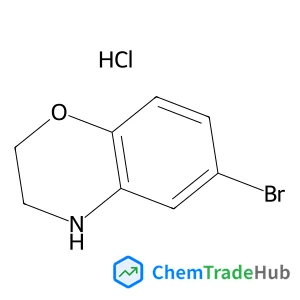
6-Bromo-3,4-dihydro-2H-1,4-benzoxazine hydrochloride (1:1)
CAS Number:
1260803-10-8
Molecular Formula:
C8H9BrClNO

Recommended Suppliers






Disclaimer
This page provides academic journal information for reference and research purposes only. We are not affiliated with any journal publishers and do not handle publication submissions. For publication-related inquiries, please contact the respective journal publishers directly.
If you notice any inaccuracies in the information displayed, please contact us at support@chemtradehub.com. We will promptly review and address your concerns.