












![[(1S,2S,3R,4S,7R,9S,10S,12R,15S)-4,12-Diacetyloxy-15-[(2R,3S)-3-benzamido-3-phenyl-2-(2,2,2-trichloroethoxycarbonyloxy)propanoyl]oxy-1,9-dihydroxy-10,14,17,17-tetramethyl-11-oxo-6-oxatetracyclo[11.3.1.03,10.04,7]heptadec-13-en-2-yl] benzoate structure](https://static.chemtradehub.com/structs/100/100431-55-8-7104.webp "[(1S,2S,3R,4S,7R,9S,10S,12R,15S)-4,12-Diacetyloxy-15-[(2R,3S)-3-benzamido-3-phenyl-2-(2,2,2-trichloroethoxycarbonyloxy)propanoyl]oxy-1,9-dihydroxy-10,14,17,17-tetramethyl-11-oxo-6-oxatetracyclo[11.3.1.03,10.04,7]heptadec-13-en-2-yl] benzoate structure")
Nanocomposites of bacterial cellulose nanofibers and chitin nanocrystals: fabrication, characterization and bactericidal activity
Literature Information
Publication Date
2013-09-17
DOI
10.1039/C3GC41700J
Impact Factor
10.182
Authors
Núria Butchosa, Christian Brown, Lars A. Berglund, Vincent Bulone
View Original
Abstract
An environmentally friendly approach was implemented for the production of nanocomposites with bactericidal activity, using bacterial cellulose (BC) nanofibers and chitin nanocrystals (ChNCs). The antibacterial activity of ChNCs prepared by acid hydrolysis, TEMPO-mediated oxidation or partial deacetylation of α-chitin powder was assessed and the structure of the ChNC nanoparticles was characterized by X-ray diffraction, atomic force microscopy, and solid-state 13C-NMR. The partially deacetylated ChNCs (D-ChNC) showed the strongest antibacterial activity, with 99 ± 1% inhibition of bacterial growth compared to control samples. Nanocomposites were prepared from BC nanofibers and D-ChNC by (i) in situ biosynthesis with the addition of D-ChNC nanoparticles in the culture medium of Acetobacter aceti, and (ii) post-modification by mixing D-ChNC with disintegrated BC in an aqueous suspension. The structure and mechanical properties of the BC/D-ChNC nanocomposites were characterized by Fourier transform infrared spectroscopy, elemental analysis, field-emission scanning electron microscopy, and an Instron universal testing machine. The bactericidal activity of the nanocomposites increased with the D-ChNC content, with a reduction in bacterial growth by 3.0 log units when the D-ChNC content was 50%. D-ChNC nanoparticles have great potential as substitutes for unfriendly antimicrobial compounds such as heavy metal nanoparticles and synthetic polymers to introduce antibacterial properties to cellulosic materials.
Recommended Journals
Related Literature
Facilely printed silk fibroin hydrogel microparticles as injectable long-lasting fillers
Chunyu Xie, Xiao Yang, Fan Zheng, Jiahao Shi, Caixia Huo, Zuyuan Wang, Bo Xiao, Lian Duan
2023-11-14
Paper
DOI: 10.1039/D3BM01488F
Determination of total phenol and six polyphenolic components in the polyphenol extract of Cinnamomi cortex by quantitative nuclear magnetic resonance spectroscopy
Dan-Yang Shi, Yu Zheng, Qiang-Sheng Guo, Can Gong, Xu Xu, Jian-Ping Gao
2023-11-13
Paper
DOI: 10.1039/D3AY01501G
Oxygen and pH responsive theragnostic liposomes for early-stage diagnosis and photothermal therapy of solid tumours
Siyi Li, Qinglin Wang, Yingying Ren, Pengtao Bao, Shanyue Guan, Xiaochen Qiu
2023-12-12
Paper
DOI: 10.1039/D3BM01514A
Expression of concern: High cytotoxic activity of ZnO@leucovorin nanocomposite based materials against an MCF-7 cell model
Shereen Magdy Bazid, Shimaa Nabih, Md Ariful Ahsan
2023-11-21
Expression of Concern
DOI: 10.1039/D3AY90141F
Molecular beacon decorated silver nanowires for quantitative miRNA detection by a SERS approach
Martina Banchelli, Sara Tombelli, Marella de Angelis, Cristiano D'Andrea, Cosimo Trono, Francesco Baldini, Ambra Giannetti, Paolo Matteini
2023-10-27
Paper
DOI: 10.1039/D3AY01661G
Simultaneous derivatization and extraction of amphetamine and methamphetamine using dispersive liquid–liquid microextraction prior to their analysis using GC-FID in creatine supplements
Mahdi Golsanamlou
2023-10-18
Paper
DOI: 10.1039/D3AY00828B
Differences in the internal energies of ions in electrospray ionization mass spectrometers equipped with capillary–skimmer and capillary–RF lens interfaces
Daiki Asakawa, Ryoma Yamamoto, Nobuyasu Hanari, Kazumi Saikusa
2023-10-03
Paper
DOI: 10.1039/D3AY01450A
Membraneless, self-powered immunosensing of a cardiac biomarker by exploiting a PEC platform based on CaBi2Ta2O9 combined with bismuth oxyiodides
Greicy Kelly Cerqueira Caldas, Guilherme de Abreu Souza, Alan Silva de Menezes, Silma Regina Ferreira Pereira, Rita de Cássia Silva Luz, Flavio Santos Damos
2023-11-02
Paper
DOI: 10.1039/D3AY01309J
Underwater determination of calcium and strontium ions in oilfield produced water by laser-induced breakdown spectroscopy (LIBS)
Nilvan A. Silva, Ivo M. Raimundo, Jr
2023-10-06
Paper
DOI: 10.1039/D3AY01457F
You might also like
Compound Q&A
What are the main uses of 4-Nitrophenyl phosphate disodium salt hexahydrate (CAS: 333338-18-4)?
4-Nitrophenyl phosphate disodium salt hexahydrate is primarily used as a substra...
333338-18-44-Nitrophenyl phosph...
Compound Q&A
What are the main uses of 2-(Trifluoromethyl)-1,3-oxazole-4-carboxylic Acid (CAS: 1060816-01-4)?
2-(Trifluoromethyl)-1,3-oxazole-4-carboxylic Acid (CAS: 1060816-01-4) is widely ...
1060816-01-42-(Trifluoromethyl)-...
Compound Q&A
How should 2-Fluoro-4-biphenylcarboxylic acid (CAS: 137045-30-8) be stored?
2-Fluoro-4-biphenylcarboxylic acid should be stored in a cool, dry place at room...
137045-30-82-Fluoro-4-biphenylc...
Compound Q&A
What industries use Prednisolone-21-Carboxylic Acid (CAS: 61549-70-0)?
Prednisolone-21-Carboxylic Acid is primarily used in the pharmaceutical industry...
61549-70-0Prednisolone-21-Carb...
Compound Q&A
How should 4-(Hydrazinomethyl)-1,2,3-benzenetriol (CAS: 3614-72-0) be stored?
4-(Hydrazinomethyl)-1,2,3-benzenetriol (CAS: 3614-72-0) should be stored in a co...
3614-72-04-(Hydrazinomethyl)-...
Compound Q&A
What industries use 4-Amino-1-methyl-1H-pyrazole-5-carboxylic acid hydrochloride (CAS: 92534-70-8)?
4-Amino-1-methyl-1H-pyrazole-5-carboxylic acid hydrochloride (CAS: 92534-70-8) i...
92534-70-84-Amino-1-methyl-1H-...
Compound Q&A
What regulatory guidelines apply to dehydropachymic acid (CAS: 77012-31-8)?
Dehydropachymic acid (CAS: 77012-31-8) is regulated by various agencies. It fall...
77012-31-8Dehydropachymic acid
Compound Q&A
What is the market or research trend for 6-[(2,2-Dimethylpropanoyl)amino]nicotinic acid (CAS: 898561-66-5)?
The market and research trends for 6-[(2,2-Dimethylpropanoyl)amino]nicotinic aci...
898561-66-56-[(2,2-Dimethylprop...
Compound Q&A
How should 1,10-Phenanthroline-2,9-dicarbaldehyde (CAS: 57709-62-3) be stored?
1,10-Phenanthroline-2,9-dicarbaldehyde should be stored in a cool, dry place awa...
57709-62-31,10-Phenanthroline-...
Compound Q&A
How is 5-Carbamoyl-11-oxo-10,11-dihydro-5H-dibenzo[b,f]azepin-10-yl acetate (CAS: 113952-21-9) typically synthesized?
5-Carbamoyl-11-oxo-10,11-dihydro-5H-dibenzo[b,f]azepin-10-yl acetate can be synt...
113952-21-95-Carbamoyl-11-oxo-1...
Source Journal
Green Chemistry

CiteScore:
16.1
Self-citation Rate:
7.5%
Articles per Year:
944
Green Chemistry provides a unique forum for the publication of innovative research on the development of alternative green and sustainable technologies. The scope of Green Chemistry is based on, but not limited to, the definition proposed by Anastas and Warner (Green Chemistry: Theory and Practice, P T Anastas and J C Warner, Oxford University Press, Oxford, 1998). Green chemistry is the utilisation of a set of principles that reduces or eliminates the use or generation of hazardous substances in the design, manufacture and application of chemical products. Green Chemistry is at the frontiers of this continuously-evolving interdisciplinary science and publishes research that attempts to reduce the environmental impact of the chemical enterprise by developing a technology base that is inherently non-toxic to living things and the environment. Submissions on all aspects of research relating to the endeavour are welcome. The journal publishes original and significant cutting-edge research that is likely to be of wide general appeal. To be published, work must present a significant advance in green chemistry. Papers must contain a comparison with existing methods and demonstrate advantages over those methods before publication can be considered. For more information please see this Editorial. Coverage includes the following, but is not limited to: Design (e.g. biomimicry, design for degradation/recycling/reduced toxicity…) Reagents & Feedstocks (e.g. renewables, CO2, solvents, auxiliary agents, waste utilization…) Synthesis (e.g. organic, inorganic, synthetic biology…) Catalysis (e.g. homogeneous, heterogeneous, enzyme, whole cell…) Process (e.g. process design, intensification, separations, recycling, efficiency…) Energy (e.g. renewable energy, fuels, photovoltaics, fuel cells, energy storage, energy carriers…) Applications (e.g. electronics, dyes, consumer products, coatings, pharmaceuticals, preservatives, building materials, chemicals for industry/agriculture/mining…) Impact (e.g. safety, metrics, LCA, sustainability, (eco)toxicology…) Green chemistry is, by definition, a continuously-evolving frontier. Therefore, the inclusion of a particular material or technology does not, of itself, guarantee that a paper is suitable for the journal. To be suitable, the novel advance should have the potential for reduced environmental impact relative to the state of the art. Green Chemistry does not normally deal with research associated with 'end-of-pipe' or remediation issues.
Recommended Compounds
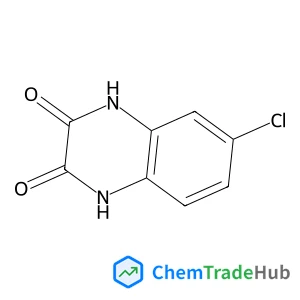
6-CHLORO-2,3-DIOXO-1,2,3,4-TETRAHYDROQUINOXALINE, 97
CAS Number:
169-14-2
Molecular Formula:
C8H5ClN2O2
Recommended Suppliers






Disclaimer
This page provides academic journal information for reference and research purposes only. We are not affiliated with any journal publishers and do not handle publication submissions. For publication-related inquiries, please contact the respective journal publishers directly.
If you notice any inaccuracies in the information displayed, please contact us at support@chemtradehub.com. We will promptly review and address your concerns.