![N-[2-(4-Hydroxyphenoxy)-4-nitrophenyl]methanesulfonamide structure](https://static.chemtradehub.com/structs/109/109032-22-6-7c88.webp "N-[2-(4-Hydroxyphenoxy)-4-nitrophenyl]methanesulfonamide structure")
N-[2-(4-Hydroxyphenoxy)-4-nitrophenyl]methanesulfonamide
CAS Number:
109032-22-6
Molecular Formula:
C13H12N2O6S
Jinliang Song, Honglei Fan, Jun Ma, Buxing Han
Lignocellulosic biomass contains about 45% cellulose. Conversion of cellulose and cellulose-derived glucose into value-added chemicals and liquid fuels benefits sustainable development of our society and has received much attention. Water and ionic liquids (ILs) are two kinds of green solvents. The unusual properties of the green solvents provide some unique advantages for efficient and greener conversion of cellulose and glucose, which have been studied extensively. This review discusses mainly the recent progress in the conversion of glucose and cellulose in water or ILs by oxidation, hydrogenation, and dehydration reactions. An outlook is presented in the last part of the article to highlight the challenges and opportunities related to this interesting area of great importance.
Kota Ando, Masashi Arakawa, Akira Terasaki
DOI: 10.1039/C8CP05955A
Zhiliang Wang, Miaoqiang Lyu, Peng Chen, Songcan Wang, Lianzhou Wang
DOI: 10.1039/C8CP04021D
Nam Kim, Emily Sahadeo, Chanyuan Liu, Olivia Rose
DOI: 10.1039/C8CP04706E
Monika Schönhoff, Cornelia Cramer, Florian Schmidt
DOI: 10.1039/C8CP06075D
Vivekanand Shukla, Anton Grigoriev, Naresh K. Jena
DOI: 10.1039/C8CP03815E
Gary S. Harlow, Iain M. Aldous, Yvonne Gründer, Laurence J. Hardwick, Christopher A. Lucas
DOI: 10.1039/C9CP00499H
Naeem Ullah, Shunwei Chen
DOI: 10.1039/C8CP04806A
William C. Bailey
DOI: 10.1039/C8CP01539B
Lorenz Kranabetter, Paul Martini, Norbert Gitzl, Martin Kuhn, Fatima Saleem, Bilal Rasul, Masoomeh Mahmoodi Darian, Elias Jabbour Al Maalouf, Ivan Sukuba, Alexander Kaiser, Marcelo Goulart, Diethard K. Böhme, Paul Scheier
DOI: 10.1039/C8CP02207K
Mosè Casalegno, Tommaso Nicolini, Antonino Famulari, Guido Raos, Riccardo Po, Stefano V. Meille
DOI: 10.1039/C8CP05820B
4-Nitrophenyl phosphate disodium salt hexahydrate is primarily used as a substra...
2-(Trifluoromethyl)-1,3-oxazole-4-carboxylic Acid (CAS: 1060816-01-4) is widely ...
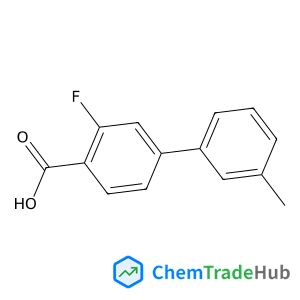
2-Fluoro-4-biphenylcarboxylic acid should be stored in a cool, dry place at room...
Prednisolone-21-Carboxylic Acid is primarily used in the pharmaceutical industry...
4-(Hydrazinomethyl)-1,2,3-benzenetriol (CAS: 3614-72-0) should be stored in a co...
4-Amino-1-methyl-1H-pyrazole-5-carboxylic acid hydrochloride (CAS: 92534-70-8) i...
Dehydropachymic acid (CAS: 77012-31-8) is regulated by various agencies. It fall...
The market and research trends for 6-[(2,2-Dimethylpropanoyl)amino]nicotinic aci...
1,10-Phenanthroline-2,9-dicarbaldehyde should be stored in a cool, dry place awa...
5-Carbamoyl-11-oxo-10,11-dihydro-5H-dibenzo[b,f]azepin-10-yl acetate can be synt...

Green Chemistry provides a unique forum for the publication of innovative research on the development of alternative green and sustainable technologies. The scope of Green Chemistry is based on, but not limited to, the definition proposed by Anastas and Warner (Green Chemistry: Theory and Practice, P T Anastas and J C Warner, Oxford University Press, Oxford, 1998). Green chemistry is the utilisation of a set of principles that reduces or eliminates the use or generation of hazardous substances in the design, manufacture and application of chemical products. Green Chemistry is at the frontiers of this continuously-evolving interdisciplinary science and publishes research that attempts to reduce the environmental impact of the chemical enterprise by developing a technology base that is inherently non-toxic to living things and the environment. Submissions on all aspects of research relating to the endeavour are welcome. The journal publishes original and significant cutting-edge research that is likely to be of wide general appeal. To be published, work must present a significant advance in green chemistry. Papers must contain a comparison with existing methods and demonstrate advantages over those methods before publication can be considered. For more information please see this Editorial. Coverage includes the following, but is not limited to: Design (e.g. biomimicry, design for degradation/recycling/reduced toxicity…) Reagents & Feedstocks (e.g. renewables, CO2, solvents, auxiliary agents, waste utilization…) Synthesis (e.g. organic, inorganic, synthetic biology…) Catalysis (e.g. homogeneous, heterogeneous, enzyme, whole cell…) Process (e.g. process design, intensification, separations, recycling, efficiency…) Energy (e.g. renewable energy, fuels, photovoltaics, fuel cells, energy storage, energy carriers…) Applications (e.g. electronics, dyes, consumer products, coatings, pharmaceuticals, preservatives, building materials, chemicals for industry/agriculture/mining…) Impact (e.g. safety, metrics, LCA, sustainability, (eco)toxicology…) Green chemistry is, by definition, a continuously-evolving frontier. Therefore, the inclusion of a particular material or technology does not, of itself, guarantee that a paper is suitable for the journal. To be suitable, the novel advance should have the potential for reduced environmental impact relative to the state of the art. Green Chemistry does not normally deal with research associated with 'end-of-pipe' or remediation issues.