












Characterization, synthesis and catalysis of hydrotalcite-related materials for highly efficient materials transformations
Literature Information
Publication Date
2013-06-18
DOI
10.1039/C3GC40405F
Impact Factor
10.182
Authors
Shun Nishimura, Atsushi Takagaki, Kohki Ebitani
View Original
Abstract
This review is intended to introduce recent progress in the characterization, synthesis and catalysis of hydrotalcite (HT) and HT-related materials. NMR, in situ neutron diffraction and TG–DTA techniques have been used to determine the local structure and structural changes of HT. Various synthetic methods of controlling the morphology of HT are introduced together with the crystal formation mechanism. The preparation methods of magnetic HTs are also included. The HT acts as a heterogeneous base catalyst for efficient transformations of organic compounds such as the synthesis of glycerol carbonate, transesterification of oils (biodiesel production) and carbon–carbon bond formations. The HT has also been used as a support for immobilizing various metal species (Ru, Pd, Ag, Au, Pt, Cu, V, Mn etc.), which enables highly selective organic reactions such as dehydrogenation of alcohols and deoxygenation of epoxides. Cooperative actions between basic sites of the HT surface and supported metal species are introduced. It is also shown that the HT can work together with other solid acids and metal catalysts to promote sequential reactions in a one-pot manner, which gives us a very important methodology for environmentally-benign synthesis of value-added chemicals, especially from biomass-derived compounds.
Related Literature
Toughening of photo-curable polymer networks: a review
Martin Schwentenwein
2015-11-20
Review Article
DOI: 10.1039/C5PY01631B
pH-Responsive non-ionic diblock copolymers: protonation of a morpholine end-group induces an order–order transition
N. J. W. Penfold, J. R. Lovett, N. J. Warren, P. Verstraete, J. Smets, S. P. Armes
2015-10-13
Paper
DOI: 10.1039/C5PY01510C
Ru(bpy)32+ derivatized polystyrenes constructed by nitroxide-mediated radical polymerization. Relationship between polymer chain length, structure and photophysical properties
Gyu Leem, Shahar Keinan, Junlin Jiang, Zhuo Chen, Toan Pho, Zachary A. Morseth, Zhenya Hu, Egle Puodziukynaite, Zhen Fang, John M. Papanikolas, John R. Reynolds, Kirk S. Schanze
2015-10-01
Paper
DOI: 10.1039/C5PY01289A
Waterborne physically crosslinked antimicrobial nanogels
Subrata Chattopadhyay, Elisabeth Heine, Ahmed Mourran, Walter Richtering, Helmut Keul, Martin Möller
2015-11-04
Paper
DOI: 10.1039/C5PY01566A
Synthesis of poly(N-acryloylmorpholine) macromonomers using RAFT and their copolymerization with methacrylic acid for the design of graft copolymer additives for concrete
T. Boursier, S. Georges, M. Mosquet, D. Rinaldi, F. D'Agosto
2015-12-01
Paper
DOI: 10.1039/C5PY01730K
Random terpolymer with a cost-effective monomer and comparable efficiency to PTB7-Th for bulk-heterojunction polymer solar cells
Tao Jiang, Youtian Tao, Cong Fan, Lingwei Xue, Zhiguo Zhang, Hai Li, Yongfang Li
2015-12-02
Paper
DOI: 10.1039/C5PY01771H
ROS self-scavenging polythiophene materials for cell imaging
Rong Hu, Fengyan Wang, Shengliang Li, Chenyao Nie, Meng Li, Hui Chen, Libing Liu, Fengting Lv, Shu Wang
2015-10-01
Communication
DOI: 10.1039/C5PY01403D
Controlled radical polymerization and in-depth mass-spectrometric characterization of poly(ionic liquid)s and their photopatterning on surfaces
Birgit Huber, Vanessa Trouillet, Steffen M. Weidner, Leonie Barner, Peter W. Roesky, Jiayin Yuan
2015-10-26
Paper
DOI: 10.1039/C5PY01320H
An aromatic/aliphatic polyester prepared via ring-opening polymerisation and its remarkably selective and cyclable depolymerisation to monomer
Jarret P. MacDonald, Michael P. Shaver
2015-11-12
Paper
DOI: 10.1039/C5PY01606A
You might also like
Compound Q&A
What are the main uses of 4-Nitrophenyl phosphate disodium salt hexahydrate (CAS: 333338-18-4)?
4-Nitrophenyl phosphate disodium salt hexahydrate is primarily used as a substra...
333338-18-44-Nitrophenyl phosph...
Compound Q&A
What are the main uses of 2-(Trifluoromethyl)-1,3-oxazole-4-carboxylic Acid (CAS: 1060816-01-4)?
2-(Trifluoromethyl)-1,3-oxazole-4-carboxylic Acid (CAS: 1060816-01-4) is widely ...
1060816-01-42-(Trifluoromethyl)-...
Compound Q&A
How should 2-Fluoro-4-biphenylcarboxylic acid (CAS: 137045-30-8) be stored?
2-Fluoro-4-biphenylcarboxylic acid should be stored in a cool, dry place at room...
137045-30-82-Fluoro-4-biphenylc...
Compound Q&A
What industries use Prednisolone-21-Carboxylic Acid (CAS: 61549-70-0)?
Prednisolone-21-Carboxylic Acid is primarily used in the pharmaceutical industry...
61549-70-0Prednisolone-21-Carb...
Compound Q&A
How should 4-(Hydrazinomethyl)-1,2,3-benzenetriol (CAS: 3614-72-0) be stored?
4-(Hydrazinomethyl)-1,2,3-benzenetriol (CAS: 3614-72-0) should be stored in a co...
3614-72-04-(Hydrazinomethyl)-...
Compound Q&A
What industries use 4-Amino-1-methyl-1H-pyrazole-5-carboxylic acid hydrochloride (CAS: 92534-70-8)?
4-Amino-1-methyl-1H-pyrazole-5-carboxylic acid hydrochloride (CAS: 92534-70-8) i...
92534-70-84-Amino-1-methyl-1H-...
Compound Q&A
What regulatory guidelines apply to dehydropachymic acid (CAS: 77012-31-8)?
Dehydropachymic acid (CAS: 77012-31-8) is regulated by various agencies. It fall...
77012-31-8Dehydropachymic acid
Compound Q&A
What is the market or research trend for 6-[(2,2-Dimethylpropanoyl)amino]nicotinic acid (CAS: 898561-66-5)?
The market and research trends for 6-[(2,2-Dimethylpropanoyl)amino]nicotinic aci...
898561-66-56-[(2,2-Dimethylprop...
Compound Q&A
How should 1,10-Phenanthroline-2,9-dicarbaldehyde (CAS: 57709-62-3) be stored?
1,10-Phenanthroline-2,9-dicarbaldehyde should be stored in a cool, dry place awa...
57709-62-31,10-Phenanthroline-...
Compound Q&A
How is 5-Carbamoyl-11-oxo-10,11-dihydro-5H-dibenzo[b,f]azepin-10-yl acetate (CAS: 113952-21-9) typically synthesized?
5-Carbamoyl-11-oxo-10,11-dihydro-5H-dibenzo[b,f]azepin-10-yl acetate can be synt...
113952-21-95-Carbamoyl-11-oxo-1...
Source Journal
Green Chemistry

CiteScore:
16.1
Self-citation Rate:
7.5%
Articles per Year:
944
Green Chemistry provides a unique forum for the publication of innovative research on the development of alternative green and sustainable technologies. The scope of Green Chemistry is based on, but not limited to, the definition proposed by Anastas and Warner (Green Chemistry: Theory and Practice, P T Anastas and J C Warner, Oxford University Press, Oxford, 1998). Green chemistry is the utilisation of a set of principles that reduces or eliminates the use or generation of hazardous substances in the design, manufacture and application of chemical products. Green Chemistry is at the frontiers of this continuously-evolving interdisciplinary science and publishes research that attempts to reduce the environmental impact of the chemical enterprise by developing a technology base that is inherently non-toxic to living things and the environment. Submissions on all aspects of research relating to the endeavour are welcome. The journal publishes original and significant cutting-edge research that is likely to be of wide general appeal. To be published, work must present a significant advance in green chemistry. Papers must contain a comparison with existing methods and demonstrate advantages over those methods before publication can be considered. For more information please see this Editorial. Coverage includes the following, but is not limited to: Design (e.g. biomimicry, design for degradation/recycling/reduced toxicity…) Reagents & Feedstocks (e.g. renewables, CO2, solvents, auxiliary agents, waste utilization…) Synthesis (e.g. organic, inorganic, synthetic biology…) Catalysis (e.g. homogeneous, heterogeneous, enzyme, whole cell…) Process (e.g. process design, intensification, separations, recycling, efficiency…) Energy (e.g. renewable energy, fuels, photovoltaics, fuel cells, energy storage, energy carriers…) Applications (e.g. electronics, dyes, consumer products, coatings, pharmaceuticals, preservatives, building materials, chemicals for industry/agriculture/mining…) Impact (e.g. safety, metrics, LCA, sustainability, (eco)toxicology…) Green chemistry is, by definition, a continuously-evolving frontier. Therefore, the inclusion of a particular material or technology does not, of itself, guarantee that a paper is suitable for the journal. To be suitable, the novel advance should have the potential for reduced environmental impact relative to the state of the art. Green Chemistry does not normally deal with research associated with 'end-of-pipe' or remediation issues.
Recommended Compounds
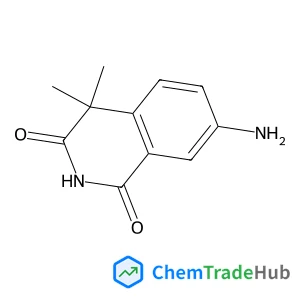
1,3(2H,4H)-Isoquinolinedione, 7-amino-4,4-dimethyl-
CAS Number:
14576-22-8
Molecular Formula:
C11H12N2O2
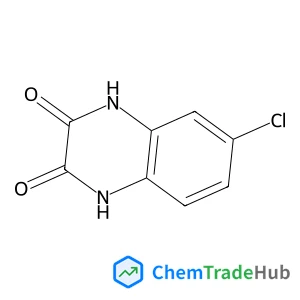
6-CHLORO-2,3-DIOXO-1,2,3,4-TETRAHYDROQUINOXALINE, 97
CAS Number:
169-14-2
Molecular Formula:
C8H5ClN2O2
![S-[2,3-Bis(palmitoyloxy)propyl]-N-[(9H-fluoren-9-ylmethoxy)(hydroxy)methylene]cysteine structure](https://static.chemtradehub.com/structs/210/210532-98-2-f6a7.webp "S-[2,3-Bis(palmitoyloxy)propyl]-N-[(9H-fluoren-9-ylmethoxy)(hydroxy)methylene]cysteine structure")
S-[2,3-Bis(palmitoyloxy)propyl]-N-[(9H-fluoren-9-ylmethoxy)(hydroxy)methylene]cysteine
CAS Number:
210532-98-2
Molecular Formula:
C53H83NO8S
Recommended Suppliers




Disclaimer
This page provides academic journal information for reference and research purposes only. We are not affiliated with any journal publishers and do not handle publication submissions. For publication-related inquiries, please contact the respective journal publishers directly.
If you notice any inaccuracies in the information displayed, please contact us at support@chemtradehub.com. We will promptly review and address your concerns.