













Aza-Michael versus aminolysis reactions of glycerol carbonate acrylate
Literature Information
Publication Date
2013-04-19
DOI
10.1039/C3GC37054B
Impact Factor
10.182
Authors
Nohra Bassam, Candy Laure, Blanco Jean-François, Raoul Yann, Mouloungui Zephirin
View Original
Abstract
The aza-Michael addition reaction represents one of the most powerful methods for the formation of carbon–nitrogen bonds in organic synthesis. Thanks to the fast addition of the amine on the ethylene sites of the glycerol carbonate acrylate permitting the aza-Michael reaction to occur first. Significant methods have been studied to monitor the addition reaction of the amine on glycerol carbonate acrylate. New five-membered cyclic glycerylic carbonate (5CGC) and hydroxyurethane isomers were synthesized under solvent free reaction conditions, short reaction times, and without the use of expensive catalysts. These new molecules, enriched with ester and amine functions, provided novel and more environmentally friendly synthons for the synthesis of bio-based polyhydroxyurethanes without the use of phosgene or isocyanate.
Related Literature
The application of generalized S-transform in the denoising of surface plasmon resonance (SPR) spectrum
Dai Junfeng, Fu Li-hui
2023-10-27
Paper
DOI: 10.1039/D3AY01462B
Simultaneous determination of 27 pesticides in corn and cow matrices by ultra-performance liquid chromatography-tandem mass spectrometry
Fengjiao Hao, Yuanyuan Luo, Fengshou Dong, Xinglu Pan, Xiaohu Wu, Yongquan Zheng, Jun Xu
2023-11-08
Paper
DOI: 10.1039/D3AY01473H
A comparison of size exclusion chromatography-based tandem strategies for plasma exosome enrichment and proteomic analysis
H. H. Bai, X. F. Wang, B. Y. Zhang, W. Liu
2023-11-02
Paper
DOI: 10.1039/D3AY01704D
A tuning fork-shaped bisbenzothiazole derivative as a pH-responsive digital fluorescent probe and its ex vivo evaluation
Priya Ranjan Sahoo, Nikhil Kumar, Keloth Sairam, L. K. Gulati, G. K. Gulati, Anupama Datta, Satish Kumar
2023-11-20
Paper
DOI: 10.1039/D3AY01702H
SERS combined with QuEChERS using NBC and Fe3O4 MNPs as cleanup agents to rapidly and reliably detect chlorpyrifos pesticide in citrus
Xu Wang, Shirong Ai, Aihua Xiong, Weiqi Zhou, Liang He, Jie Teng, Xiang Geng, Ruimei Wu
2023-11-13
Paper
DOI: 10.1039/D3AY01604H
Catechol-tetraethylenepentamine co-deposition modified cellulose filter paper for α-glucosidase immobilization and inhibitor screening from traditional Chinese medicine
Guang-Zhen Wan, Chun-Lin Zhang, Juan Chen
2023-10-30
Paper
DOI: 10.1039/D3AY01835K
Construction of Mn–N–C nanoparticles with multienzyme-like properties and photothermal performance for the effective treatment of bacterial infections
Yong Ding, Xiao-Chan Yang, Ya-Ya Yu, Sheng-Nan Song, Bo Li, Xue-Yao Pang, Jian-Jian Cai, Chun-Huan Zhang, Ya-Mu Xia, Wei-Wei Gao
2023-11-22
Paper
DOI: 10.1039/D3BM01228J
Determination of vitamin D metabolites in various biological samples through an improved chemical derivatization assisted liquid chromatography-tandem mass spectrometry approach
Hua-Ming Xiao, Na An, Quan-Fei Zhu
2023-10-24
Paper
DOI: 10.1039/D3AY01769A
A simple, quick and non-destructive approach for sampling drugs of abuse in tablets and blotter for qualitative analysis by paper spray mass spectrometry
Mariana C. C. Diniz, Yuri Machado, Evandro Piccin
2023-10-20
Paper
DOI: 10.1039/D3AY01393F
You might also like
Compound Q&A
What are the main uses of 4-Nitrophenyl phosphate disodium salt hexahydrate (CAS: 333338-18-4)?
4-Nitrophenyl phosphate disodium salt hexahydrate is primarily used as a substra...
333338-18-44-Nitrophenyl phosph...
Compound Q&A
What are the main uses of 2-(Trifluoromethyl)-1,3-oxazole-4-carboxylic Acid (CAS: 1060816-01-4)?
2-(Trifluoromethyl)-1,3-oxazole-4-carboxylic Acid (CAS: 1060816-01-4) is widely ...
1060816-01-42-(Trifluoromethyl)-...
Compound Q&A
How should 2-Fluoro-4-biphenylcarboxylic acid (CAS: 137045-30-8) be stored?
2-Fluoro-4-biphenylcarboxylic acid should be stored in a cool, dry place at room...
137045-30-82-Fluoro-4-biphenylc...
Compound Q&A
What industries use Prednisolone-21-Carboxylic Acid (CAS: 61549-70-0)?
Prednisolone-21-Carboxylic Acid is primarily used in the pharmaceutical industry...
61549-70-0Prednisolone-21-Carb...
Compound Q&A
How should 4-(Hydrazinomethyl)-1,2,3-benzenetriol (CAS: 3614-72-0) be stored?
4-(Hydrazinomethyl)-1,2,3-benzenetriol (CAS: 3614-72-0) should be stored in a co...
3614-72-04-(Hydrazinomethyl)-...
Compound Q&A
What industries use 4-Amino-1-methyl-1H-pyrazole-5-carboxylic acid hydrochloride (CAS: 92534-70-8)?
4-Amino-1-methyl-1H-pyrazole-5-carboxylic acid hydrochloride (CAS: 92534-70-8) i...
92534-70-84-Amino-1-methyl-1H-...
Compound Q&A
What regulatory guidelines apply to dehydropachymic acid (CAS: 77012-31-8)?
Dehydropachymic acid (CAS: 77012-31-8) is regulated by various agencies. It fall...
77012-31-8Dehydropachymic acid
Compound Q&A
What is the market or research trend for 6-[(2,2-Dimethylpropanoyl)amino]nicotinic acid (CAS: 898561-66-5)?
The market and research trends for 6-[(2,2-Dimethylpropanoyl)amino]nicotinic aci...
898561-66-56-[(2,2-Dimethylprop...
Compound Q&A
How should 1,10-Phenanthroline-2,9-dicarbaldehyde (CAS: 57709-62-3) be stored?
1,10-Phenanthroline-2,9-dicarbaldehyde should be stored in a cool, dry place awa...
57709-62-31,10-Phenanthroline-...
Compound Q&A
How is 5-Carbamoyl-11-oxo-10,11-dihydro-5H-dibenzo[b,f]azepin-10-yl acetate (CAS: 113952-21-9) typically synthesized?
5-Carbamoyl-11-oxo-10,11-dihydro-5H-dibenzo[b,f]azepin-10-yl acetate can be synt...
113952-21-95-Carbamoyl-11-oxo-1...
Source Journal
Green Chemistry

CiteScore:
16.1
Self-citation Rate:
7.5%
Articles per Year:
944
Green Chemistry provides a unique forum for the publication of innovative research on the development of alternative green and sustainable technologies. The scope of Green Chemistry is based on, but not limited to, the definition proposed by Anastas and Warner (Green Chemistry: Theory and Practice, P T Anastas and J C Warner, Oxford University Press, Oxford, 1998). Green chemistry is the utilisation of a set of principles that reduces or eliminates the use or generation of hazardous substances in the design, manufacture and application of chemical products. Green Chemistry is at the frontiers of this continuously-evolving interdisciplinary science and publishes research that attempts to reduce the environmental impact of the chemical enterprise by developing a technology base that is inherently non-toxic to living things and the environment. Submissions on all aspects of research relating to the endeavour are welcome. The journal publishes original and significant cutting-edge research that is likely to be of wide general appeal. To be published, work must present a significant advance in green chemistry. Papers must contain a comparison with existing methods and demonstrate advantages over those methods before publication can be considered. For more information please see this Editorial. Coverage includes the following, but is not limited to: Design (e.g. biomimicry, design for degradation/recycling/reduced toxicity…) Reagents & Feedstocks (e.g. renewables, CO2, solvents, auxiliary agents, waste utilization…) Synthesis (e.g. organic, inorganic, synthetic biology…) Catalysis (e.g. homogeneous, heterogeneous, enzyme, whole cell…) Process (e.g. process design, intensification, separations, recycling, efficiency…) Energy (e.g. renewable energy, fuels, photovoltaics, fuel cells, energy storage, energy carriers…) Applications (e.g. electronics, dyes, consumer products, coatings, pharmaceuticals, preservatives, building materials, chemicals for industry/agriculture/mining…) Impact (e.g. safety, metrics, LCA, sustainability, (eco)toxicology…) Green chemistry is, by definition, a continuously-evolving frontier. Therefore, the inclusion of a particular material or technology does not, of itself, guarantee that a paper is suitable for the journal. To be suitable, the novel advance should have the potential for reduced environmental impact relative to the state of the art. Green Chemistry does not normally deal with research associated with 'end-of-pipe' or remediation issues.
Recommended Compounds

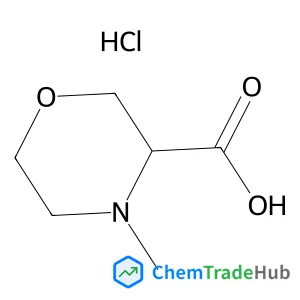
4-Methyl-3-morpholinecarboxylic acid hydrochloride (1:1)
CAS Number:
1240518-90-4
Molecular Formula:
C6H12ClNO3
![(3R,5R)-1-[(Benzyloxy)carbonyl]-5-methyl-3-piperidinecarboxylic acid structure](https://static.chemtradehub.com/structs/126/1269757-29-0-c552.webp "(3R,5R)-1-[(Benzyloxy)carbonyl]-5-methyl-3-piperidinecarboxylic acid structure")
(3R,5R)-1-[(Benzyloxy)carbonyl]-5-methyl-3-piperidinecarboxylic acid
CAS Number:
1269757-29-0
Molecular Formula:
C15H19NO4
Recommended Suppliers






Disclaimer
This page provides academic journal information for reference and research purposes only. We are not affiliated with any journal publishers and do not handle publication submissions. For publication-related inquiries, please contact the respective journal publishers directly.
If you notice any inaccuracies in the information displayed, please contact us at support@chemtradehub.com. We will promptly review and address your concerns.