


Dielectric measurements of aqueous DNA solutions up to 110 GHz
Literature Information
Publication Date
2014-04-23
DOI
10.1039/C3CP55272A
Impact Factor
3.676
Authors
Elena Ermilova, Frank F. Bier, Ralph Hölzel
View Original
Abstract
A measurement system for broadband dielectric spectroscopy of biological samples for frequencies between 25 MHz and 110 GHz is presented. It is based on a vector network analyzer and a 1.19 mm-diameter open-ended coaxial probe. Complex reflection coefficients of aqueous Na–DNA solutions are measured in the frequency domain at a constant temperature of 25 °C. Complex permittivity spectra are analysed at various solute concentrations and two dispersions are observed. The first one is located at about 19 GHz and is due to the reorientation of water molecules. The second one is located at approximately 100 MHz and is interpreted as being caused by DNA counterion fluctuations. The relaxation frequency of free water in solutions appears to be practically unaffected by the presence of DNA. For the relaxation in the MHz region the dielectric loss maximum shifts to higher frequencies and the distribution of relaxation times becomes broader with increasing polymer concentration.
Recommended Journals

Acta Metallurgica Sinica-English Letters

Heteroatom Chemistry

NDT & E International

Herald of the Russian Academy of Sciences

Chinese Journal of Chemistry

Journal of Chemical Sciences

Medicinal Chemistry Research

Biocatalysis and Biotransformation

Bioorganic & Medicinal Chemistry Letters

Atomization and Sprays
Related Literature
Anion-induced isomerization of fluorescent semi(thio)carbazones
Valeria Amendola, Massimo Boiocchi, Luigi Fabbrizzi, Sonia La Cognata, Laura Legnani, Eliana Lo Presti, Carlo Mangano, Ana Miljkovic
2017-10-11
Research Article
DOI: 10.1039/C7QO00805H
A one-pot, metal-free approach to bicyclic 2-pyridones
Wannaporn Disadee
2017-07-03
Research Article
DOI: 10.1039/C7QO00406K
Cu-Catalyzed tertiary alkylation of α-(trifluoromethyl)styrenes with tertiary alkylmagnesium reagents
Wenpeng Dai, Yingyin Lin, Yan Wan, Song Cao
2017-09-18
Research Article
DOI: 10.1039/C7QO00716G
Tunable regiodivergent phosphine-catalyzed [3 + 2] cycloaddition of alkynones and trifluoroacetyl phenylamides
Yao-Liang Sun, Yin Wei
2017-08-29
Research Article
DOI: 10.1039/C7QO00512A
Manganese-mediated/-catalyzed oxidative carboazidation of acrylamides
Danwei Zhao, Kai Kang, Haizhen Jiang, Hongmei Deng, Yunrong Chen
2017-05-04
Research Article
DOI: 10.1039/C7QO00217C
Phosphinodifluoroalkylation of alkynes using P(O)H compounds and ethyl difluoroiodoacetate
Pengbo Zhang, Jianxi Ying, Guo Tang
2017-07-17
Research Article
DOI: 10.1039/C7QO00466D
Cu(i)-Catalyzed amidation/imidation of N-arylglycine ester derivatives via C–N coupling under mild conditions
Ramana V. Daggupati, Chandrasekharam Malapaka
2017-11-22
Research Article
DOI: 10.1039/C7QO00851A
Copper-catalyzed oxidative dehydrogenative coupling of carboxylic acids with H-phosphonates: an efficient and practical approach to acyl phosphate esters
Hong Fu, Tao Yang, Jia-Qi Shang, Jia-Li Zhou, Meng Sun, Ya-Min Li
2017-06-05
Research Article
DOI: 10.1039/C7QO00298J
A one-pot synthetic approach for the construction of a thiazolo[3,2-a]benzimidazole-linked quinazoline scaffold via palladium-catalyzed reactions
Ali Keivanloo, Atena Soozani, Mohammad Bakherad, Amir Hossein Amin
2018-01-09
Research Article
DOI: 10.1039/C7QO00751E
You might also like
Compound Q&A
What precautions should be taken when handling 4-Methyl-6-(trifluoromethyl)quinoline (CAS: 40716-16-3)?
When handling 4-Methyl-6-(trifluoromethyl)quinoline (CAS: 40716-16-3), safety go...
40716-16-34-Methyl-6-(trifluor...
Compound Q&A
What is 4-(3,5-Difluorophenyl)aniline (CAS: 405058-00-6)?
4-(3,5-Difluorophenyl)aniline is an aromatic organic compound with the CAS numbe...
405058-00-64-(3,5-Difluoropheny...
Compound Q&A
How is 5-{[4-(Trifluoromethyl)phenyl]sulfanyl}-1,2,3-thiadiazole-4-carboxylic acid (CAS: 338982-07-3) typically synthesized?
5-{[4-(Trifluoromethyl)phenyl]sulfanyl}-1,2,3-thiadiazole-4-carboxylic acid can ...
338982-07-35-{[4-(Trifluorometh...
Compound Q&A
What is the market or research trend for 4-Benzylaniline hydrochloride (CAS: 6317-57-3)?
The market for 4-Benzylaniline hydrochloride (CAS: 6317-57-3) is steadily growin...
6317-57-34-Benzylaniline hydr...
Compound Q&A
Is [3-(Diethylsulfamoyl)phenyl]boronic acid (CAS: 871329-58-7) safe?
[3-(Diethylsulfamoyl)phenyl]boronic acid is generally considered safe when handl...
871329-58-7[3-(Diethylsulfamoyl...
Compound Q&A
What are the main uses of 3-Bromo-2,5-dimethoxyaniline (CAS: 115929-62-9)?
3-Bromo-2,5-dimethoxyaniline is mainly used in the pharmaceutical and chemical i...
115929-62-93-Bromo-2,5-dimethox...
Compound Q&A
What regulatory guidelines apply to N-Methyl-1-(5-methyl-1H-indol-3-yl)methanamine (CAS: 915922-67-7)?
N-Methyl-1-(5-methyl-1H-indol-3-yl)methanamine (CAS: 915922-67-7) is subject to ...
915922-67-7N-Methyl-1-(5-methyl...
Compound Q&A
What industries use Carbamic acid, N-[(5S)-5,6-diamino-6-oxohexyl]-, 1,1-dimethylethyl ester (CAS: 24828-96-4)?
This compound is primarily used in the pharmaceutical industry for the synthesis...
24828-96-4Carbamic acid, N-[(5...
Compound Q&A
How should 2-Methyl-2-propanyl [(1S,3R)-3-aminocyclohexyl]carbamate (CAS: 1298101-47-9) be stored?
2-Methyl-2-propanyl [(1S,3R)-3-aminocyclohexyl]carbamate (CAS: 1298101-47-9) sho...
1298101-47-92-Methyl-2-propanyl ...
Compound Q&A
What industries use Ethyl 2-bromo-4,4,4-trifluorobutanoate (CAS: 367-33-9)?
Ethyl 2-bromo-4,4,4-trifluorobutanoate (CAS: 367-33-9) is utilized in the pharma...
367-33-9Ethyl 2-bromo-4,4,4-...
Source Journal
Physical Chemistry Chemical Physics

CiteScore:
5.5
Self-citation Rate:
10.3%
Articles per Year:
3036
Physical Chemistry Chemical Physics (PCCP) is an international journal co-owned by 19 physical chemistry and physics societies from around the world. This journal publishes original, cutting-edge research in physical chemistry, chemical physics and biophysical chemistry. To be suitable for publication in PCCP, articles must include significant innovation and/or insight into physical chemistry; this is the most important criterion that reviewers and Editors will judge against when evaluating submissions. The journal has a broad scope and welcomes contributions spanning experiment, theory, computation and data science. Topical coverage includes spectroscopy, dynamics, kinetics, statistical mechanics, thermodynamics, electrochemistry, catalysis, surface science, quantum mechanics, quantum computing and machine learning. Interdisciplinary research areas such as polymers and soft matter, materials, nanoscience, energy, surfaces/interfaces, and biophysical chemistry are welcomed if they demonstrate significant innovation and/or insight into physical chemistry. Joined experimental/theoretical studies are particularly appreciated when complementary and based on up-to-date approaches.
Recommended Compounds
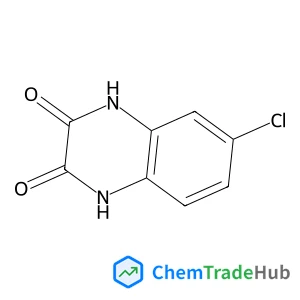
6-CHLORO-2,3-DIOXO-1,2,3,4-TETRAHYDROQUINOXALINE, 97
CAS Number:
169-14-2
Molecular Formula:
C8H5ClN2O2
Recommended Suppliers






Disclaimer
This page provides academic journal information for reference and research purposes only. We are not affiliated with any journal publishers and do not handle publication submissions. For publication-related inquiries, please contact the respective journal publishers directly.
If you notice any inaccuracies in the information displayed, please contact us at support@chemtradehub.com. We will promptly review and address your concerns.