













The free energy of nanopores in tense membranes
Literature Information
Publication Date
2014-04-15
DOI
10.1039/C3CP54685C
Impact Factor
3.676
Authors
Andrea Grafmüller, Volker Knecht
View Original
Abstract
Membrane nanopores are central players for a range of important cellular membrane remodeling processes as well as membrane rupture. Understanding pore formation in tense membranes requires comprehension of the molecular mechanism of pore formation and the associated free energy change as a function of the membrane tension. Here we propose a scheme to calculate the free energy change associated with the formation of a nanometer sized pore in molecular dynamics simulations as a function of membrane tension, which requires the calculation of only one computationally expensive potential of mean force. We show that membrane elastic theory can be used to estimate the pore formation free energy at different tension values from the free energy change in a relaxed membrane and the area expansion curves of the membranes. We have computed the pore formation free energy for a dipalmitoyl-phosphatidylcholine (DPPC) membrane at two different lateral pressure values, 1 bar and −40 bar, by calculating the potential of mean force acting on the head group of a single lipid molecule. Unrestrained simulations of the closing process confirm that the intermediate states along this reaction coordinate are reasonable and show that hydrophilic indentations spanning half the bilayer connected by a hydrophobic pore segment represent the corresponding high energy transition state. A comparison of the stability of simulated membranes to experiment at high loading rates show that, contrary to expectation, pores form too easily in small simulated membrane patches. This discrepancy originates from a combination of the absence of ions in the simulations and the small membrane size.
Related Literature
Carbon dioxide reduction via light activation of a ruthenium–Ni(cyclam) complex
Christian Herrero, Annamaria Quaranta, Sanae El Ghachtouli, Winfried Leibl
2014-02-11
Paper
DOI: 10.1039/C3CP54946A
Effect of amide bonds on the self-assembly of gemini surfactants
Jiaul Hoque, Spandhana Gonuguntla, Venkateswarlu Yarlagadda, Vinod K. Aswal, Jayanta Haldar
2014-04-09
Paper
DOI: 10.1039/C3CP55244F
Dielectric measurements of aqueous DNA solutions up to 110 GHz
Elena Ermilova, Frank F. Bier, Ralph Hölzel
2014-04-23
Paper
DOI: 10.1039/C3CP55272A
Dynamic control of Förster energy transfer in a photonic environment
Frank Schleifenbaum, Andreas M. Kern, Alexander Konrad, Alfred J. Meixner
2014-05-01
Paper
DOI: 10.1039/C4CP01306A
Interplay between the ionic and electronic transport and its effects on the reaction pattern during the electrochemical conversion in an FeF2 nanoparticle
Ying Ma, Stephen H. Garofalini
2014-05-09
Paper
DOI: 10.1039/C4CP00481G
Graphene mechanics: II. Atomic stress distribution during indentation until rupture
Bogdan I. Costescu
2014-04-15
Paper
DOI: 10.1039/C3CP55341H
Photophysical properties of open-framework germanates templated by nickel complexes
M. V. Peskov, U. Schwingenschlögl
2014-04-24
Paper
DOI: 10.1039/C4CP00836G
Selective oxidation of alcohols in aqueous suspensions of rhodium ion-modified TiO2 photocatalysts under irradiation of visible light
Sho Kitano, Atsuhiro Tanaka, Keiji Hashimoto, Hiroshi Kominami
2014-05-08
Paper
DOI: 10.1039/C4CP00863D
Steric matching and the concentration induced self-assembled structural variety of 2,7-bis(n-alkoxy)-9-fluorenone at the aliphatic solvent/graphite interface
Xinrui Miao, Li Xu, Lihua Cui, Wenli Deng
2014-05-01
Paper
DOI: 10.1039/C4CP00871E
Electron transport in MoWSeS monolayers in the presence of an external electric field
Nourdine Zibouche, Pier Philipsen, Thomas Heine, Agnieszka Kuc
2014-04-11
Paper
DOI: 10.1039/C4CP00966E
You might also like
Compound Q&A
What precautions should be taken when handling 4-Methyl-6-(trifluoromethyl)quinoline (CAS: 40716-16-3)?
When handling 4-Methyl-6-(trifluoromethyl)quinoline (CAS: 40716-16-3), safety go...
40716-16-34-Methyl-6-(trifluor...
Compound Q&A
What is 4-(3,5-Difluorophenyl)aniline (CAS: 405058-00-6)?
4-(3,5-Difluorophenyl)aniline is an aromatic organic compound with the CAS numbe...
405058-00-64-(3,5-Difluoropheny...
Compound Q&A
How is 5-{[4-(Trifluoromethyl)phenyl]sulfanyl}-1,2,3-thiadiazole-4-carboxylic acid (CAS: 338982-07-3) typically synthesized?
5-{[4-(Trifluoromethyl)phenyl]sulfanyl}-1,2,3-thiadiazole-4-carboxylic acid can ...
338982-07-35-{[4-(Trifluorometh...
Compound Q&A
What is the market or research trend for 4-Benzylaniline hydrochloride (CAS: 6317-57-3)?
The market for 4-Benzylaniline hydrochloride (CAS: 6317-57-3) is steadily growin...
6317-57-34-Benzylaniline hydr...
Compound Q&A
Is [3-(Diethylsulfamoyl)phenyl]boronic acid (CAS: 871329-58-7) safe?
[3-(Diethylsulfamoyl)phenyl]boronic acid is generally considered safe when handl...
871329-58-7[3-(Diethylsulfamoyl...
Compound Q&A
What are the main uses of 3-Bromo-2,5-dimethoxyaniline (CAS: 115929-62-9)?
3-Bromo-2,5-dimethoxyaniline is mainly used in the pharmaceutical and chemical i...
115929-62-93-Bromo-2,5-dimethox...
Compound Q&A
What regulatory guidelines apply to N-Methyl-1-(5-methyl-1H-indol-3-yl)methanamine (CAS: 915922-67-7)?
N-Methyl-1-(5-methyl-1H-indol-3-yl)methanamine (CAS: 915922-67-7) is subject to ...
915922-67-7N-Methyl-1-(5-methyl...
Compound Q&A
What industries use Carbamic acid, N-[(5S)-5,6-diamino-6-oxohexyl]-, 1,1-dimethylethyl ester (CAS: 24828-96-4)?
This compound is primarily used in the pharmaceutical industry for the synthesis...
24828-96-4Carbamic acid, N-[(5...
Compound Q&A
How should 2-Methyl-2-propanyl [(1S,3R)-3-aminocyclohexyl]carbamate (CAS: 1298101-47-9) be stored?
2-Methyl-2-propanyl [(1S,3R)-3-aminocyclohexyl]carbamate (CAS: 1298101-47-9) sho...
1298101-47-92-Methyl-2-propanyl ...
Compound Q&A
What industries use Ethyl 2-bromo-4,4,4-trifluorobutanoate (CAS: 367-33-9)?
Ethyl 2-bromo-4,4,4-trifluorobutanoate (CAS: 367-33-9) is utilized in the pharma...
367-33-9Ethyl 2-bromo-4,4,4-...
Source Journal
Physical Chemistry Chemical Physics

CiteScore:
5.5
Self-citation Rate:
10.3%
Articles per Year:
3036
Physical Chemistry Chemical Physics (PCCP) is an international journal co-owned by 19 physical chemistry and physics societies from around the world. This journal publishes original, cutting-edge research in physical chemistry, chemical physics and biophysical chemistry. To be suitable for publication in PCCP, articles must include significant innovation and/or insight into physical chemistry; this is the most important criterion that reviewers and Editors will judge against when evaluating submissions. The journal has a broad scope and welcomes contributions spanning experiment, theory, computation and data science. Topical coverage includes spectroscopy, dynamics, kinetics, statistical mechanics, thermodynamics, electrochemistry, catalysis, surface science, quantum mechanics, quantum computing and machine learning. Interdisciplinary research areas such as polymers and soft matter, materials, nanoscience, energy, surfaces/interfaces, and biophysical chemistry are welcomed if they demonstrate significant innovation and/or insight into physical chemistry. Joined experimental/theoretical studies are particularly appreciated when complementary and based on up-to-date approaches.
Recommended Compounds
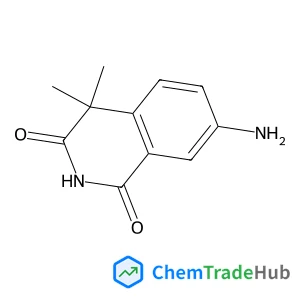
1,3(2H,4H)-Isoquinolinedione, 7-amino-4,4-dimethyl-
CAS Number:
14576-22-8
Molecular Formula:
C11H12N2O2

cis-3-Amino-1-(trifluoromethyl)cyclobutanol hydrochloride (1:1)
CAS Number:
1408075-16-0
Molecular Formula:
C5H9ClF3NO
phosphoryl}methyl 4-methylbenzenesulfonate structure](https://static.chemtradehub.com/structs/864/864068-45-1-ba7c.webp "{[3-(Hexadecyloxy)propoxy](hydroxy)phosphoryl}methyl 4-methylbenzenesulfonate structure")
{[3-(Hexadecyloxy)propoxy](hydroxy)phosphoryl}methyl 4-methylbenzenesulfonate
CAS Number:
864068-45-1
Molecular Formula:
C27H49O7PS
Recommended Suppliers





Disclaimer
This page provides academic journal information for reference and research purposes only. We are not affiliated with any journal publishers and do not handle publication submissions. For publication-related inquiries, please contact the respective journal publishers directly.
If you notice any inaccuracies in the information displayed, please contact us at support@chemtradehub.com. We will promptly review and address your concerns.