













Coupled-cluster calculations of the lowest 0–0 bands of the electronic excitation spectrum of naphthalene
Literature Information
Publication Date
2013-12-18
DOI
10.1039/C3CP54421D
Impact Factor
3.676
Authors
Heike Fliegl, Dage Sundholm
View Original
Abstract
Approximate singles and doubles coupled-cluster (CC2) calculations have been carried out for the 0–0 bands of the 1Ag → 1B3u and 1Ag → 1B2u transitions of naphthalene. The vertical excitation energies calculated for the 16 lowest excited singlet states have also been calculated using a sequence of large basis sets. The CC2 excitation energies extrapolated to the basis-set limit are in rather good agreement with values recently calculated at the multiconfiguration second-order perturbation theory (CASPT2) and at the singles, doubles and approximate triples (CC3) levels. Best values for the vertical excitation energies and the 0–0 transition energies have been obtained by adding higher-order correlation contributions to the basis-set extrapolated CC2 energies. For some of the states, the best estimated vertical excitation energies in this work deviate up to 0.3 eV from the previously best estimated energies, because larger basis sets have been employed in this study. The calculations of the 0–0 transitions show the importance of considering vibrational effects when aiming at reliable comparisons of calculated and measured excitation energies for assessing the accuracy of employed computational methods. Calculations at the density functional theory (DFT) level using Becke's three-parameter functional (B3LYP) yield less accurate excitation energies. At the B3LYP level, the two lowest states appear in reverse order with a deviation of 0.50 eV from experiment for the 0–0 transition energy of the 1B3u state.
Recommended Journals
Related Literature
A one-pot, metal-free approach to bicyclic 2-pyridones
Wannaporn Disadee
2017-07-03
Research Article
DOI: 10.1039/C7QO00406K
Rearranged limonoids with unique 6/5/6/5 tetracarbocyclic skeletons from Toona ciliata and biomimetic structure divergence
Jun Luo, Wan-Sha Huang, Sheng-Mou Hu, Pan-Pan Zhang, Xu-Wei Zhou, Xiao-Bing Wang, Ming-Hua Yang, Jian-Guang Luo, Chen Wang, Chang Liu, He-Quan Yao, Can Zhang, Hong-Bin Sun, Yi-Jun Chen, Ling-Yi Kong
2017-09-06
Research Article
DOI: 10.1039/C7QO00678K
Synthesis of dibromo- and tetrabromo-bipyrrolines and their corresponding 2,6-diazasemibullvalene derivatives
Zhe Huang, Ming Zhan, Shaoguang Zhang, Qian Luo, Wen-Xiong Zhang
2017-06-12
Research Article
DOI: 10.1039/C7QO00287D
The asymmetric synthesis of multisubstituted diquinanes via the domino reaction of electron-deficient enynes
Qian Yao, Lili Lin, Hang Zhang, Han Yu, Qian Xiong, Xiaohua Liu, Xiaoming Feng
2017-07-05
Research Article
DOI: 10.1039/C7QO00408G
Copper-catalyzed oxidative dehydrogenative coupling of carboxylic acids with H-phosphonates: an efficient and practical approach to acyl phosphate esters
Hong Fu, Tao Yang, Jia-Qi Shang, Jia-Li Zhou, Meng Sun, Ya-Min Li
2017-06-05
Research Article
DOI: 10.1039/C7QO00298J
Palladium-catalyzed C–S bond activation and functionalization of 3-sulfenylindoles and related electron-rich heteroarenes
Jianxiao Li, Yanni An, Jiawei Li, Shaorong Yang, Wanqing Wu, Huanfeng Jiang
2017-05-10
Research Article
DOI: 10.1039/C7QO00215G
Decarboxylative Umpolung of conjugated enals to β-carbanions for intramolecular nucleophilic addition to an aldehyde
Feng Liu, Jiaxin Tian, Yong Liu, Chuangan Tao, Hao Zhu, Aina Zhang, Dongfang Xu, Baoguo Zhao
2017-05-09
Research Article
DOI: 10.1039/C6QO00846A
Post-synthetic diversification of pyrrole-fused benzosultams via trans-sulfonylations and reactions on the periphery of pyrrole
Joydev K. Laha, Rohan A. Bhimpuria, Aitha Manoj Kumar
2017-07-28
Research Article
DOI: 10.1039/C7QO00440K
You might also like
Compound Q&A
What precautions should be taken when handling 4-Methyl-6-(trifluoromethyl)quinoline (CAS: 40716-16-3)?
When handling 4-Methyl-6-(trifluoromethyl)quinoline (CAS: 40716-16-3), safety go...
40716-16-34-Methyl-6-(trifluor...
Compound Q&A
What is 4-(3,5-Difluorophenyl)aniline (CAS: 405058-00-6)?
4-(3,5-Difluorophenyl)aniline is an aromatic organic compound with the CAS numbe...
405058-00-64-(3,5-Difluoropheny...
Compound Q&A
How is 5-{[4-(Trifluoromethyl)phenyl]sulfanyl}-1,2,3-thiadiazole-4-carboxylic acid (CAS: 338982-07-3) typically synthesized?
5-{[4-(Trifluoromethyl)phenyl]sulfanyl}-1,2,3-thiadiazole-4-carboxylic acid can ...
338982-07-35-{[4-(Trifluorometh...
Compound Q&A
What is the market or research trend for 4-Benzylaniline hydrochloride (CAS: 6317-57-3)?
The market for 4-Benzylaniline hydrochloride (CAS: 6317-57-3) is steadily growin...
6317-57-34-Benzylaniline hydr...
Compound Q&A
Is [3-(Diethylsulfamoyl)phenyl]boronic acid (CAS: 871329-58-7) safe?
[3-(Diethylsulfamoyl)phenyl]boronic acid is generally considered safe when handl...
871329-58-7[3-(Diethylsulfamoyl...
Compound Q&A
What are the main uses of 3-Bromo-2,5-dimethoxyaniline (CAS: 115929-62-9)?
3-Bromo-2,5-dimethoxyaniline is mainly used in the pharmaceutical and chemical i...
115929-62-93-Bromo-2,5-dimethox...
Compound Q&A
What regulatory guidelines apply to N-Methyl-1-(5-methyl-1H-indol-3-yl)methanamine (CAS: 915922-67-7)?
N-Methyl-1-(5-methyl-1H-indol-3-yl)methanamine (CAS: 915922-67-7) is subject to ...
915922-67-7N-Methyl-1-(5-methyl...
Compound Q&A
What industries use Carbamic acid, N-[(5S)-5,6-diamino-6-oxohexyl]-, 1,1-dimethylethyl ester (CAS: 24828-96-4)?
This compound is primarily used in the pharmaceutical industry for the synthesis...
24828-96-4Carbamic acid, N-[(5...
Compound Q&A
How should 2-Methyl-2-propanyl [(1S,3R)-3-aminocyclohexyl]carbamate (CAS: 1298101-47-9) be stored?
2-Methyl-2-propanyl [(1S,3R)-3-aminocyclohexyl]carbamate (CAS: 1298101-47-9) sho...
1298101-47-92-Methyl-2-propanyl ...
Compound Q&A
What industries use Ethyl 2-bromo-4,4,4-trifluorobutanoate (CAS: 367-33-9)?
Ethyl 2-bromo-4,4,4-trifluorobutanoate (CAS: 367-33-9) is utilized in the pharma...
367-33-9Ethyl 2-bromo-4,4,4-...
Source Journal
Physical Chemistry Chemical Physics

CiteScore:
5.5
Self-citation Rate:
10.3%
Articles per Year:
3036
Physical Chemistry Chemical Physics (PCCP) is an international journal co-owned by 19 physical chemistry and physics societies from around the world. This journal publishes original, cutting-edge research in physical chemistry, chemical physics and biophysical chemistry. To be suitable for publication in PCCP, articles must include significant innovation and/or insight into physical chemistry; this is the most important criterion that reviewers and Editors will judge against when evaluating submissions. The journal has a broad scope and welcomes contributions spanning experiment, theory, computation and data science. Topical coverage includes spectroscopy, dynamics, kinetics, statistical mechanics, thermodynamics, electrochemistry, catalysis, surface science, quantum mechanics, quantum computing and machine learning. Interdisciplinary research areas such as polymers and soft matter, materials, nanoscience, energy, surfaces/interfaces, and biophysical chemistry are welcomed if they demonstrate significant innovation and/or insight into physical chemistry. Joined experimental/theoretical studies are particularly appreciated when complementary and based on up-to-date approaches.
Recommended Compounds

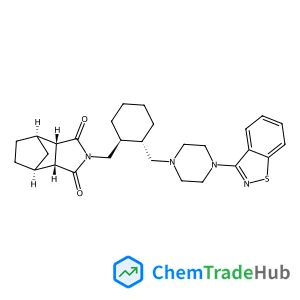
![(2E)-3-(3-Chlorophenyl)-N-{2-[4-(methylsulfonyl)-1-piperazinyl]-2-oxoethyl}acrylamide structure](https://static.chemtradehub.com/structs/250/2505001-54-5-c1e9.webp "(2E)-3-(3-Chlorophenyl)-N-{2-[4-(methylsulfonyl)-1-piperazinyl]-2-oxoethyl}acrylamide structure")
(2E)-3-(3-Chlorophenyl)-N-{2-[4-(methylsulfonyl)-1-piperazinyl]-2-oxoethyl}acrylamide
CAS Number:
2505001-54-5
Molecular Formula:
C16H20ClN3O4S
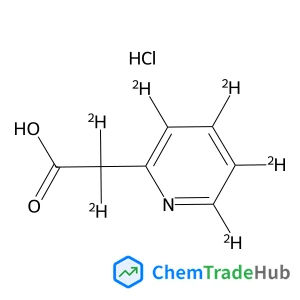
2,2-dideuterio-2-(3,4,5,6-tetradeuterio-2-pyridyl)acetic acid;hydrochloride
CAS Number:
1329799-67-8
Molecular Formula:
C7H2ClD6NO2
Recommended Suppliers




Disclaimer
This page provides academic journal information for reference and research purposes only. We are not affiliated with any journal publishers and do not handle publication submissions. For publication-related inquiries, please contact the respective journal publishers directly.
If you notice any inaccuracies in the information displayed, please contact us at support@chemtradehub.com. We will promptly review and address your concerns.