












A facile eco-friendly three-component protocol for the regio- and stereoselective synthesis of functionalized trans-dihydrofuro[3,2-c]-quinolin-4(2H)-ones
Literature Information
Publication Date
2012-09-21
DOI
10.1039/C2GC36040C
Impact Factor
10.182
Authors
Sethuraman Indumathi, Subbu Perumal, Natarajan Anbananthan
View Original
Abstract
A series of novel trans-2-aroyl-5-methyl-3-aryl-3,5-dihydrofuro[3,2-c]quinolin-4(2H)-ones has been synthesized in good yields from the three-component reaction of 4-hydroxy-1-methyl-2(1H)-quinolinone, aromatic aldehydes and 1-(2-oxo-2-arylethyl)pyridinium bromides in the presence of a catalytic amount of triethylamine in water under microwave irradiation. This green domino transformation, generating one C–O and two C–C bonds, presumably proceeds via generation of α,β-unsaturated diketone and ylide, Michael addition and intramolecular cyclisation.
Recommended Journals
Related Literature
Facile synthesis of a multifunctional copolymer via a concurrent RAFT-enzymatic system for theranostic applications
Changkui Fu, Andre Bongers, Ke Wang, Bin Yang, Yuan Zhao, Yen Wei, Hien T. T. Duong, Zhiming Wang, Lei Tao
2015-11-11
Paper
DOI: 10.1039/C5PY01652E
Synthesis and hydrolytic properties of water-soluble poly(carbonate–hydroxyurethane)s from trimethylolpropane
Hiroyuki Matsukizono, Takeshi Endo
2015-12-08
Paper
DOI: 10.1039/C5PY01733E
Chalcogenodiazolo[3,4-c]pyridine based donor–acceptor–donor polymers for green and near-infrared electrochromics
Shouli Ming, Shijie Zhen, Ximei Liu, Kaiwen Lin, Hongtao Liu, Yao Zhao, Baoyang Lu, Jingkun Xu
2015-09-15
Paper
DOI: 10.1039/C5PY01321F
Novel dithienosilole-based conjugated copolymers and their application in bulk heterojunction solar cells
Lijie Liu, Jinsheng Song, Heng Lu, Hua Wang, Zhishan Bo
2015-10-23
Paper
DOI: 10.1039/C5PY01427A
Unexpected fluorescence from maleimide-containing polyhedral oligomeric silsesquioxanes: nanoparticle and sequence distribution analyses of polystyrene-based alternating copolymers
Mohamed Gamal Mohamed, Kuo-Chih Hsu, Jin-Long Hong, Shiao-Wei Kuo
2015-10-20
Paper
DOI: 10.1039/C5PY01537E
Ru(bpy)32+ derivatized polystyrenes constructed by nitroxide-mediated radical polymerization. Relationship between polymer chain length, structure and photophysical properties
Gyu Leem, Shahar Keinan, Junlin Jiang, Zhuo Chen, Toan Pho, Zachary A. Morseth, Zhenya Hu, Egle Puodziukynaite, Zhen Fang, John M. Papanikolas, John R. Reynolds, Kirk S. Schanze
2015-10-01
Paper
DOI: 10.1039/C5PY01289A
Entropically-driven ring-opening metathesis polymerization (ED-ROMP) of macrocyclic olefins prepared from deoxycholic acid to give functionalized polymers‡
Philip Hodge, Abdel Chakiri
2015-04-30
Paper
DOI: 10.1039/C5PY00272A
Micelles from self-assembled double-hydrophilic PHEMA-glycopolymer-diblock copolymers as multivalent scaffolds for lectin binding
H. Park, S. Walta, R. R. Rosencrantz, A. Körner, C. Schulte, L. Elling, W. Richtering, A. Böker
2015-12-02
Paper
DOI: 10.1039/C5PY00797F
You might also like
Compound Q&A
What are the main uses of 4-Nitrophenyl phosphate disodium salt hexahydrate (CAS: 333338-18-4)?
4-Nitrophenyl phosphate disodium salt hexahydrate is primarily used as a substra...
333338-18-44-Nitrophenyl phosph...
Compound Q&A
What are the main uses of 2-(Trifluoromethyl)-1,3-oxazole-4-carboxylic Acid (CAS: 1060816-01-4)?
2-(Trifluoromethyl)-1,3-oxazole-4-carboxylic Acid (CAS: 1060816-01-4) is widely ...
1060816-01-42-(Trifluoromethyl)-...
Compound Q&A
How should 2-Fluoro-4-biphenylcarboxylic acid (CAS: 137045-30-8) be stored?
2-Fluoro-4-biphenylcarboxylic acid should be stored in a cool, dry place at room...
137045-30-82-Fluoro-4-biphenylc...
Compound Q&A
What industries use Prednisolone-21-Carboxylic Acid (CAS: 61549-70-0)?
Prednisolone-21-Carboxylic Acid is primarily used in the pharmaceutical industry...
61549-70-0Prednisolone-21-Carb...
Compound Q&A
How should 4-(Hydrazinomethyl)-1,2,3-benzenetriol (CAS: 3614-72-0) be stored?
4-(Hydrazinomethyl)-1,2,3-benzenetriol (CAS: 3614-72-0) should be stored in a co...
3614-72-04-(Hydrazinomethyl)-...
Compound Q&A
What industries use 4-Amino-1-methyl-1H-pyrazole-5-carboxylic acid hydrochloride (CAS: 92534-70-8)?
4-Amino-1-methyl-1H-pyrazole-5-carboxylic acid hydrochloride (CAS: 92534-70-8) i...
92534-70-84-Amino-1-methyl-1H-...
Compound Q&A
What regulatory guidelines apply to dehydropachymic acid (CAS: 77012-31-8)?
Dehydropachymic acid (CAS: 77012-31-8) is regulated by various agencies. It fall...
77012-31-8Dehydropachymic acid
Compound Q&A
What is the market or research trend for 6-[(2,2-Dimethylpropanoyl)amino]nicotinic acid (CAS: 898561-66-5)?
The market and research trends for 6-[(2,2-Dimethylpropanoyl)amino]nicotinic aci...
898561-66-56-[(2,2-Dimethylprop...
Compound Q&A
How should 1,10-Phenanthroline-2,9-dicarbaldehyde (CAS: 57709-62-3) be stored?
1,10-Phenanthroline-2,9-dicarbaldehyde should be stored in a cool, dry place awa...
57709-62-31,10-Phenanthroline-...
Compound Q&A
How is 5-Carbamoyl-11-oxo-10,11-dihydro-5H-dibenzo[b,f]azepin-10-yl acetate (CAS: 113952-21-9) typically synthesized?
5-Carbamoyl-11-oxo-10,11-dihydro-5H-dibenzo[b,f]azepin-10-yl acetate can be synt...
113952-21-95-Carbamoyl-11-oxo-1...
Source Journal
Green Chemistry

CiteScore:
16.1
Self-citation Rate:
7.5%
Articles per Year:
944
Green Chemistry provides a unique forum for the publication of innovative research on the development of alternative green and sustainable technologies. The scope of Green Chemistry is based on, but not limited to, the definition proposed by Anastas and Warner (Green Chemistry: Theory and Practice, P T Anastas and J C Warner, Oxford University Press, Oxford, 1998). Green chemistry is the utilisation of a set of principles that reduces or eliminates the use or generation of hazardous substances in the design, manufacture and application of chemical products. Green Chemistry is at the frontiers of this continuously-evolving interdisciplinary science and publishes research that attempts to reduce the environmental impact of the chemical enterprise by developing a technology base that is inherently non-toxic to living things and the environment. Submissions on all aspects of research relating to the endeavour are welcome. The journal publishes original and significant cutting-edge research that is likely to be of wide general appeal. To be published, work must present a significant advance in green chemistry. Papers must contain a comparison with existing methods and demonstrate advantages over those methods before publication can be considered. For more information please see this Editorial. Coverage includes the following, but is not limited to: Design (e.g. biomimicry, design for degradation/recycling/reduced toxicity…) Reagents & Feedstocks (e.g. renewables, CO2, solvents, auxiliary agents, waste utilization…) Synthesis (e.g. organic, inorganic, synthetic biology…) Catalysis (e.g. homogeneous, heterogeneous, enzyme, whole cell…) Process (e.g. process design, intensification, separations, recycling, efficiency…) Energy (e.g. renewable energy, fuels, photovoltaics, fuel cells, energy storage, energy carriers…) Applications (e.g. electronics, dyes, consumer products, coatings, pharmaceuticals, preservatives, building materials, chemicals for industry/agriculture/mining…) Impact (e.g. safety, metrics, LCA, sustainability, (eco)toxicology…) Green chemistry is, by definition, a continuously-evolving frontier. Therefore, the inclusion of a particular material or technology does not, of itself, guarantee that a paper is suitable for the journal. To be suitable, the novel advance should have the potential for reduced environmental impact relative to the state of the art. Green Chemistry does not normally deal with research associated with 'end-of-pipe' or remediation issues.
Recommended Compounds
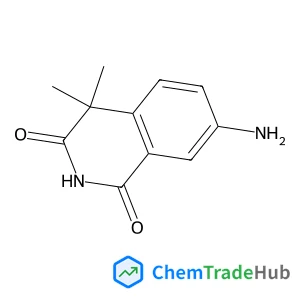
1,3(2H,4H)-Isoquinolinedione, 7-amino-4,4-dimethyl-
CAS Number:
14576-22-8
Molecular Formula:
C11H12N2O2
![(2E)-3-(3-Chlorophenyl)-N-{2-[4-(methylsulfonyl)-1-piperazinyl]-2-oxoethyl}acrylamide structure](https://static.chemtradehub.com/structs/250/2505001-54-5-c1e9.webp "(2E)-3-(3-Chlorophenyl)-N-{2-[4-(methylsulfonyl)-1-piperazinyl]-2-oxoethyl}acrylamide structure")
(2E)-3-(3-Chlorophenyl)-N-{2-[4-(methylsulfonyl)-1-piperazinyl]-2-oxoethyl}acrylamide
CAS Number:
2505001-54-5
Molecular Formula:
C16H20ClN3O4S
Recommended Suppliers






Disclaimer
This page provides academic journal information for reference and research purposes only. We are not affiliated with any journal publishers and do not handle publication submissions. For publication-related inquiries, please contact the respective journal publishers directly.
If you notice any inaccuracies in the information displayed, please contact us at support@chemtradehub.com. We will promptly review and address your concerns.