












Pushing the limit of liquid-state dynamic nuclear polarization at high field
Literature Information
Publication Date
2010-05-05
DOI
10.1039/C002554M
Impact Factor
3.676
Authors
J. A. Villanueva-Garibay, G. Annino, P. J. M. van Bentum, A. P. M. Kentgens
View Original
Abstract
Dynamic nuclear polarization in the liquid state was predicted more than 50 years ago by Overhauser. Its application for NMR sensitivity enhancement has been limited because of intrinsic and experimental problems to apply this method at high magnetic fields. Here we report on 95 GHz DNP experiments using the common TEMPO radical dissolved in water. In an efficient non-radiative microwave resonator, we observe average experimental enhancement factors up to −65. The local enhancement in the center of the resonator is calculated to reach a level of −94 at the highest microwave power. At high microwave power, the DNP enhancement shows a linear increase with no tendency to saturation. The results indicate that a substantial sensitivity enhancement is possible for liquid state NMR in nL sample volumes.
Recommended Journals
Related Literature
Antibody purification via affinity membrane chromatography method utilizing nucleotide binding site targeting with a small molecule
Nur Mustafaoglu
2016-11-10
Paper
DOI: 10.1039/C6AN02145J
Lectin-based lateral flow assay: proof-of-concept
Pavel Damborský, Katarzyna M. Koczula, Andrea Gallotta, Jaroslav Katrlík
2016-10-07
Paper
DOI: 10.1039/C6AN01746K
Detection of evoked acetylcholine release in mouse brain slices
R. Asri, B. O'Neill, J. C. Patel, K. A. Siletti, M. E. Rice
2016-10-03
Paper
DOI: 10.1039/C6AN01758D
Next generation of labeling reagents for quantitative and multiplexing immunoassays by the use of LA-ICP-MS
S. Kanje, S. Hober, L. Mueller
2016-10-17
Communication
DOI: 10.1039/C6AN01878E
A biotinylated piperazine-rhodol derivative: a ‘turn-on’ probe for nitroreductase triggered hypoxia imaging
Ying Zhou, Kondapa Naidu Bobba, Xue Wei Lv, Dan Yang, Nithya Velusamy, Jun Feng Zhang
2016-12-01
Paper
DOI: 10.1039/C6AN02107G
Creating compact and microscale features in paper-based devices by laser cutting
Md. Almostasim Mahmud, Eric J. M. Blondeel, Moufeed Kaddoura, Brendan D. MacDonald
2016-10-25
Paper
DOI: 10.1039/C6AN02208A
PCR free multiple ligase reactions and probe cleavages for the SNP detection of KRAS mutation with attomole sensitivity
2016-10-19
Communication
DOI: 10.1039/C6AN00909C
You might also like
Compound Q&A
What precautions should be taken when handling 4-Methyl-6-(trifluoromethyl)quinoline (CAS: 40716-16-3)?
When handling 4-Methyl-6-(trifluoromethyl)quinoline (CAS: 40716-16-3), safety go...
40716-16-34-Methyl-6-(trifluor...
Compound Q&A
What is 4-(3,5-Difluorophenyl)aniline (CAS: 405058-00-6)?
4-(3,5-Difluorophenyl)aniline is an aromatic organic compound with the CAS numbe...
405058-00-64-(3,5-Difluoropheny...
Compound Q&A
How is 5-{[4-(Trifluoromethyl)phenyl]sulfanyl}-1,2,3-thiadiazole-4-carboxylic acid (CAS: 338982-07-3) typically synthesized?
5-{[4-(Trifluoromethyl)phenyl]sulfanyl}-1,2,3-thiadiazole-4-carboxylic acid can ...
338982-07-35-{[4-(Trifluorometh...
Compound Q&A
What is the market or research trend for 4-Benzylaniline hydrochloride (CAS: 6317-57-3)?
The market for 4-Benzylaniline hydrochloride (CAS: 6317-57-3) is steadily growin...
6317-57-34-Benzylaniline hydr...
Compound Q&A
Is [3-(Diethylsulfamoyl)phenyl]boronic acid (CAS: 871329-58-7) safe?
[3-(Diethylsulfamoyl)phenyl]boronic acid is generally considered safe when handl...
871329-58-7[3-(Diethylsulfamoyl...
Compound Q&A
What are the main uses of 3-Bromo-2,5-dimethoxyaniline (CAS: 115929-62-9)?
3-Bromo-2,5-dimethoxyaniline is mainly used in the pharmaceutical and chemical i...
115929-62-93-Bromo-2,5-dimethox...
Compound Q&A
What regulatory guidelines apply to N-Methyl-1-(5-methyl-1H-indol-3-yl)methanamine (CAS: 915922-67-7)?
N-Methyl-1-(5-methyl-1H-indol-3-yl)methanamine (CAS: 915922-67-7) is subject to ...
915922-67-7N-Methyl-1-(5-methyl...
Compound Q&A
What industries use Carbamic acid, N-[(5S)-5,6-diamino-6-oxohexyl]-, 1,1-dimethylethyl ester (CAS: 24828-96-4)?
This compound is primarily used in the pharmaceutical industry for the synthesis...
24828-96-4Carbamic acid, N-[(5...
Compound Q&A
How should 2-Methyl-2-propanyl [(1S,3R)-3-aminocyclohexyl]carbamate (CAS: 1298101-47-9) be stored?
2-Methyl-2-propanyl [(1S,3R)-3-aminocyclohexyl]carbamate (CAS: 1298101-47-9) sho...
1298101-47-92-Methyl-2-propanyl ...
Compound Q&A
What industries use Ethyl 2-bromo-4,4,4-trifluorobutanoate (CAS: 367-33-9)?
Ethyl 2-bromo-4,4,4-trifluorobutanoate (CAS: 367-33-9) is utilized in the pharma...
367-33-9Ethyl 2-bromo-4,4,4-...
Source Journal
Physical Chemistry Chemical Physics

CiteScore:
5.5
Self-citation Rate:
10.3%
Articles per Year:
3036
Physical Chemistry Chemical Physics (PCCP) is an international journal co-owned by 19 physical chemistry and physics societies from around the world. This journal publishes original, cutting-edge research in physical chemistry, chemical physics and biophysical chemistry. To be suitable for publication in PCCP, articles must include significant innovation and/or insight into physical chemistry; this is the most important criterion that reviewers and Editors will judge against when evaluating submissions. The journal has a broad scope and welcomes contributions spanning experiment, theory, computation and data science. Topical coverage includes spectroscopy, dynamics, kinetics, statistical mechanics, thermodynamics, electrochemistry, catalysis, surface science, quantum mechanics, quantum computing and machine learning. Interdisciplinary research areas such as polymers and soft matter, materials, nanoscience, energy, surfaces/interfaces, and biophysical chemistry are welcomed if they demonstrate significant innovation and/or insight into physical chemistry. Joined experimental/theoretical studies are particularly appreciated when complementary and based on up-to-date approaches.
Recommended Compounds
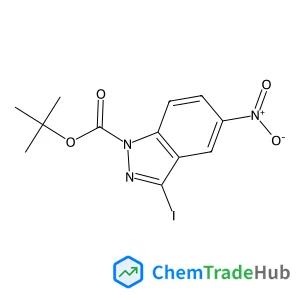
Tert-butyl 3-iodo-5-nitro-1H-indazole-1-carboxylate
CAS Number:
459133-69-8
Molecular Formula:
C12H12IN3O4
Recommended Suppliers






Disclaimer
This page provides academic journal information for reference and research purposes only. We are not affiliated with any journal publishers and do not handle publication submissions. For publication-related inquiries, please contact the respective journal publishers directly.
If you notice any inaccuracies in the information displayed, please contact us at support@chemtradehub.com. We will promptly review and address your concerns.